
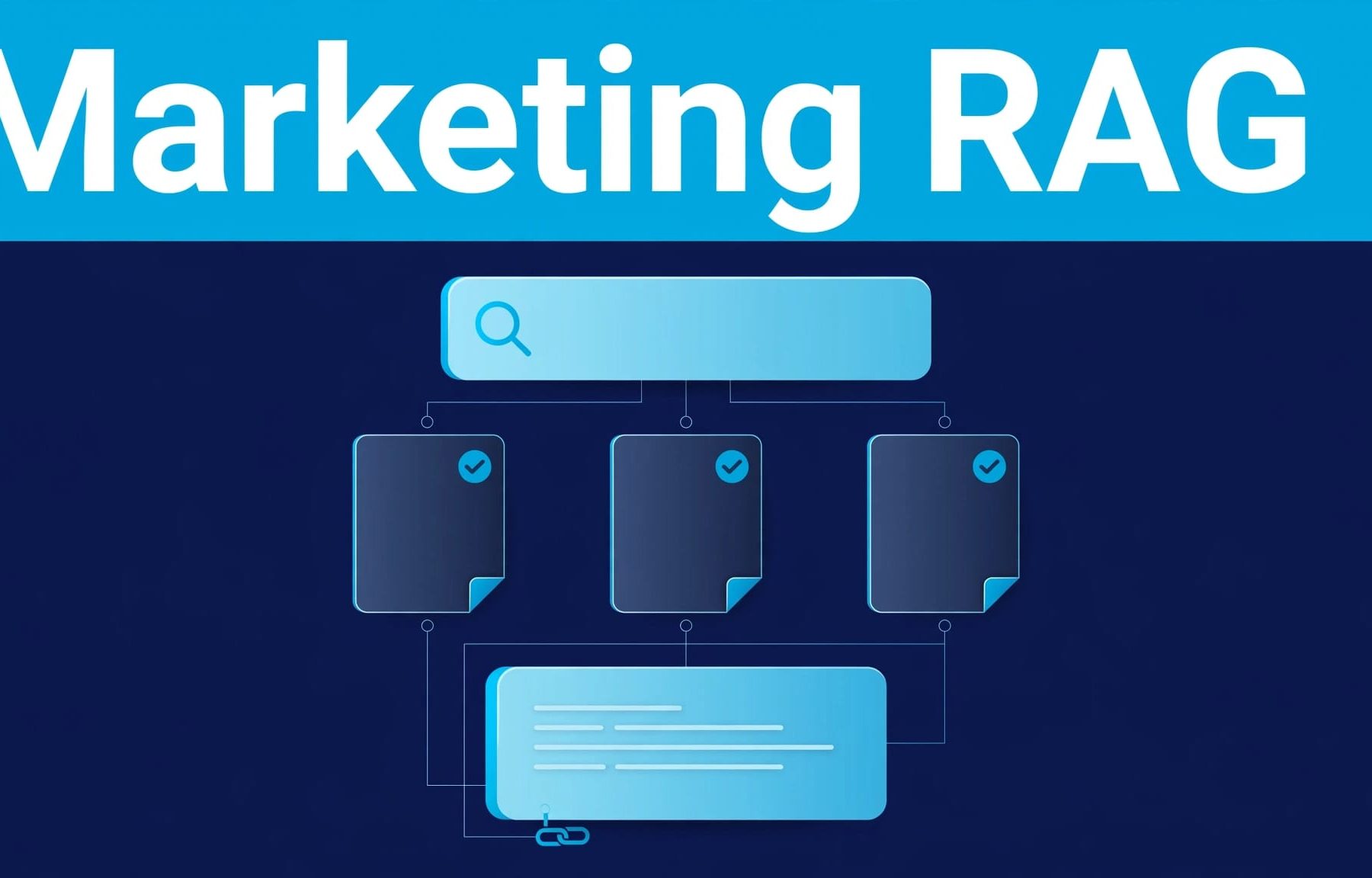
Retrieval-augmented generation (RAG) helps generative AI find relevant, approved information before drafting an answer. That matters when a product offer changed last week. For marketing teams, the value is practical: people get faster answers about products, campaigns and customers, with sources they can check.
It still needs careful setup. If the search finds the wrong document, the answer can sound confident and be wrong. Here’s how the process works and where your team should pay attention.
What retrieval augmented generation changes
A standard foundation model uses patterns in its training data and your prompt to generate text. Large language models don’t automatically know that you updated your pricing page yesterday or changed the terms of an offer.
Retrieval-augmented generation (RAG) combines information retrieval, a common task in natural language processing, with text generation. When you ask a question, the system searches an approved knowledge base and supplies relevant source passages for grounded generation. Patrick Lewis and his co-authors described this combination in their 2020 RAG research paper.
For your team, an artificial intelligence system might draw on product documentation, campaign briefs, approved case studies and frequently asked questions. RAG is useful when answers depend on details that change, and it lets a reviewer trace claims to sources, although a citation alone doesn’t prove a claim is correct.
Think of RAG as a way to make your existing information easier to use. It works best when that information is accurate, owned by someone and kept up to date.
How retrieval augmented generation works
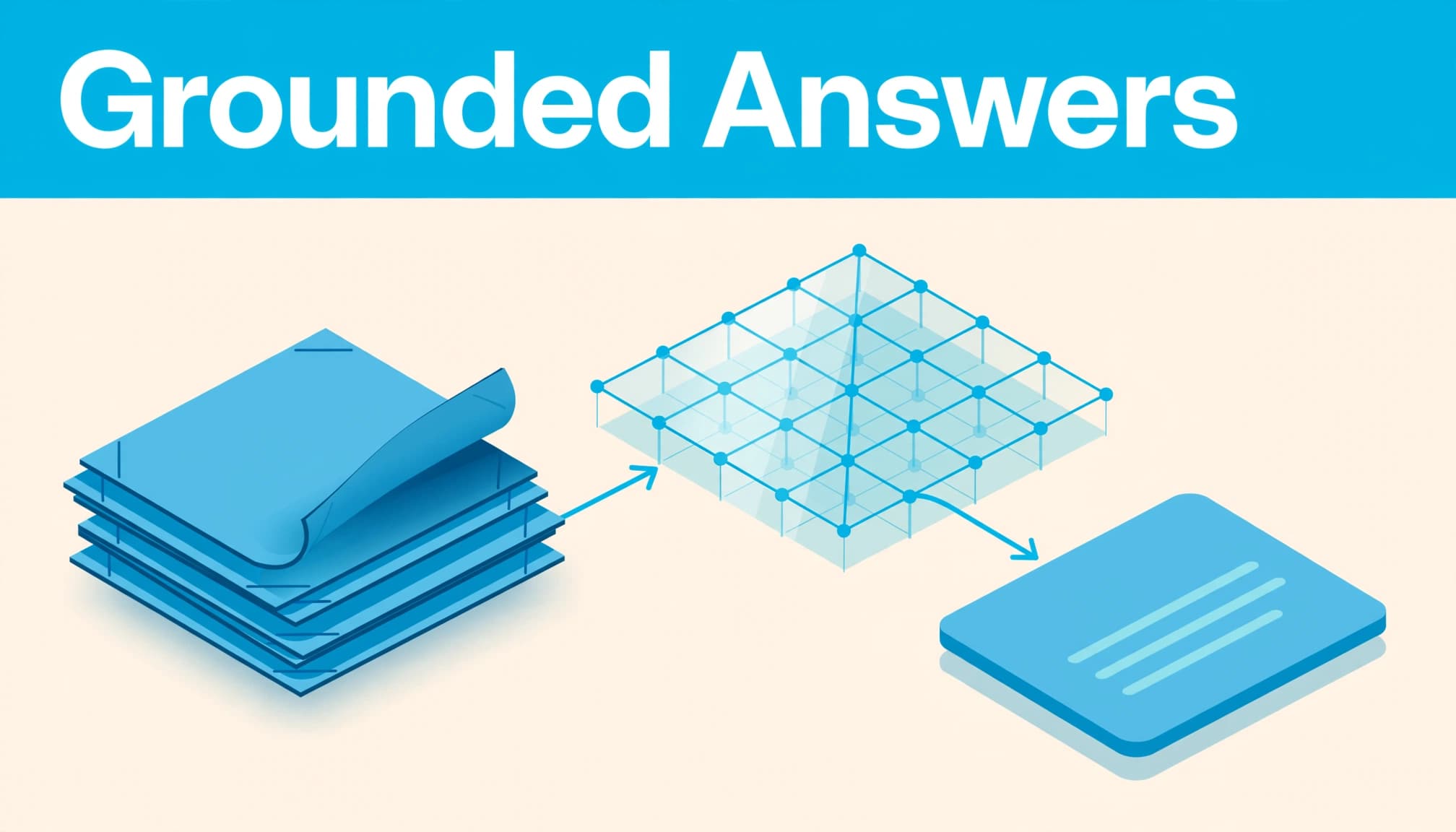
The method has two parts: prepare information so it can be found, then retrieve the right pieces when someone asks a question.
Prepare documents people can rely on
Start with sources your team would trust when answering the question themselves. Give documents an owner, a review date and useful metadata, such as product, region and publication status. Separate current offers from archived ones before either reaches the index.
Documents are usually divided into smaller passages called chunks. Choose chunking strategies that keep relevant details together. A chunk that’s too short may lose a qualification, such as an eligibility rule beneath a headline price. One that’s too long can bury the answer amongst unrelated details. Tables and PDFs deserve particular care because extracting their text can separate figures from their headings.
Retrieve evidence, then write the answer
An embedding model uses machine learning to turn passages and questions into vector embeddings. A vector database or vector store can use these for semantic search, finding passages with similar meaning even when the wording differs. Keyword search helps with exact campaign names, product codes and policy terms. A hybrid search combines both approaches; a re-ranker can then order candidate passages by relevance.
Document retrieval is part of the wider retrieval pipeline, which can connect to relevant, approved external knowledge bases. The selected passages must fit the model’s context window before going into the prompt with instructions on how to answer and cite sources. If your approved material doesn’t support an answer, the assistant should say so or pass the question to a person. Adding more text to the prompt isn’t always helpful: irrelevant or conflicting passages can make an answer worse.
RAG or fine-tuning: which job needs doing?
These approaches solve different problems. Retrieval supplies information when a question is asked; fine-tuning uses additional training data to change a model’s behaviour, rather than supply current facts. Choose based on what you need to improve.
| Approach | Best suited to | Main consideration |
|---|---|---|
| Prompt instructions | Setting format, tone and boundaries through prompt engineering | They don’t supply missing facts. |
| RAG | Answering with approved, changing sources | Search quality and document upkeep matter. |
| Fine-tuning | Improving a repeatable style or specialised task | Updating facts requires further work. |
If your service terms change often, updating a controlled source library for grounded generation may be more practical than retraining a model whenever a detail changes. That doesn’t make RAG automatically cheaper. You still pay for document preparation, search infrastructure, model calls, testing and maintenance.
The distinction also matters for content production. You may use a model to draft copy in your preferred style, then use retrieval to check product claims against approved material. Flow20’s guide to AI use cases in digital marketing covers other tasks where the purpose of the AI tool should shape how you use it.
Where marketing teams can put RAG to work
The strongest starting point is a repeated question that already has a reliable answer somewhere in your business. You’re making that answer easier to find, not asking AI to invent a new strategy.
Support content and sales enquiries
A website assistant could handle recurring customer support questions using approved service pages, product specifications and support articles. A sales colleague could use document retrieval to find approved proposal material or product details about an integration or delivery process. The model can surface existing information rather than invent it.
In both cases, permissions matter. Public visitors should receive answers from public material. An internal assistant may access more, but it still needs to respect who is allowed to see each document. If you’re using customer records, plan that alongside your first-party data marketing approach rather than copying an entire CRM into a search index.
Campaign research and reporting
Your team could ask an internal assistant which approved claims support a landing page or where a campaign’s targeting decision was recorded. That’s useful for SEO content and PPC planning, where a small change in wording can alter what you promise.
RAG can also help people find the right reporting notes before they interpret a result. It cannot replace analysis. If a Google Ads campaign produces more enquiries, you still need conversion data and lead quality to judge performance. The same distinction applies to AI-driven PPC reporting and analytics: a clear explanation is useful only when the underlying data supports it.
Why good source material matters more than a clever prompt
You can’t retrieve a dependable answer from a knowledge base full of duplicate, outdated or ambiguous pages. Clean, current documents can reduce the risk of AI hallucinations, but they can’t guarantee a correct answer. Before changing models, check whether your source documents state claims clearly.
Keep claims and qualifications together
Imagine a service page that says an offer is available to UK customers, while the eligibility detail sits several pages away in a PDF. A short chunk might retrieve the offer but miss the restriction. Grounded generation still depends on retrieving the right passage, with its qualifications. Give important claims enough surrounding context and test how your system handles tables, footnotes and document updates.
This is familiar territory for marketers. Good search-intent-led keyword clustering also depends on understanding the meaning behind different wording. In RAG, that understanding helps search, but the retrieved passage must still contain the precise answer.
Decide what counts as an approved source
Set an order of trust. Current product documentation may outrank an old campaign brief; a published policy may outrank notes in a shared folder. Attach review dates and owners so someone can resolve conflicts instead of asking the model to guess.
For an internal content assistant, keep approved brand claims and examples separate from draft copy. Your SEO automation workflows can help teams identify topics and organise work, but a human should approve claims before they become source material for future answers.
How to test answers before people rely on them
A polished response is a poor test of a RAG system. You need to know whether it found the right evidence, used it correctly and handled a missing answer honestly.
Build questions from real work
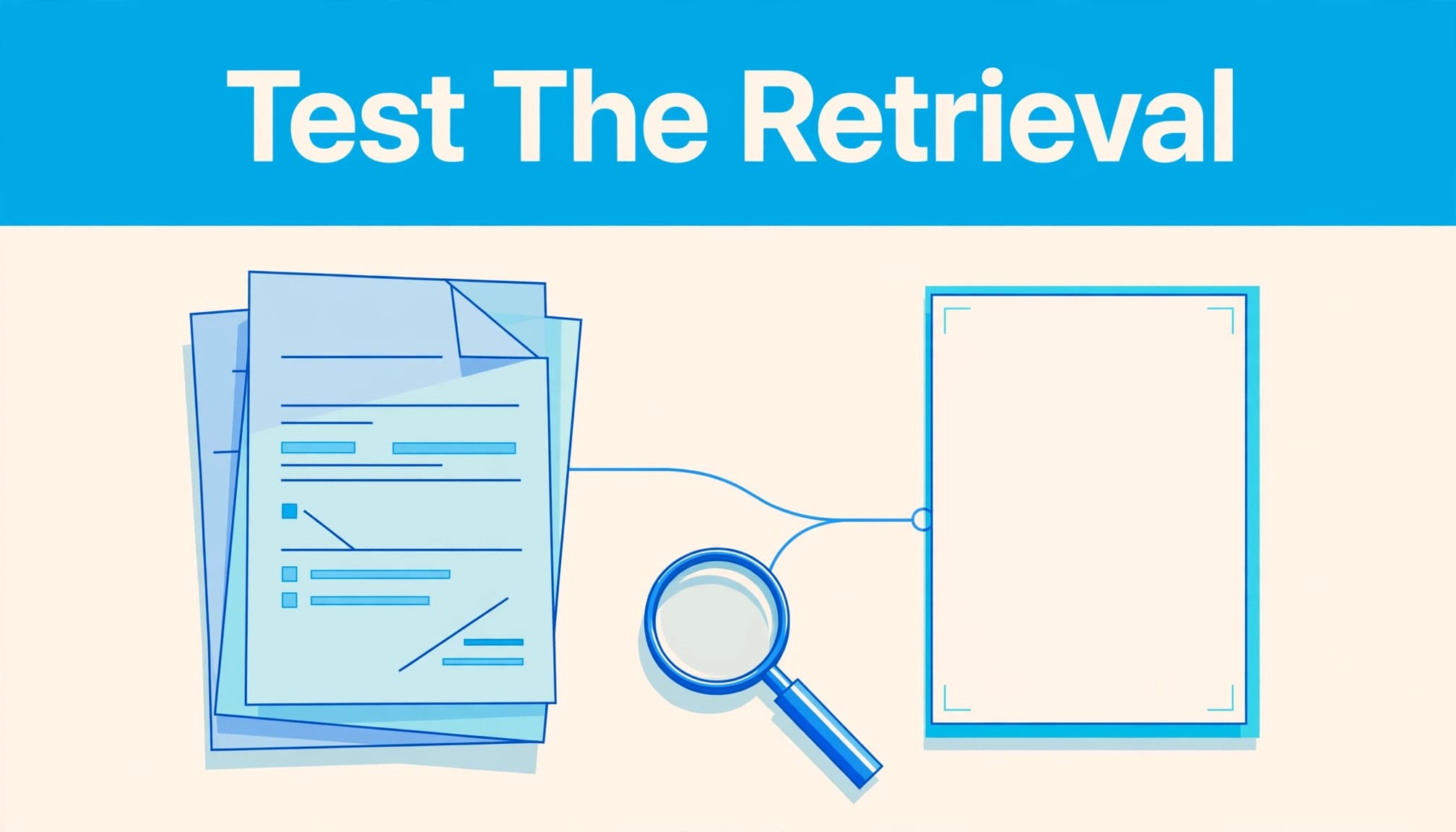
Collect questions from customer support tickets, sales calls, site search and campaign planning. Include straightforward questions, ambiguous wording, exact product names and questions about expired offers. For each, record the approved answer or the expected behaviour when no answer exists.
First, inspect document retrieval to confirm the approved source was found, then read the generated response. If the correct document wasn’t found, changing the prompt may hide the problem without fixing search. Test chunk size, metadata filters and hybrid search first.
Measure the failures that affect decisions
Track whether the right passages appear in the results, whether the answer stays faithful to them and whether citations support the claims beside them. Also measure response time and how often the assistant passes a question to a person.
For example, an answer about an advert’s eligibility may be fluent but cite an expired campaign brief. Count that as a failure. Logging the question, retrieved document version and cited passage makes it easier to find the cause after a document changes.
Use recurring unanswered questions to improve approved content, then connect those themes to your wider AI-powered audience segmentation work. Keep this feedback separate from evidence that a campaign improved: you’ll need conversion and lead-quality data for that.
Security and speed need decisions before launch
Retrieval gives a model access to material it might otherwise never see. Treat that access as a data security decision, particularly when documents contain customer information or commercial plans.
Protect the index and the answer
Restrict access to documents and their vector representations, and apply permissions when searching, not only when displaying an answer. Consider encryption, retention and supplier arrangements as part of your security review. The Information Commissioner’s Office explains that encryption supports data protection, while noting that UK GDPR doesn’t require every item of personal information to be encrypted.
Retrieved documents can also contain misleading instructions. A pasted note saying “ignore previous rules” is source content, not an instruction your assistant should obey. Limit who can add documents, test suspicious passages and check important claims against their cited source.
Keep the workflow proportionate
Every additional search, re-ranking step and model call can add time and cost. A small, stable FAQ library may need only a simple retrieval setup. A larger system with separate policy, product and customer sources may need routing and stricter controls.
Start by measuring how long a useful answer takes. Add complexity when your tests show it improves accuracy enough to justify the delay. The same discipline applies when connecting Facebook Ads insights to customer-facing content: speed matters, but an unsupported claim is a poor trade-off.
A sensible first pilot for your team
Choose one controlled collection, such as approved product FAQs, and one group of users. Adding approved documents to a RAG pilot makes them available for retrieval, but doesn’t make them training data. Ask the collection’s owner to remove outdated material and agree what the assistant should do when it can’t find evidence. Then test it against questions people already ask, including those it must decline.
Review the retrieved source passages as well as the answers. If the pilot saves time without weakening accuracy, expand the library gradually and assign ongoing ownership. If it struggles, fix the documents or retrieval before adding more data.
For AI and personalised marketing, keep the distinction clear: retrieving an approved product answer is different from deciding which message a particular customer should receive. Your permissions and data choices should reflect that difference.
Frequently Asked Questions
What is retrieval-augmented generation?
Retrieval-augmented generation (RAG) searches an approved knowledge base for relevant information, then supplies those source passages to a generative AI model. This helps it answer using current material your team can check.
Does RAG prevent AI hallucinations?
No. RAG can reduce the risk of unsupported answers, but the system may retrieve the wrong document or misrepresent a source. Test retrieval and answers, and make sure the assistant can say when it lacks evidence.
How is RAG different from fine-tuning?
RAG retrieves information when a question is asked, making it useful for facts that change. Fine-tuning changes a model’s behaviour using additional training data; it isn’t a straightforward way to supply current facts.
How should a marketing team start with RAG?
Choose one repeated question and a small collection of current, approved documents with clear owners. Test real questions, including ones the assistant should decline, before expanding the collection.
Conclusion
That convincing answer about last week’s offer is only useful if it draws on the current terms. Reliable retrieval starts with approved documents, then depends on search quality, testing and clear rules for unsupported claims.
If you’d like to connect those principles to your content and campaign work, talk to Flow20 about digital marketing. Start with one question your team answers often and the source you’d trust to answer it.