
A page can still rank well after its pricing, product details or advice have gone out of date. For AI search freshness, review your most commercially important pages first, make genuine updates when facts change, and check what AI answers actually cite. A newer date alone won’t tell a buyer anything useful.
You don’t need to republish your whole content library every quarter. You need a review schedule that supports content freshness, reflects how quickly each topic changes, and shows whether the work helps buyers find accurate information.
What AI citation data tells you about freshness
Cited pages tend to be newer
In an analysis of 17 million citations, Ahrefs found that AI-cited URLs averaged 1,064 days old. URLs in Google’s organic SERPs averaged 1,432 days old, making AI citations 25.7% fresher in that dataset.
It’s a useful prompt to review ageing content and content freshness, especially pages answering current commercial questions. Some systems may use retrieval-augmented generation, but that doesn’t mean every platform uses the same retrieval method or freshness rule. The figures aren’t evidence of a fixed age limit: a well-supported guide can remain useful for years, whilst a six-month-old pricing comparison may already mislead buyers.
The thirteen-week window isn’t a deadline
You may also see the claim that around half of citations come from content published or updated within thirteen weeks. Treat this as a reported pattern in one sample, not a universal citation window or citation half-life, or an instruction to change every page four times a year.
For a B2B team, the better question is whether the information still answers what buyers ask now. Review where your brand appears in AI search as part of checking AI visibility and the accuracy of each cited page. A recent citation pointing to an outdated offer is still a problem.
Citation age tells you what appeared in an observed set of answers. It doesn’t tell you why a system selected those sources.
What counts as a useful freshness signal?
Make changes that a buyer can verify
Publication and modification dates give readers context, but they’re only freshness signals, not proof of accuracy. Content freshness depends on accurate specifications, current terms and credible evidence. No public documentation gives you a universal checklist that guarantees a citation after an update.
Suppose you sell payroll software to UK employers. If your integration list changes, update the relevant comparison, implementation guidance and product page. Explain what changed in the product itself. Moving a date to the top of an otherwise identical article leaves the buyer with the same old answer.
Use an editorial record to distinguish substantive updates from minor corrections and date-only changes. Update the visible date when it fairly describes the work you’ve done.
Keep the underlying page accessible
A good update has limited value if search systems can’t access the page. Google’s guidance for AI features points site owners back to ordinary Search requirements, rather than an AI-only markup shortcut.
Check indexability, canonical tags and links to the updated page. Make sure its main answer appears in readable page content, not only in an inaccessible document. Structured data should match what’s visible, but it won’t secure an AI Overview citation.
This work belongs in your wider SEO checks. The same page needs to be useful when someone clicks through from an ordinary search result.
Set review windows by business risk
Start with pages that can affect a decision
A content audit can quickly become a spreadsheet of hundreds of URLs. Start with pages that influence enquiries, answer late-stage buyer questions or appear in commercial queries. Then assess how much damage content decay could cause when facts, terms or advice become outdated. Your content strategy should reflect business risk, not just page age or traffic.
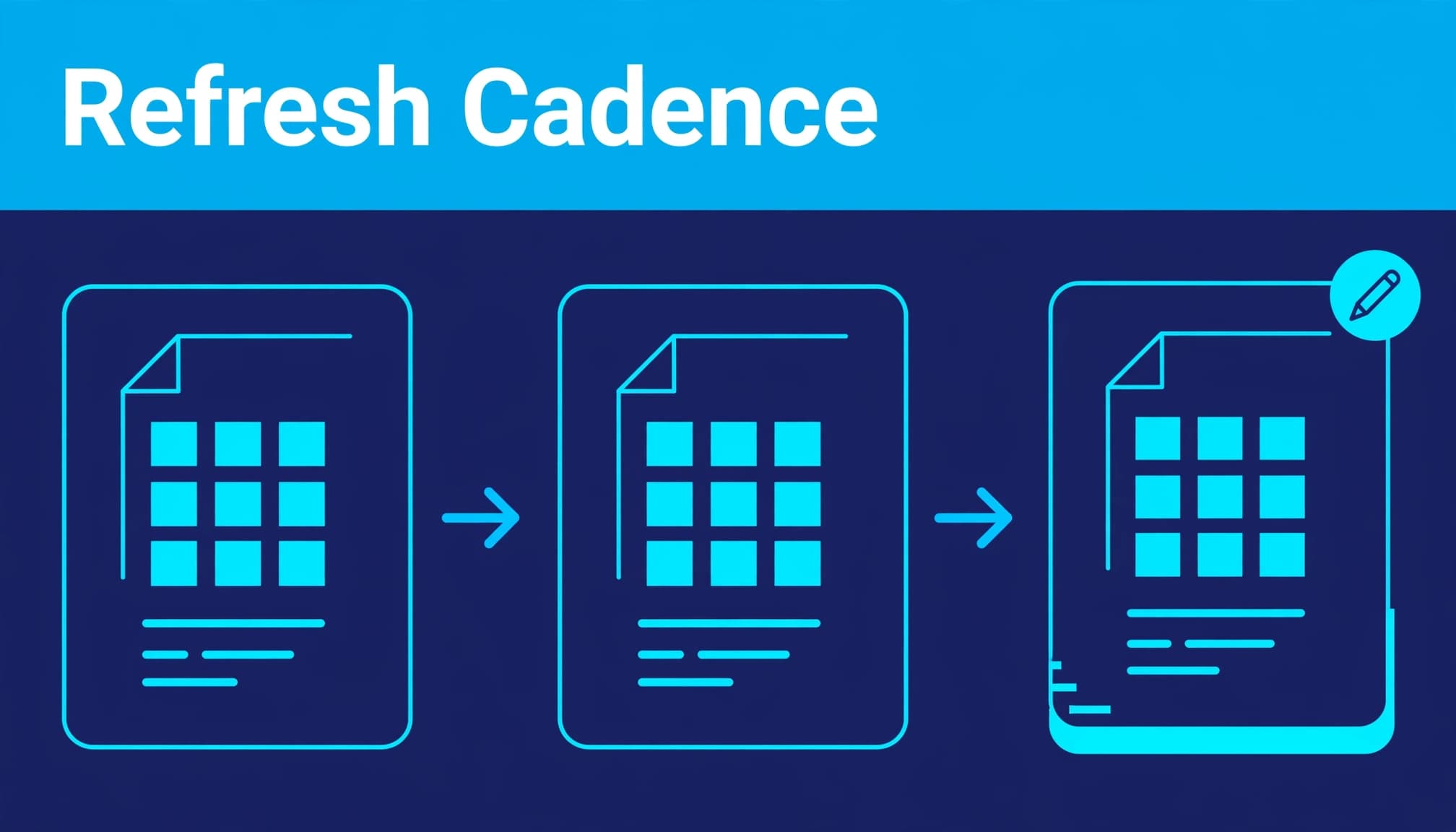
Treat this refresh cadence as a practical starting point, not a rule set by search engines.
| Content type or freshness signal | Suggested review | Useful review action |
|---|---|---|
| Pricing, offers and product specifications | When something changes, with a monthly check | Confirm figures, terms and availability, then update linked sales material |
| Comparisons and integration pages | Quarterly, or after a product change | Check competitors, supported tools and implementation details |
| Compliance and regulated advice | When guidance changes, with a named owner | Verify current rules and source dates, then get approval |
| Evergreen content and explainers | Every six to twelve months | Check accuracy, examples and unanswered buyer questions |
The fastest-changing page may not be your newest one. Use leads, opportunities and buyer intent to decide what deserves attention, with citation share as a secondary signal rather than the sole reason to update a page. Flow20’s guide to prioritising an SEO content refresh offers a fuller way to shortlist pages.
Give each page an owner and a trigger
Assign someone to approve changes, especially for financial, legal or technical claims. A calendar reminder catches routine drift; a product release, policy change or sales objection should trigger a review sooner.
Record the page, review date, reason for the change and next check. That simple history makes it easier to see whether your team updated the answer or merely refreshed the date.
Refresh the answer, not just the timestamp
Add what buyers need to make a decision
An AI summary can satisfy a basic definition without sending someone to your site. Give buyers a reason to inspect the source with implementation steps, cost factors, integration limits, evidence or a useful comparison. These substantive updates matter more than cosmetic edits.
For example, a consultancy’s article about migrating a CRM might explain the stages clearly but omit data ownership and downtime planning. Those omissions matter more to a procurement team than a newly formatted introduction. Use the questions sales hears to decide what to add.
When an AI answer repeatedly covers a topic you haven’t addressed, use AI content gap analysis to decide whether to improve an existing page or create a new one. Don’t create near-duplicate pages for every variation of the question.
Check claims across your marketing
A revised service page can still conflict with an older case study, sales PDF or campaign. Review the evidence, calls to action and links around the updated page as part of AI SEO quality control.
The same applies to paid campaigns. If your service terms change, check the landing pages and offers used in Facebook Ads. Buyers shouldn’t receive one answer in search and another after clicking an ad.
Expect different answers across AI platforms
Test the question, not a presumed formula
Google AI Overviews, ChatGPT Search and Perplexity can cite different sources for the same buyer question. OpenAI says ChatGPT Search can use web sources and link to them. Some services may use retrieval-augmented generation or a live search index to retrieve current web results. That doesn’t establish a shared, published freshness weight.
Run the same small set of questions across the services your buyers use. Include comparisons, pricing considerations, integrations and implementation queries. Save the answer and its AI citations, then check whether they describe your offer correctly.
A UK buyer asking about a provider’s support hours may receive a confident answer based on an old third-party listing. Fixing your page may help, but you may also need to correct the listing.
Keep platform results separate
Don’t blend ten answers from one service, ten from Perplexity and Google results into one citation share. The combined figure hides which platform has a factual problem or regularly cites a competitor.
Track your own citations, brand mentions and competing sources separately, including on Perplexity. Comparing competitor citations across AI search can show which buyer questions your content leaves unanswered. It won’t reveal a platform’s private retrieval rules.
Measure whether a refresh helps buyers and your business
Keep a repeatable citation log
Choose a fixed set of commercially relevant prompts and check it monthly. Record the exact wording, date, UK location, citation window (the period covered by each check), and platform (ChatGPT, Perplexity or Google AI Overviews), plus the model where available. Keep results separate by platform, noting cited URLs, answer accuracy and citation share across the prompt set, measured consistently.
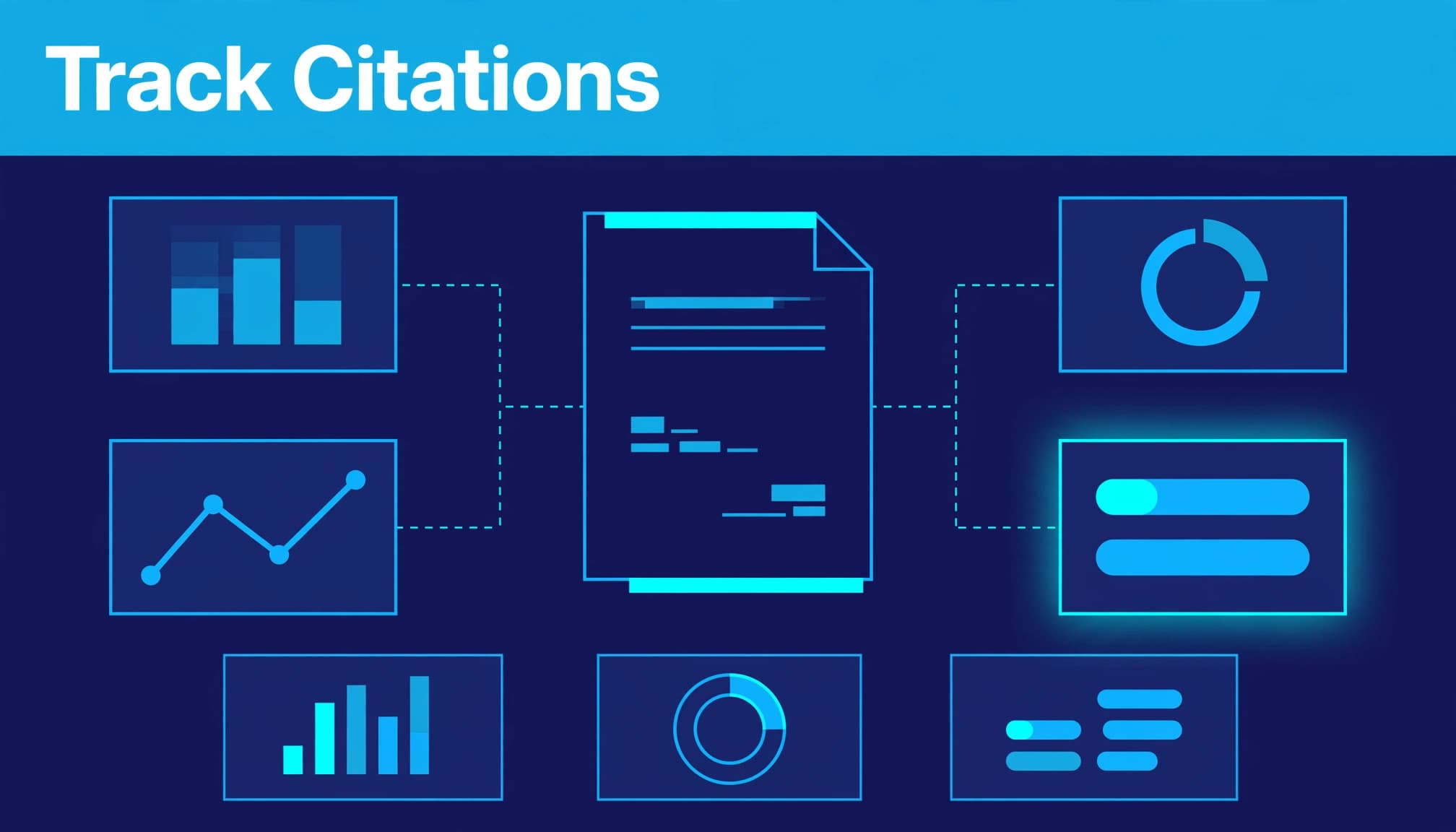
Repeat important checks before making a major content decision. Results can vary with location, account settings and time. A repeatable AI search audit gives you a better comparison than a screenshot taken immediately after publishing.
Connect observations to commercial data
Put your citation log beside Search Console, GA4 and CRM reporting. Google’s reporting can offer a view of its AI search features, but it won’t show your full presence across other platforms, and a citation doesn’t prove a visit.
Look for changes in identifiable referrals, landing-page activity, qualified enquiries and opportunities. Compare these with citation share, treating citations and brand mentions as one limited indicator of AI visibility, not a lead total. Flow20’s approach to AI search reporting treats citations as one visibility measure.
Also annotate other changes during the same period. A new Google Ads campaign may lift branded demand; changes in PPC spend, PR coverage or sales follow-up can affect enquiries. If leads rise after a refresh, these details help you judge the result without assigning all the credit to AI search.
Turn the review into a manageable routine
Work through a focused first cycle
In the first month, run a content audit of key pages and flag factual risks. Choose a small group with clear business value, then agree what a useful update should include. Check each page is accessible and has an owner.
During month two, publish approved changes and record what you altered. Check related sales and campaign material at the same time. Then compare fixed-prompt results and commercial measures with the baseline. Use this refresh framework to set review intervals according to how quickly each page’s information can change. That keeps content freshness relevant and makes ongoing content maintenance manageable.
Judge the quality of the outcome
A citation count can rise while an answer becomes less helpful. Judge citation share alongside accuracy and usefulness. Does the platform name the right service, use current facts and point buyers to a page that helps them take the next step?
Treat incorrect prices, retired services and unsupported compliance claims as urgent accuracy issues. They need attention even when a page attracts little traffic. For less serious gaps, use buyer questions and sales feedback to decide the next edit.
Key takeaways
AI search freshness is a reason to maintain key pages and protect content freshness, not republish everything every thirteen weeks. Prioritise pages whose facts change or whose answers affect buying decisions. Make updates useful, keep pages accessible and check what each platform actually shows.
Then compare citations with enquiries and opportunities. Treat citation share as one observation alongside accuracy and commercial relevance, which matter more than a newer timestamp.
Keep the useful pages current
An old page isn’t automatically a weak page, just as a recent one isn’t automatically reliable. Your job is to know which claims buyers depend on and review them before they become a source of confusion.
If you need help turning those checks into an owned plan, speak to Flow20 about a Digital marketing approach that connects content updates, search visibility and qualified leads.