
For B2B SaaS, LLMs infer trial eligibility from public terms, retrieved pages and available account information. Clear rules about who qualifies, what the trial includes and what happens when it ends make their answers more reliable. However, your application must verify eligibility and enforce limits; an LLM reading your website can’t tell whether a particular company has already used its allowance.
Start by separating the rules you publish from the account decisions your systems make.
Separate public information from account verification
What a model can infer
An LLM can extract a published trial duration, identify a payment-card requirement and explain restrictions attached to an offer. Its answer depends on which information it receives, and whether it preserves the conditions.
A headline saying “Try every feature” can produce a misleading summary if enterprise integrations are excluded several sections below. Put that exclusion beside the claim.
Retrieval also matters. ChatGPT’s web search guidance explains that allowing OAI-SearchBot access is part of eligibility for inclusion. That doesn’t mean every answer will retrieve your latest trial page.
What your systems must establish
A public page can’t tell a model whether an account has previously completed a trial, received a sales-approved extension or exhausted its credits.
Those answers require authenticated application data. Even a connected assistant should receive a clear result from your account service, rather than decide eligibility from a conversation.
Keep permission checks in application code. A buyer saying “We’re a new business” isn’t evidence that the organisation qualifies under your policy.
Write B2B free trial eligibility as account rules
“New customers only” sounds clear until two colleagues register separately. Decide whether eligibility belongs to a person, workspace, legal entity or company group, then use that definition consistently.
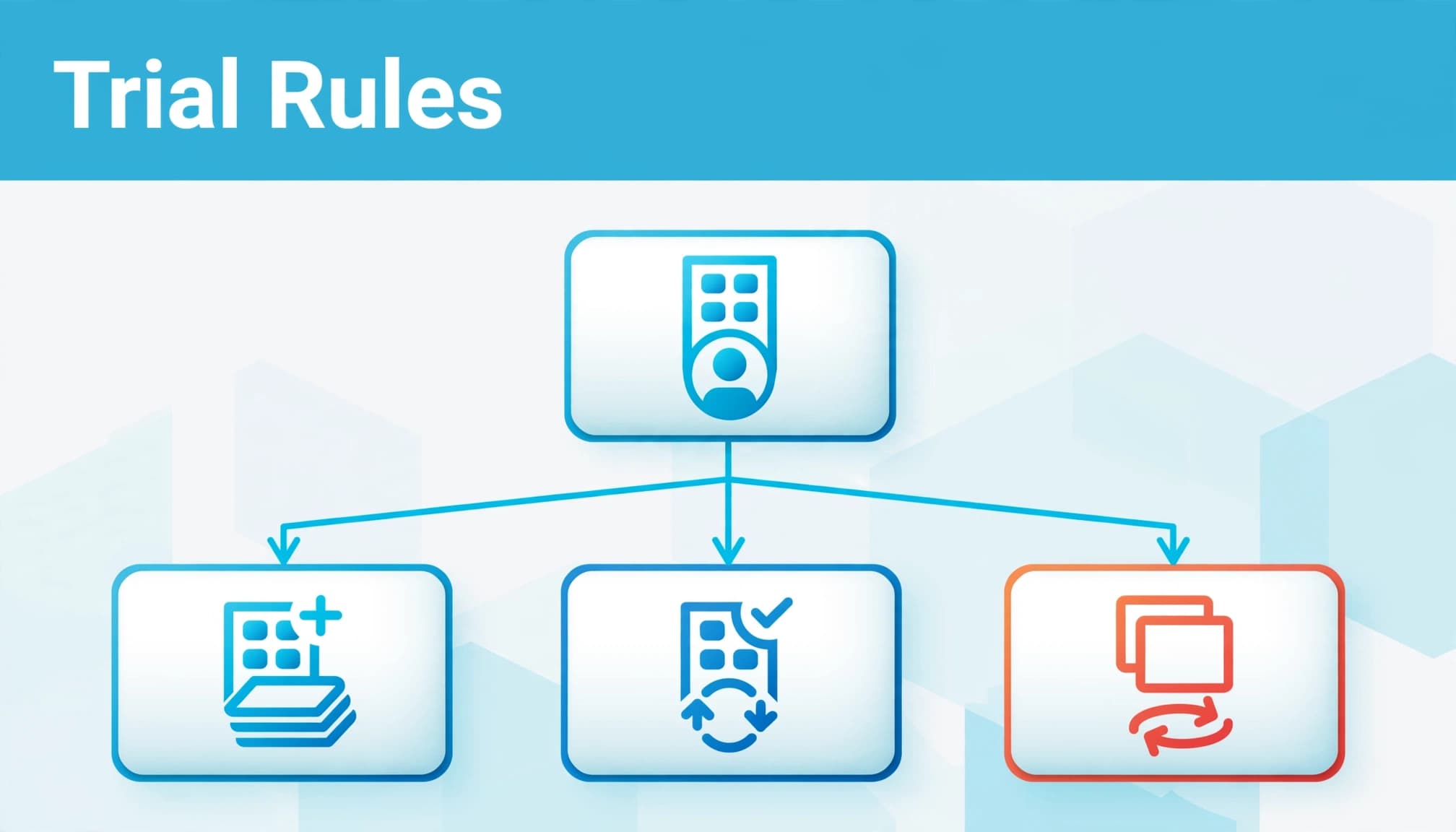
Use a decision table to organise the rules your product and commercial teams approve.
| Decision | What your published policy should explain | What your systems must establish |
|---|---|---|
| New organisation | How you define a new customer | Previous account and subscription history |
| Existing customer | Whether another product or feature can be evaluated | Current products and entitlements |
| Repeat request | Whether another trial or extension is available | Earlier trials and approved exceptions |
| Email requirement | Whether personal email addresses are accepted | Address ownership and applicable account requirements |
| Enterprise evaluation | Whether approval or an agreement is required | Approval status and agreed scope |
| Regional restriction | Which territories the offer covers | Applicable account location and agreement |
The important distinction is between an eligibility condition and evidence that it has been met. Owning a company email address doesn’t, by itself, establish purchasing authority.
Our guidance on LLM table extraction covers a related problem: values need clear labels and attached qualifications. Keep exceptions within the relevant row or immediately beside it.
Define trial limits and expiry without gaps
Give every allowance a scope
A trial limit needs a counting unit, account scope and reset rule. “Includes credits” leaves too much room for interpretation.
Explain whether credits belong to each user or the whole organisation, which actions consume them and whether failed actions count. Distinguish a trial-wide allowance from a daily reset.
API quotas need the same treatment. Requests per minute, concurrent jobs and total trial credits control different things. A model shouldn’t have to infer one from another.
Also separate trial features from paid-plan capabilities. If onboarding, migration or a supported integration requires a separate agreement, say so where the trial is described.
Describe the end of the trial
State what starts and ends the trial period. Say whether it begins at registration or activation. Define expiry by elapsed time, exhausted usage, cancellation or another event.
Then explain access, billing and data separately. Read-only access doesn’t necessarily mean exports remain available. Account closure doesn’t explain when stored data is deleted.
Trial expiry, loss of access and data deletion are separate events. Publish each rule rather than expecting “your trial ends” to cover all three.
Where payment follows automatically, explain the charging date, billing commitment and cancellation route before registration.
Choose a trial model using comparable evidence
Match the duration to useful evaluation
ChartMogul’s January 2026 survey of 200 software products found that 62% used a 14-day trial, the most common trial length. Seven-day trials and a 30-day trial each accounted for 14%.
That makes 14 days a common starting point, not proof that it suits your product. These figures describe trial lengths, not conversion performance.
Base your decision on time-to-value. A buyer evaluating a reporting tool may need a complete reporting cycle. An enterprise evaluation involving security review and data migration needs a different process.
Publish whether setup time counts towards the trial, particularly when your team controls part of the implementation.
Keep card requirements separate from conversion claims
An opt-in free trial requires the buyer to choose a paid subscription. It may ask for a credit card, but billing doesn’t start automatically. An opt-out free trial collects payment details upfront and converts automatically unless cancelled.
1Capture’s benchmark page attributes its 2025 conversion benchmarks to First Page Sage’s dataset of 86 SaaS companies, covering Q1 2022 to Q3 2025. The trial conversion rate with a card was 48.8% for organic traffic and 51% for paid traffic. Without a card, rates were 18.2% and 17.4%, respectively.
Those figures count conversion after at least one paid month. They don’t establish that collecting a card causes better retention or produces more customers overall.
A freemium model is different again: it offers a continuing free basic tier with paid upgrades. Keep freemium vs free trial distinct in your headings and registration buttons, including when describing time-limited evaluation access.
Make the policy easy to retrieve
Put essential trial terms in accessible page text. A polished pricing calculator is useful, but it shouldn’t be the only place where a buyer can discover a restriction.
Create one maintained policy page, then summarise the relevant conditions on pricing, product and registration pages. Link to the full terms without making the buyer leave to understand the basic offer.
Keep the offer consistent across brochures, help articles and campaign pages. An old PDF offering a longer trial can conflict with your current pricing page.
Google’s AI features guidance says supporting pages must be indexed and eligible to appear with a snippet. It doesn’t require special AI schema or AI text files.
Your SEO work should therefore include crawl access, discoverability and accurate visible content. Clear wording helps interpretation, but it doesn’t guarantee an AI citation.
Our guidance on AI search visibility also separates being mentioned from generating commercially useful enquiries. Keep both measures in view.
Measure activation alongside trial conversion
Sign-ups show someone accepted the invitation, but not whether they reached a useful product outcome.
Define activation around a product-supported action tied to value, such as completing a working integration, producing a usable report or inviting colleagues into a shared workflow. The activation rate measures how often trial users reach this chosen outcome, their plain-language “aha moment”.
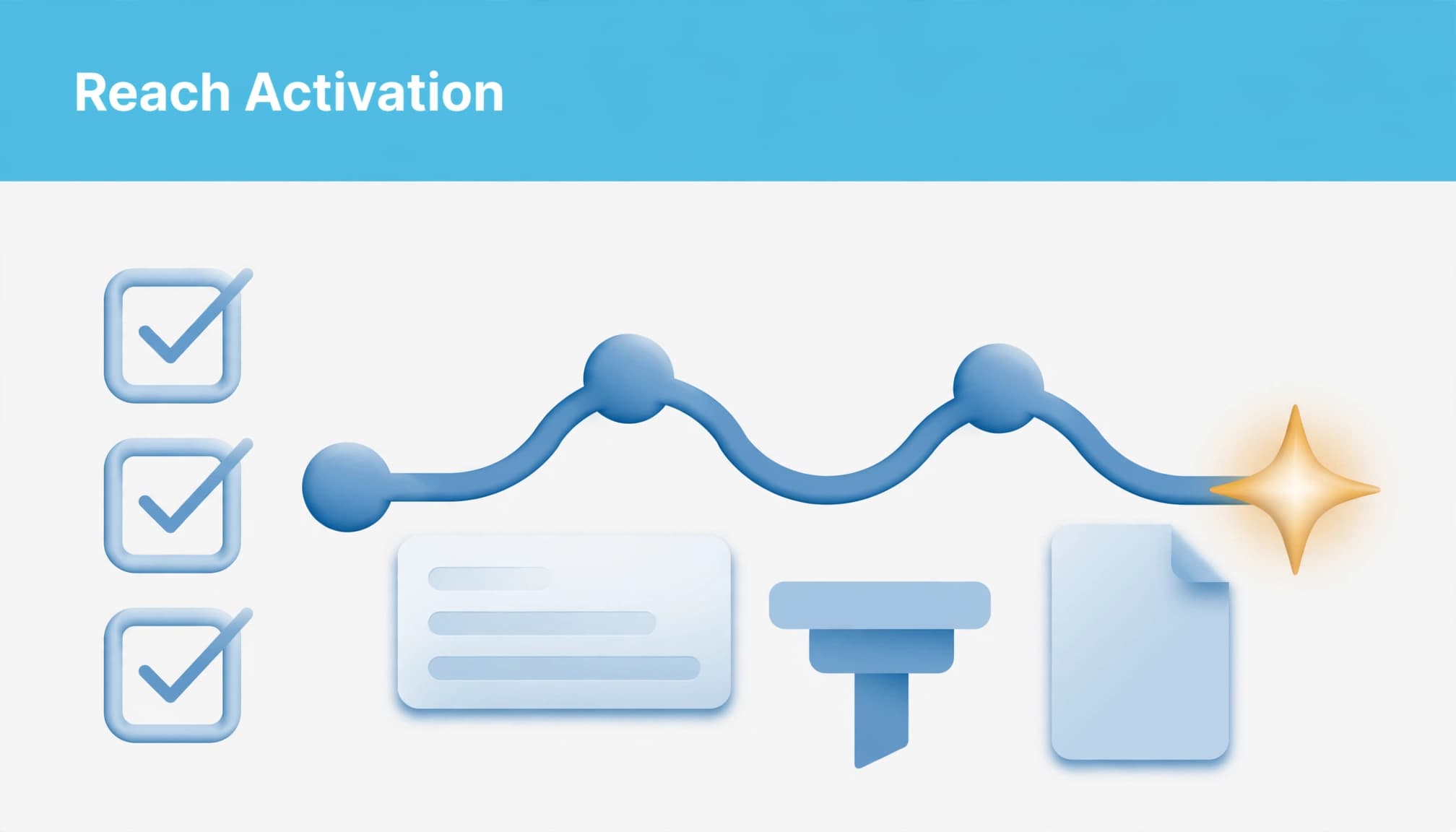
Track sign-ups, relevant key events, paid conversion and retention rate across the journey. Keep card-required and no-card cohorts separate, and distinguish genuine evaluations from accounts that never completed setup.
Use the onboarding process to prompt the next unfinished task. A reminder about an unconnected email marketing data source gives the buyer something actionable; an expiry countdown alone doesn’t explain how to progress.
Your account data can support these prompts, but an LLM should receive only the information needed for the task.
Keep campaign promises aligned with trial terms
Your landing page needs to continue the offer that brought the visitor there. An advert promising unrestricted access creates avoidable friction if registration introduces feature exclusions.
Use PPC enquiry and search-term data to identify repeated questions about eligibility, setup and payment. Those questions are useful priorities for improving the trial page.
With Google Ads, match specific trial claims to the relevant product and account conditions. Don’t send every evaluation query to a generic company introduction.
For Facebook Ads, give less familiar buyers enough product context before asking them to register. Keep the eligibility and billing explanation consistent across both routes.
Consistent campaign promises support self-serve growth by reducing friction for buyers assessing a product alone and attracting better-informed, suitable registrations.
Test the answers your buyers receive
Test your published information using questions a buyer would reasonably ask. Include eligibility, repeat trials, shared allowances, payment and data access.
A useful review follows three steps:
- Ask questions that contain a condition, such as whether an existing customer can evaluate another product.
- Record the platform, date, answer and cited pages, then compare the response with your approved policy.
- Use user feedback to spot recurring confusion about eligibility, payment or trial limits. Then fix the source of an error, whether that’s missing copy, contradictory documentation or an account integration returning incomplete information.
Repeat important questions after policy changes. Keep public-page tests separate from authenticated account checks, because they assess different capabilities.
If you operate an assistant, return a clear status when account information is unavailable. “Eligibility hasn’t been established” is more useful than an unsupported approval.
Also measure the commercial result. Track qualification, activation, support questions and retained customers alongside mentions or citations. A clearer answer only has business value when it improves the buyer’s next decision.
Frequently Asked Questions
Can an LLM confirm whether a company qualifies for a free trial?
An LLM can explain published eligibility rules, but it can’t check whether a company has used a trial or exhausted its allowance. Your application must verify eligibility using authenticated account information.
How should a B2B company define trial eligibility?
Decide whether eligibility belongs to a person, workspace, legal entity or company group, then use that definition consistently. Your systems should check account and subscription history, previous trials and any approved exceptions.
What should free trial terms say about limits and expiry?
Explain what each allowance covers, how it’s counted, which account it applies to and when it resets. State separately when the trial ends, what happens to access and billing, and when stored data is deleted.
Does requiring a credit card make a trial opt-out?
No. An opt-in trial requires the buyer to choose a paid subscription, while an opt-out trial converts automatically unless cancelled; either type may ask for a card.
Make your trial policy easier to act on
Your trial terms should let buyers understand the offer before they register, whilst your systems establish whether their account qualifies. Keep conditions attached to claims, and explain limits, billing and expiry as separate decisions.
Start with your pricing and registration pages. Compare their promises with the rules your application actually applies, then resolve the gaps.
If your trial pages attract attention but leave buyers uncertain, speak to us about Digital marketing focused on turning that demand into qualified enquiries.