
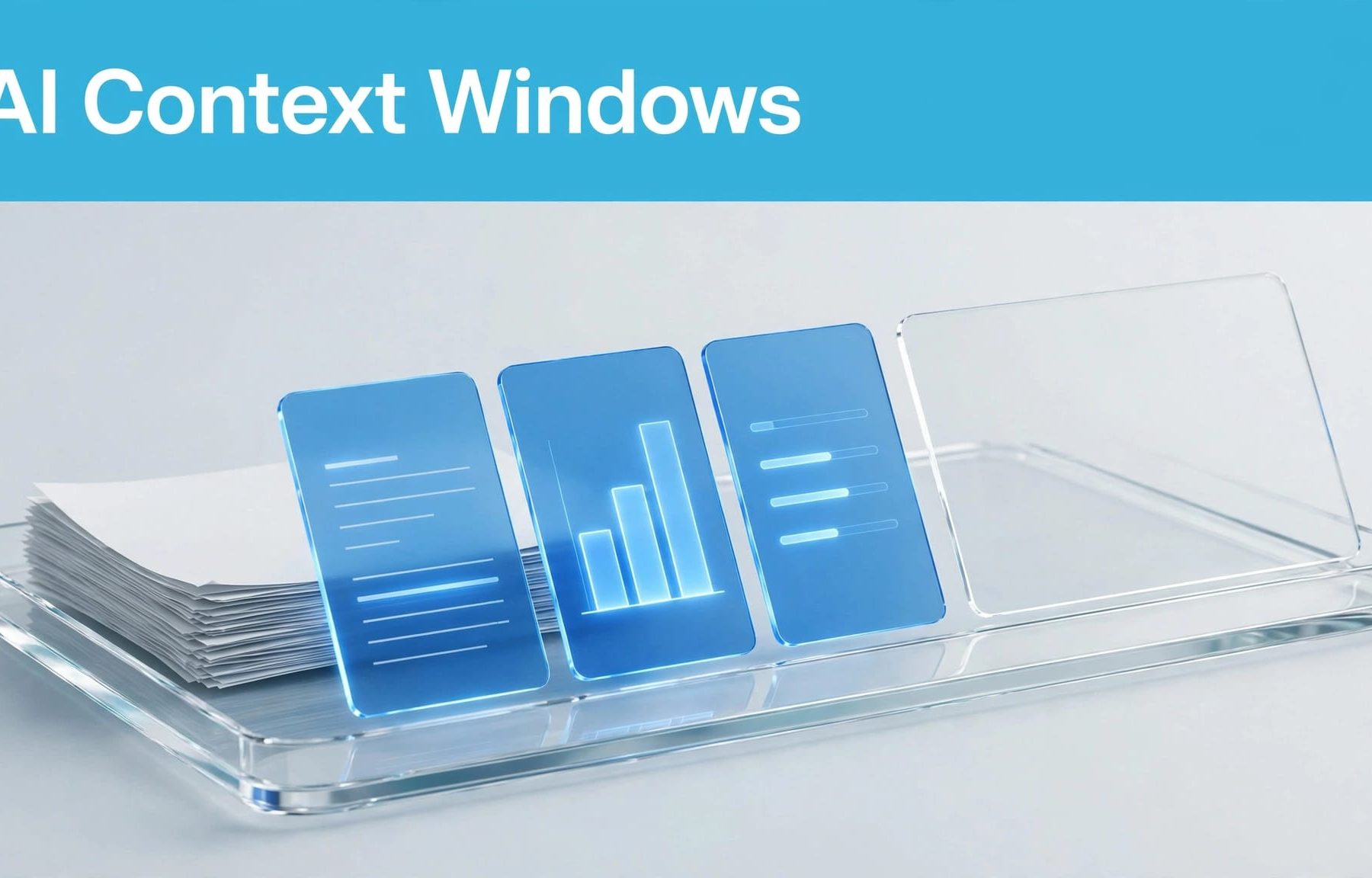
Your AI tool can accept a large brief and still miss an important detail. AI context windows limit the material a model can work with, but filling that space doesn’t guarantee better answers. You get more reliable marketing output by supplying relevant evidence, leaving room for the response and checking what the model uses.
That matters when you’re combining brand guidelines, campaign data and customer research. Large language models use the available context to guide text generation. Start with what tokens measure, then build a process that keeps your instructions and evidence useful.
What AI context windows hold
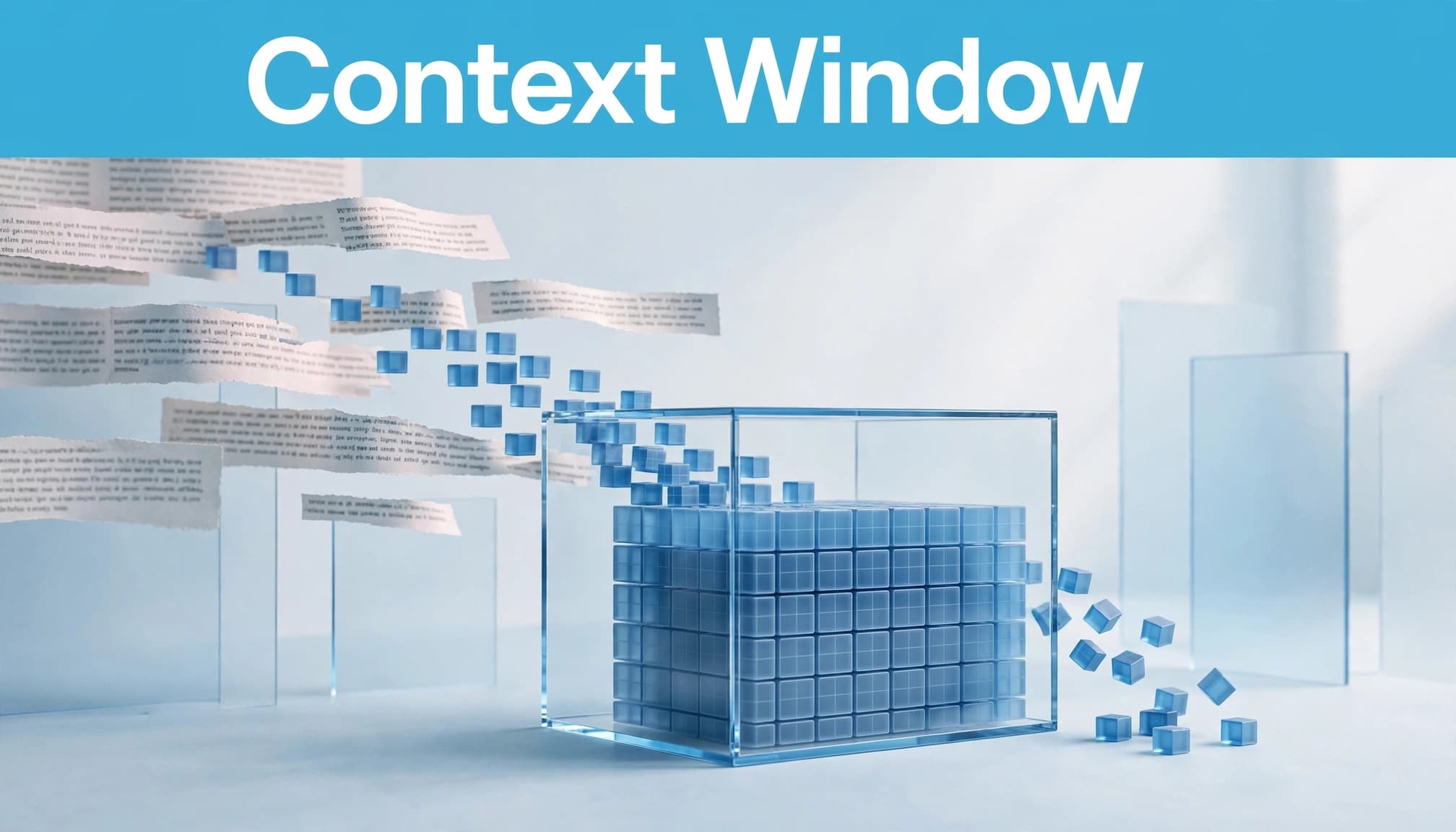
Think of the context window as temporary working memory. It holds the information available to the model for its current response.
Tokens aren’t the same as words
A token is a unit of text that a model processes. Tokenisation, also spelled tokenization in some technical documentation, breaks text into these units and converts them into numerical identifiers.
Some common words remain whole. Other words split into smaller pieces, whilst punctuation and spacing also affect token counts. Different tokenisers can divide the same text differently.
This is why a document’s word count won’t give you an exact token count. Campaign names, URLs, tables and technical product descriptions all need checking with the relevant token counter.
When you assess ChatGPT for digital marketing, distinguish its ability to draft quickly from its ability to follow every detail in a long brief.
Your brief isn’t the whole request
The context includes more than your latest instruction. System instructions, earlier messages, uploaded documents and tool results can occupy space too.
Your response also needs capacity, although providers may publish separate input and output limits. Check how your chosen model handles both.
A context window isn’t permanent memory or the model’s training knowledge. During generation, a KV cache retains attention calculations, but it doesn’t preserve campaign decisions between conversations. A fresh conversation won’t automatically contain previous campaign decisions, and saved-memory features are separate product capabilities.
If your team needs yesterday’s approved offer, supply it through an approved source rather than expecting the model to remember.
Why longer prompts can produce weaker answers
Larger windows are useful for document-heavy work. They let you compare more material within one request, but capacity and reliable use are different things.
The self-attention mechanism adds processing work
Transformer architecture uses a self-attention mechanism to relate positions across a sequence. This helps connect an instruction with evidence elsewhere in your prompt.
In standard self-attention, the number of pairwise comparisons grows with the square of sequence length. Doubling the sequence creates roughly four times as many comparisons.
That doesn’t mean your invoice or response time will increase fourfold. This theoretical complexity doesn’t directly predict inference speed. Architecture and KV cache implementation can affect computational cost, repeated computation and memory use.
For your team, the useful lesson is simpler: extra material creates additional processing work. Add documents because they support a decision, not because the upload feature allows it.
Important details can get missed
The Lost in the Middle research found that models could use relevant information less effectively when it appeared midway through long contexts.
It doesn’t establish one single cause or mean every model behaves identically. It does give you a sensible testing requirement.
Place essential instructions clearly near the beginning. Restate the immediate task at the end, and identify the sources supporting any claims.
Ask the model to show which passage supports an offer, exclusion or product statement. A polished answer can still omit the restriction that matters.
For advertising, that could mean leaving out eligibility terms or using an expired promotion. Review those details before judging the writing.
Choose capacity around the task
Don’t choose an AI tool solely because its advertised token limits look generous.
Anthropic announced a context window of up to one million tokens for Claude Sonnet 4 on its API in August 2025. That’s a dated, model-specific example, not a promise about every Claude account today.
Limits vary by model, plan and workload. Record the exact setup your team tests rather than relying on an old comparison chart.
Research into the maximum effective context window also examines the distinction between nominal capacity and performance on real tasks. Your own evaluation should make that distinction too.
Compare model capabilities in ChatGPT, Claude or another approved tool using a consistent source pack and task-based evaluation. Check whether each identifies the same exclusions, cites the right evidence and produces an acceptable answer.
When you’re building your AI marketing skills, keep those test results alongside your prompts. They tell you more than a headline token limit.
Give marketing tasks a focused source pack
Context engineering means deciding what information reaches the model, in what form and at which step. For marketing teams, good context engineering starts with a disciplined brief. Select relevant evidence and keep channel requirements visible.
Supply evidence that changes the answer
Include the audience, geography, business objective, approved offer, supporting evidence and known restrictions. Remove unrelated background material.
For an SEO article, supply the search intent, first-party product information and the customer questions the page must answer.
For PPC, include landing-page claims, lead qualification criteria and campaign exclusions. Those details help avoid copy that attracts enquiries your sales team won’t accept.
You can use AI content briefs to organise this information. Keep approved facts separate from suggestions so the model doesn’t treat an untested idea as a confirmed claim.
Keep channel requirements visible
A Google Ads copy task needs different instructions from a customer research summary. Specify the required format and check current platform requirements.
For AI ad copywriting, ask for controlled variations around one approved proposition. Changing the audience, offer and tone together makes evaluation harder.
Keep your brand guidance concise, with a few approved examples. A long style guide containing conflicting advice creates unnecessary ambiguity.
Most importantly, put the commercial decision in the prompt. “Identify objections preventing qualified prospects from booking a call” gives the model a clearer job than “analyse these notes”.
When retrieval beats a bigger context window
Retrieval-augmented generation, or RAG, searches a knowledge source before the model drafts its answer. It supplies relevant passages instead of requiring you to paste the entire archive.
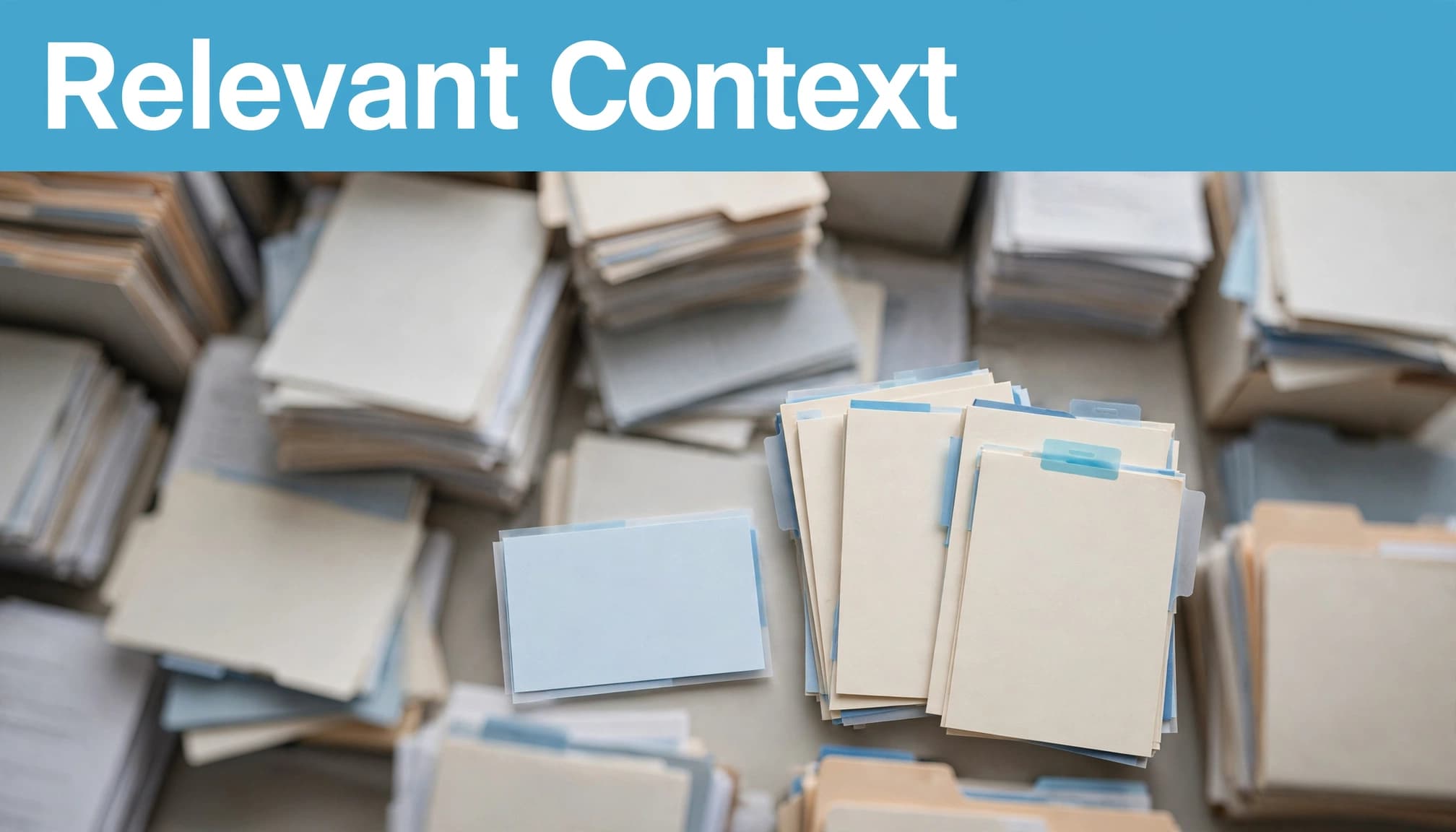
This suits information that changes, such as pricing, eligibility terms and product documentation. The model’s training data won’t automatically contain yesterday’s update.
A larger context window helps when you need to compare a complete source pack. Retrieval-augmented generation helps when you need selected evidence from a larger, changing library. You can use both together.
Hybrid retrieval combines exact-term search with meaning-based search. Exact matching protects product names and model numbers. Meaning-based retrieval helps when customers describe the same problem using different language.
Retrieval gathers candidates, but finding a document doesn’t prove that it’s the right evidence. Re-ranking and source checks help select passages that support the question.
Use current versions, ownership details and access permissions. Ask the system to expose its sources and acknowledge when evidence is missing.
Clear, self-contained passages also support ChatGPT search optimisation, although internal retrieval and public search visibility are separate jobs.
RAG doesn’t prevent every unsupported answer. If it retrieves an outdated offer, the response can still sound convincing. Test the retrieval stage as well as the final wording.
Build a token budget you can monitor
Start by measuring a real request. Include the brief, selected evidence, conversation history and space reserved for the answer.

Use your provider’s token counter or API usage records where available. Word counts are useful for editorial planning, but they aren’t reliable technical limits.
These measures give you a practical starting point.
| Measure | What it tells you | What to do |
|---|---|---|
| Input tokens | How much material each request receives | Remove irrelevant history and duplicated evidence |
| Output tokens | How much the model generates | Set a response limit suited to the task |
| Cached tokens | How much repeated input receives cache treatment | Check actual usage rather than assuming a cache hit |
| Context remaining | Whether another step has enough room | Refresh or summarise before capacity becomes tight |
| Answer quality | Whether important evidence survives | Test claims, exclusions and source references |
Track these by workflow step. A monthly total can hide an expensive research stage or repeated failed drafts.
Prompt caching can reduce the cost of reusing stable input, depending on the provider’s rules. It doesn’t create additional context capacity.
Cached instructions still occupy the context window. Lower input cost doesn’t mean you have more room for new evidence.
A KV cache works during generation by reusing previously computed information, unlike prompt caching, which can reduce the cost of repeated input.
Check pricing thresholds as well as headline rates. Some models charge differently for longer requests, and output tokens may have different rates from input. Prompt caching may also affect costs, so check how your provider applies it.
Report costs consistently in pounds using your organisation’s accounting method. Compare computational cost per accepted draft or reviewed recommendation, including revision time. Cheap generation isn’t useful if the team spends longer repairing it.
Keep multi-step agents on track
AI agents may research, analyse, draft and review across several model calls. Each step can add messages and tool results to the working context.
Give each step a bounded job rather than sending the full history everywhere. This principle applies across generative AI marketing workflows.
Use a simple hand-off process:
- Retrieve the evidence needed for the immediate task, with source dates and identifiers.
- Pass forward approved facts, decisions and unresolved questions, rather than every intermediate response.
- Check the next request’s token count and reserve space for its answer.
- Review the output against the original objective before allowing an action.
Server-side compaction summarises accumulated history into a shorter working record. Context editing removes or replaces selected material. If your platform offers server-side compaction, test which details survive it.
Keep approved offer wording, restrictions and source identifiers outside disposable summaries. Otherwise, a shorter context can lose the exact detail your next step needs.
Start campaign agents in observation mode. Allow recommendations before permitting tightly controlled changes, with a person responsible for approval.
This matters for Facebook Ads qualification workflows as much as paid search. A higher conversation count doesn’t prove better lead quality.
The same balance applies when automating SEO tasks: automate repeatable work, but keep judgement and publishing accountability with people.
Don’t paste identifiable CRM exports into an unapproved chat tool. Use approved systems, de-identified summaries and appropriate access controls.
Frequently Asked Questions
What is an AI context window?
It is the temporary working space for the information a model uses to produce a response. It can include your instructions, conversation history, uploaded documents and tool results, as well as room for the answer.
Does a larger context window make answers more accurate?
Not necessarily: more capacity lets you provide more material, but it doesn’t guarantee the model will use every detail well. Supply relevant evidence and test whether the model preserves important claims and restrictions.
How can I reduce the tokens in a marketing prompt?
Remove unrelated background, duplicated evidence and unnecessary conversation history. Keep the audience, objective, approved facts and restrictions visible, then check the request with your provider’s token counter.
When should I use retrieval instead of a larger context window?
Retrieval is useful when you need selected evidence from a large or frequently changing library, such as current pricing or product documentation. A larger context window can be more useful when you need to compare a complete, focused source pack.
Put context controls to work
AI context windows give you capacity, but relevant evidence and controlled hand-offs determine how useful that capacity becomes. Start with one repeated task and measure whether the model preserves the details your team needs.
Keep token use, review time and output quality together. That gives you a clearer basis for choosing tools and improving the workflow.
If you want to apply AI to campaigns with measurable commercial outcomes, speak to Flow20 about Digital marketing support that combines efficient workflows with human strategy and review.