
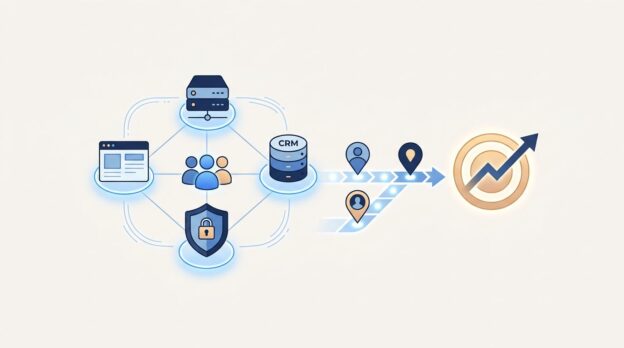
Cookie changes haven’t ended your ability to bring interested prospects back to your business. They have made weak tracking setups easier to expose. Meta retargeting now depends less on browser-held data and more on the customer information, consent, and conversion signals you collect properly.
If you generate leads, the priority is simple: reconnect with people who showed real interest, then judge results by qualified enquiries rather than cheap form fills. That starts with a clear view of what has changed.
Key Takeaways
- Third-party cookies are no longer a dependable foundation for Meta campaigns, especially across Safari and Firefox.
- You can still build strong audiences with the Meta Pixel, Conversions API, CRM lists, video views, and lead-form engagement.
- Server-side tracking helps you retain key conversion signals when browser data is limited or blocked.
- Retarget prospects by their level of intent, then exclude converted leads and existing customers where appropriate.
- Measure lead quality through your CRM, because a low cost per lead means little if enquiries never reach your sales pipeline.
What Cookie Deprecation Means for Meta Retargeting
For years, retargeting relied heavily on browser cookies to recognise someone who visited a site, viewed a service, or abandoned a form. That model now has gaps. Safari and Firefox restrict third-party cookies, while Chrome’s position has moved away from a universal removal deadline towards user choice and consent controls.
Google’s original guidance on preparing for third-party cookie changes still explains why advertisers must reduce dependency on a single browser-based identifier. Although Chrome retained cookies rather than fully removing them, the end of the Privacy Sandbox initiative does not make old retargeting methods dependable again.
Meta retargeting is different from generic third-party cookie retargeting. Meta can use first-party signals that you send through its tracking tools and data that people provide directly to you. However, signal loss still affects attribution, audience sizes, and the confidence you can have in reported conversions.
A person may visit your site in a privacy-focused browser, decline non-essential tracking, and later enquire through another device. If your reporting only counts a browser pixel event, that journey can disappear. Your campaigns may still influence the lead, but the platform has less evidence to optimise towards similar prospects.
Your audience may look smaller after a tracking cleanup, yet the remaining signals can be more useful if they represent real enquiries and sales conversations.
Treat the change as a measurement issue first. You need dependable inputs before you make decisions about budgets, creative, or audiences.
Build a Stronger Meta Retargeting Signal Base
The Meta Pixel remains useful because it captures browser-side actions such as page views, content views, lead submissions, and purchases. Put it on every relevant page, then test the events that matter to your sales process. For a lead-generation business, that often means a booked consultation, completed quote form, phone call, or a high-intent downloadable resource.
Browser tracking alone is not enough. Set up Meta’s Conversions API, commonly called CAPI, to send events from your server, CRM, e-commerce platform, or tag-management setup. It gives Meta another route to receive conversion data where browser tracking is unavailable or incomplete.
Use both together, then check that they deduplicate correctly. If the pixel and CAPI each report the same form completion as two leads, your cost per lead will look better than reality. Meta’s Events Manager diagnostics can highlight event-matching and duplication problems.

First-party data matters more than ever. Collect it with a clear reason and a clear consent process. A useful quote request form, webinar registration, account sign-up, or newsletter can capture email addresses and phone numbers that a visitor has chosen to share.
You can then upload properly permissioned customer data as a Custom Audience. Meta hashes the information before matching it to user accounts. Your list can include customers, sales-qualified leads, existing opportunities, or past enquiries that did not proceed.
Keep your lists clean. Remove duplicates, format phone numbers consistently, and separate people by commercial status. A list of decision-makers who asked for a proposal is far more useful than every contact your business has ever collected.
This is also where landing-page quality becomes part of your advertising strategy. If a page loads slowly, hides the form on mobile, or asks for too much information, you lose both leads and the consented data needed for later follow-up. Your forms should ask for enough information to qualify the lead without turning a simple enquiry into paperwork.
Retarget Audiences by Intent, Not by One Website Visit
A website visit has never carried a single meaning. Someone who spent two minutes reading a pricing page is different from someone who landed on a blog post and left after five seconds. Your Meta audiences should reflect that difference.
Start by separating audiences according to meaningful actions and recent activity:
- People who visited high-intent pages, such as service, pricing, case-study, or contact pages.
- People who opened but did not submit a lead form, started a booking process, or clicked a call button.
- People who watched a substantial part of your video, engaged with your Facebook or Instagram profile, or messaged your business.
- Existing leads and customers from your CRM, split by lead stage and recency.
For many lead campaigns, engagement audiences are particularly resilient. A person who watched your explanation video or saved a post has interacted within Meta’s own environment. That does not rely on an external browser cookie in the same way as a website-only audience.
Set shorter windows for immediate intent. A person who opened your contact page during the past seven days may need a direct ad with a case study, proof point, or booking prompt. Someone who watched a video 60 days ago may need an educational message before they are ready to talk.
Creative needs to match the audience. Do not show a cold explainer to a prospect who already downloaded your guide. Equally, don’t push a “Book now” message to someone who only gave a casual like to a social post. Repetition without relevance can waste budget and irritate potential customers.
Frequency control also protects your spend. Review frequency alongside lead quality, comments, and conversion rate. If the same small audience sees an ad repeatedly without progressing, refresh the creative, shorten the audience window, or reduce the budget.
For a wider view of where social retargeting sits alongside search activity, see this guide to retargeting with Facebook and Google ads. Search often catches demand when prospects are ready to act, while Meta can keep your business familiar during a longer consideration period.
Exclusions Keep Your Budget Focused on New Opportunities
Exclusions are among the most underused controls in Meta retargeting. They stop you paying to chase people who have already completed the action you wanted.
Exclude recent form completions, booked meetings, purchasers, and current customers from acquisition campaigns. If you sell a repeat service, create a separate retention or upsell audience with an offer that makes sense for existing clients.
You should also exclude employees, agencies, suppliers, and test contacts where possible. Otherwise, internal visits and test submissions can distort your audience data. Check whether old CRM contacts belong in your campaigns too. A contact who has repeatedly declined your service may not need another 90 days of ads.
Audience exclusions also help you assess incrementality. If your campaign keeps serving ads to branded searchers and existing customers, reported performance may look impressive without generating fresh demand. The same issue appears in paid search, where a PPC agency should separate branded activity from new-customer acquisition before judging performance.
Measure the Leads That Reach Your Pipeline
Meta can optimise towards leads, but it cannot tell a useful prospect from a poor one unless you return that information. Connect your form submissions and ad data to your CRM. Then mark leads as contacted, qualified, sales-qualified, won, or lost.
A £25 lead that never answers the phone is not automatically better than a £75 lead that becomes a £5,000 client. Review cost per qualified lead, meeting rate, opportunity rate, and revenue alongside Meta’s own results. Give longer sales cycles time before calling a campaign successful or unsuccessful.
When you run paid activity across channels, compare it fairly. A Google Ads agency can assess high-intent search traffic and offline conversion feedback. An SEO agency can improve the pages that turn organic visitors into identifiable prospects. For B2B campaigns aimed at job roles and company types, a LinkedIn advertising agency may suit the buying journey better than broad social reach.
If Meta remains the right channel, a specialist Facebook Ads agency can audit the pixel, CAPI events, audience exclusions, creative, and CRM feedback loop together. Those parts need to agree before you increase spend.
The Practical Future of Meta Retargeting
Meta retargeting still works when you build it around consented first-party data, robust conversion signals, and audiences with clear intent. Browser cookies can add data, but they should no longer carry the whole strategy.
Prioritise accurate Pixel and CAPI events, maintain clean customer lists, and send qualified outcomes back to Meta. You will then spend less time chasing flattering dashboard numbers and more time building a lead pipeline your sales team can use.