
Your paid media budget in Google Ads can produce plenty of clicks and still leave your sales team short of worthwhile enquiries. The Demand Gen vs Performance Max choice matters because each campaign type reaches people at a different point in the marketing funnel.
Demand Gen helps you build early brand awareness and create interest before someone searches, often relying on rich creative assets to engage prospective buyers. Performance Max finds conversions and drives lead generation across Google’s wider inventory. The stronger option depends on your offer, tracking, and the quality of lead you need.
Key Takeaways
- Demand Gen campaigns work best when you need to reach and persuade prospective customers before they search for a solution.
- Performance Max campaigns suit businesses with reliable conversion tracking and enough data for Google Ads automation to pursue leads at scale.
- Demand Gen campaigns give you more audience targeting and creative control, while Performance Max gives Google Ads more freedom over placement and delivery.
- Your landing page, lead qualification process, and conversion data matter more than a high click-through rate alone.
- Many businesses benefit from running both campaigns with separate roles, rather than treating them as direct replacements.
Demand Gen vs Performance Max: The Practical Difference
Google designed both campaign types around automation, but they do different jobs within Google Ads. If you are comparing Demand Gen vs Performance Max, start with intent rather than platform features.
Demand Gen campaigns place visual adverts in environments where people browse content, targeting upper funnel audiences. Your ads can appear on YouTube, Discover and Gmail across various visual ad placements. They are useful when potential customers do not yet know your company, or have not started actively comparing suppliers.
Performance Max campaigns, often shortened to PMax, can run across Search, Shopping, YouTube, Display, Discover, Gmail and Maps. They rely on machine learning and audience signals, combining your supplied text, images, video, product feed and audience signals to drive lead generation by finding people likely to complete the conversion you have chosen with lower funnel intent.
Google’s own Demand Gen campaign guidance describes the contrast clearly: Demand Gen focuses on finding demand through visual, consideration-led formats, while Performance Max looks for converting customers across Google Ads channels.
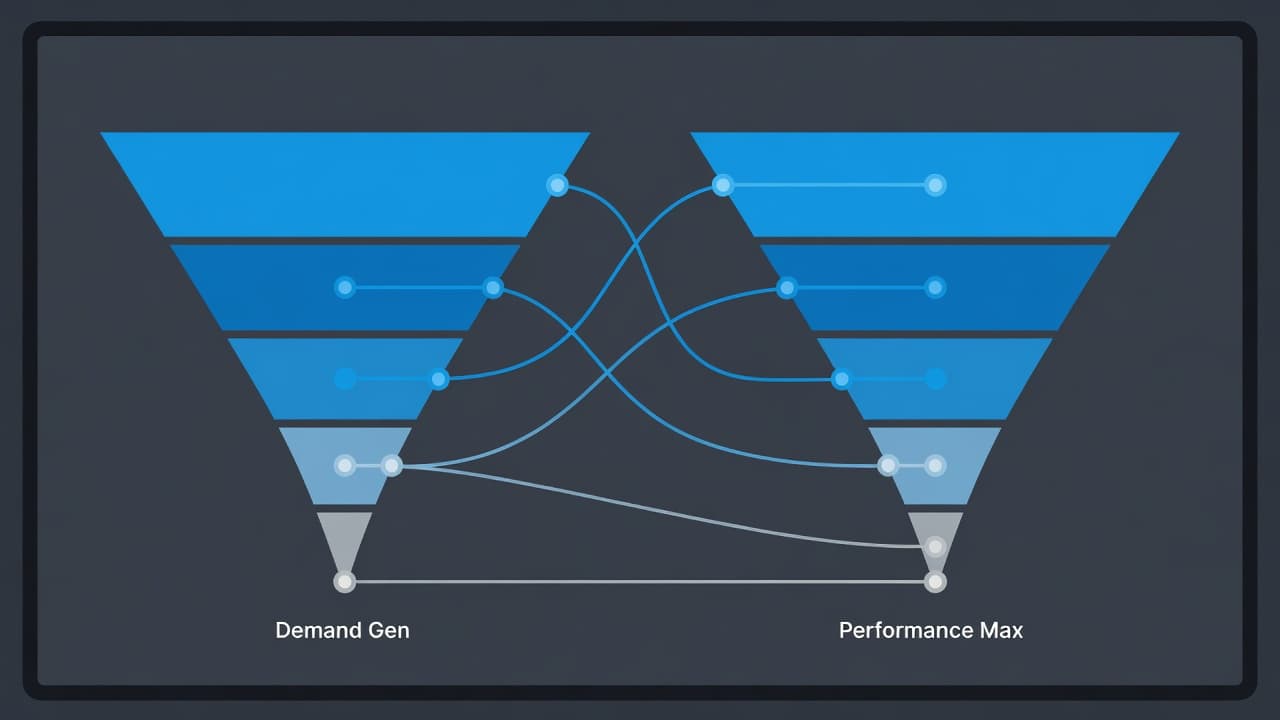
The distinction is important for lead generation. Someone watching a YouTube video might respond to a strong case study or demonstration, but they are not necessarily ready to request a quote. Someone searching “commercial boiler repair London” has a far clearer immediate need.
A campaign can report a low cost per lead while still wasting budget if those leads never become qualified opportunities. Track the outcome after the form submission.
Match the Campaign to Your Customer Journey
Your decision should follow the length and shape of your sales process. A low-cost ecommerce product and a high-value B2B service need very different campaign structures.
Choose Demand Gen when you need to create interest
Demand Gen campaigns are useful if your prospect needs to understand a problem before they seek a provider. They give you room to use video campaigns, lifestyle imagery, carousels and creative assets that explain a service or introduce an offer, making them ideal for upper funnel brand awareness.
You also have more control over whom you want to reach. First-party customer lists, custom segments and lookalike audiences can help you approach a target audience that resembles your best customers. That control is valuable when your target is narrow, such as finance directors, facilities managers or homeowners in selected postcodes.
For example, a business selling a specialist HR platform may find little search demand for its exact solution. Demand Gen campaigns can introduce the platform to HR decision-makers, then bring engaged visitors back through remarketing or search activity later.
A LinkedIn advertising agency can complement this approach for B2B teams, particularly when job title, company size and sector are more useful than broad consumer signals in Google Ads.
Choose Performance Max when conversions are proven
Performance Max campaigns suit you when you already know what a good conversion looks like. You need accurate conversion tracking for completed purchases, qualified enquiry forms, booked appointments or offline sales. Without clean signals, automated bidding will optimise towards the easiest action, rather than necessarily the most profitable one.
PMax is often a sensible choice for ecommerce brands with a healthy Google Merchant Center product feed. It can also work for lead generation when you import qualified leads or closed deals from your CRM, allowing audience signals and automated bidding to learn from customers who become revenue rather than every person who submits a form, which ultimately helps lift your conversion rate.
However, PMax offers less day-to-day control. You cannot manage Performance Max campaigns like traditional search campaigns with full keyword and placement visibility, nor can you rely on the same level of brand awareness control found in standard Google Ads setups. Seer’s comparison of PMax and Demand Gen makes the practical trade-off clear, showing how PMax prioritises scale and automation while Demand Gen provides more control.
Compare Control, Reach and Lead Quality
This quick comparison helps you place the two campaign types in your media plan.
| Factor | Demand Gen | Performance Max |
|---|---|---|
| Main job | Build awareness and consideration | Drive conversions across Google |
| Best audience stage | Upper funnel and middle funnel | Lower funnel, with a conversion focus |
| Main placements | YouTube, Discover and Gmail | Search, Shopping, YouTube, Display, Discover, Gmail and Maps via flexible ad placements |
| Audience control | More direct control through audience targeting segments and lists | Audience signals guide Google’s automation |
| Creative needs | Strong image and video-led creative assets | Full asset set, plus product data where relevant |
| Reporting visibility | More granular campaign insight | More aggregated reporting |
| Best fit | New offers, longer sales cycles, visual storytelling | Proven offers, ecommerce brands, mature lead funnels |
The Demand Gen vs Performance Max decision does not need to be permanent. Your campaigns should change as your data improves. A newer brand may begin with Demand Gen campaigns for brand awareness to build a warm audience, then add Performance Max campaigns in Google Ads once it has reliable conversion data and a steady flow of leads.
By moving users down the marketing funnel, advertisers can optimise campaign performance and protect their return on ad spend. A detailed Demand Gen and Performance Max comparison also highlights the same divide: Demand Gen gives you more control over audience-led activity, while PMax provides wider automated coverage.
Build a Measurement System Before Scale
Neither campaign can fix a weak landing page or vague offer. Before you increase spend, check the full route from advert to sales conversation.
First, decide which conversion deserves optimisation to protect your overall conversion rate within Google Ads. A newsletter sign-up and a consultation request should not carry equal weight. If your sales team rejects most enquiries, import qualified-lead stages from your CRM and use robust conversion tracking to feed stronger signals back into your Google Ads account.
Next, review the landing page on a mobile phone to safeguard your conversion rate. Many Demand Gen clicks come from mobile browsing, where attention is limited. Your headline should match the advert, the form should feel proportionate to the offer, and the next action should be obvious. Long forms can filter low-intent enquiries, but they can also deter serious buyers when they ask for unnecessary detail.
Then, separate campaign roles within your broader advertising strategy. Use Demand Gen campaigns to introduce an offer or re-engage visitors. Use search campaigns or Performance Max campaigns to capture high-intent demand. Relying on automated bidding helps manage these budgets effectively, and this structure makes reporting more honest because you can see whether early-stage spend later supports qualified enquiries.
Ultimately, this data-driven approach enhances overall campaign performance. Paid activity should also inform organic search. Reviewing the lead quality differences between SEO and PPC helps you identify which topics and search terms attract buyers rather than browsers. An SEO agency can turn those commercial insights into landing pages and content that continue attracting relevant organic traffic.
How to Test Without Damaging Results
Do not launch both automated campaigns with identical audience targeting, identical creative assets, and one shared conversion target. You will learn little, and Google Ads systems may compete for the same users.
Give each campaign a defined purpose. For instance, you could use Demand Gen for video campaigns aimed at new prospects, then use PMax for verified lead submissions or online sales. Keep budgets separate and review lead quality in your CRM each week.
Allow enough time for machine learning to optimise, but don’t ignore poor signals. Watch for sudden rises in cost per qualified lead, falling appointment attendance, poor geographic fit, a declining conversion rate, or a surge in low-quality form submissions that harm your overall campaign performance and return on ad spend. If results drop, check tracking, landing-page changes, creative fatigue, and sales feedback before changing several settings at once.
A capable Google Ads agency will assess search terms, conversion tracking, asset quality, feed health, and landing pages together. Campaign reports inside Google Ads rarely reveal the entire story.
For broader paid acquisition, a PPC agency can help you set lead-quality rules that match your sales process. If your audience spends more time on social platforms, a Facebook Ads agency can also test prospecting creative and refine audience signals before you retarget engaged users through Google Ads, ultimately protecting your conversion rate.
Frequently Asked Questions
What is the main difference between Demand Gen and Performance Max?
Demand Gen focuses on building early brand awareness and consideration using visual formats on YouTube, Discover, and Gmail. Performance Max is designed to drive conversions by leveraging automation across Google’s entire inventory, including Search, Maps, and Shopping.
Can I run Demand Gen and Performance Max campaigns at the same time?
Yes, many businesses run both simultaneously by assigning them separate roles in the marketing funnel. Demand Gen works best for reaching upper-funnel prospects, while Performance Max captures lower-funnel demand from users ready to convert.
Which campaign type is better for lead generation?
Performance Max is generally more effective for lead generation when you have reliable conversion data and CRM tracking to feed the algorithm. However, Demand Gen is essential if your target audience needs nurturing and visual education before they consider enquiring.
Choose the Campaign That Supports the Next Sale
The best answer to Demand Gen vs Performance Max comes from your current constraint, depending on where your prospects sit in the marketing funnel. Use Demand Gen when people need to notice, understand and trust your offer before they buy. Use Performance Max when you have dependable conversion data and need wider automated reach.
Both can produce leads. Demand Gen campaigns in Google Ads excel at building brand awareness, whereas Performance Max campaigns convert high-intent prospects into measurable sales outcomes, provided you use a landing page that makes the next step easy.