
AI search schema markup helps search engines identify your business, its services and the relationships between them. For a B2B company, schema markup can make a service page easier to interpret, but it doesn’t guarantee an AI citation or a better ranking. The most useful approach is to make your offer clear to buyers first, then use structured data to describe the same facts.
If your website calls one service by three different names, adding more schema markup won’t fix the inconsistency. The visible page copy and structured data should describe the same offer.
How AI search schema markup clarifies your services
Schema markup is structured data added to a web page using the shared Schema.org vocabulary. It can identify a page as an article, a business as an organisation, or an offering as a service. This gives search engines more context than an isolated heading or keyword, which can support semantic search.
What Google says it uses
Google says structured data helps it understand page content and can make eligible page types appear with rich results. These rich results are limited to supported result types. Its structured data guidance recommends JSON-LD as an implementation format. If you’re new to the terminology, Flow20’s guide to what schema markup does for SEO covers the basics.
Google also says there are no special markup requirements for AI Overviews or AI Mode. A page needs to be indexed and eligible for a standard Search snippet. Accurate markup supports your wider AI search setup; it doesn’t secure a place in an AI answer.
What remains uncertain about AI platforms
AI search tools don’t all retrieve or cite information in the same way. Generative AI platforms, including those built on large language models, may draw on search indexes, retrieved page content or other sources, and may not consistently read JSON-LD. Search engines and AI platforms may treat this context differently: structured data can provide context for a knowledge graph, but doesn’t guarantee inclusion or dictate a particular retrieval method. That means markup alone can’t predict visibility in AI search.
The practical point is simple: keep important service facts in accessible page content. Schema can reinforce them, but it shouldn’t be the only place a buyer or crawler can find them.
Connect your business to the services it actually sells
An AI search answer about “SEO agencies in London” needs to distinguish the business, its service and its location. Make these connections clear on your website before adding schema markup.
Give the organisation a consistent identity
Use your approved business name and website address across the homepage, service pages and credible business profiles. On the homepage, Organization markup, or organization schema, can describe the business in structured data. LocalBusiness may fit when you have a genuine local business presence and accurate location details.
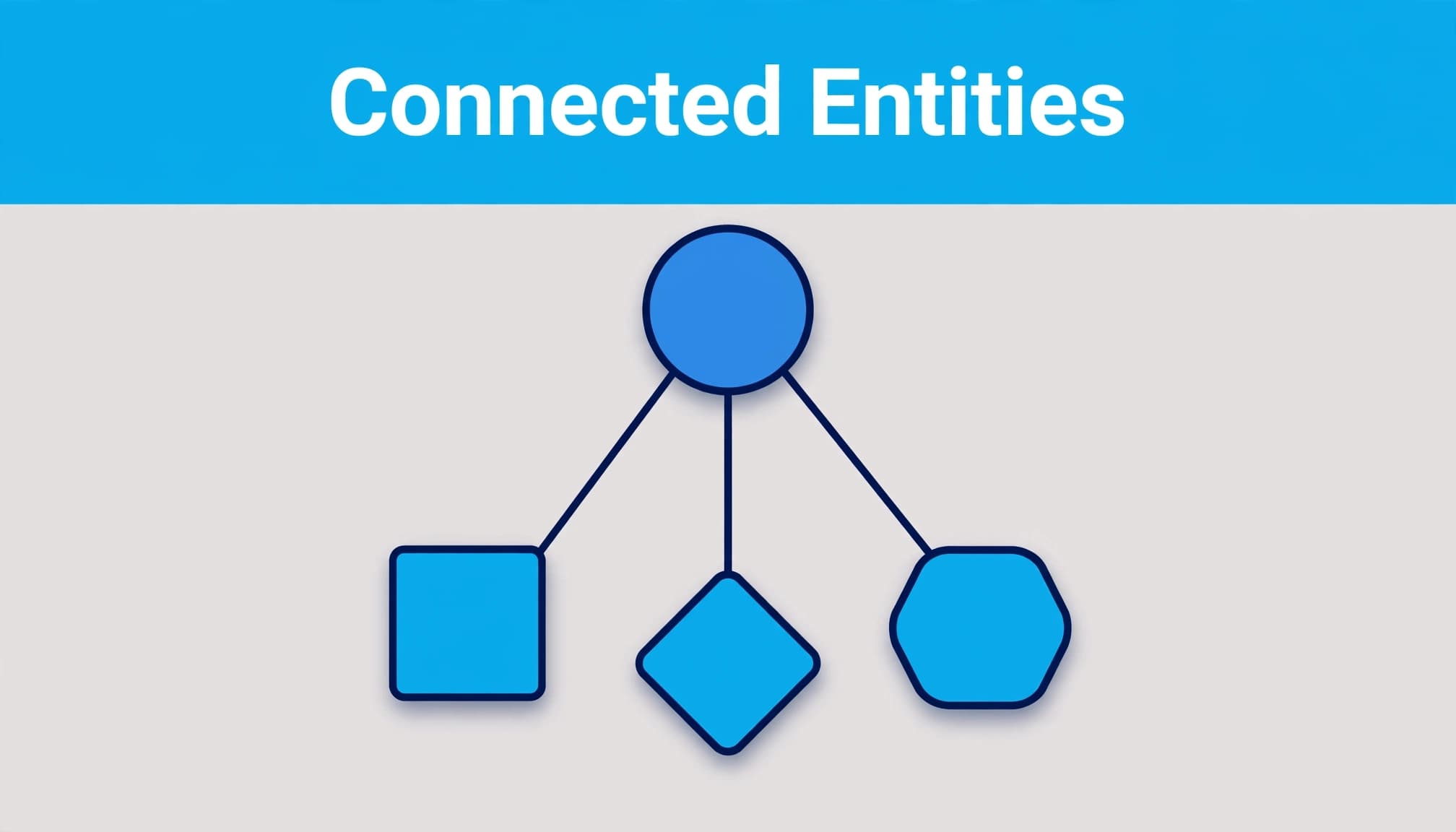
A stable @id lets related markup point back to the same organisation entity, supporting entity linking between organisation and service records. This may help systems represent those relationships in a knowledge graph, but it isn’t guaranteed. Flow20’s guide to building a clear AI search entity profile explains how to keep those connections consistent.
Make the service relationship explicit
Suppose you offer SEO to B2B companies. The service page should explain who it’s for, what the work includes and where you provide it. For AI search, describe how technical SEO and content strategy fit the service, giving buyers and generative AI systems useful context.
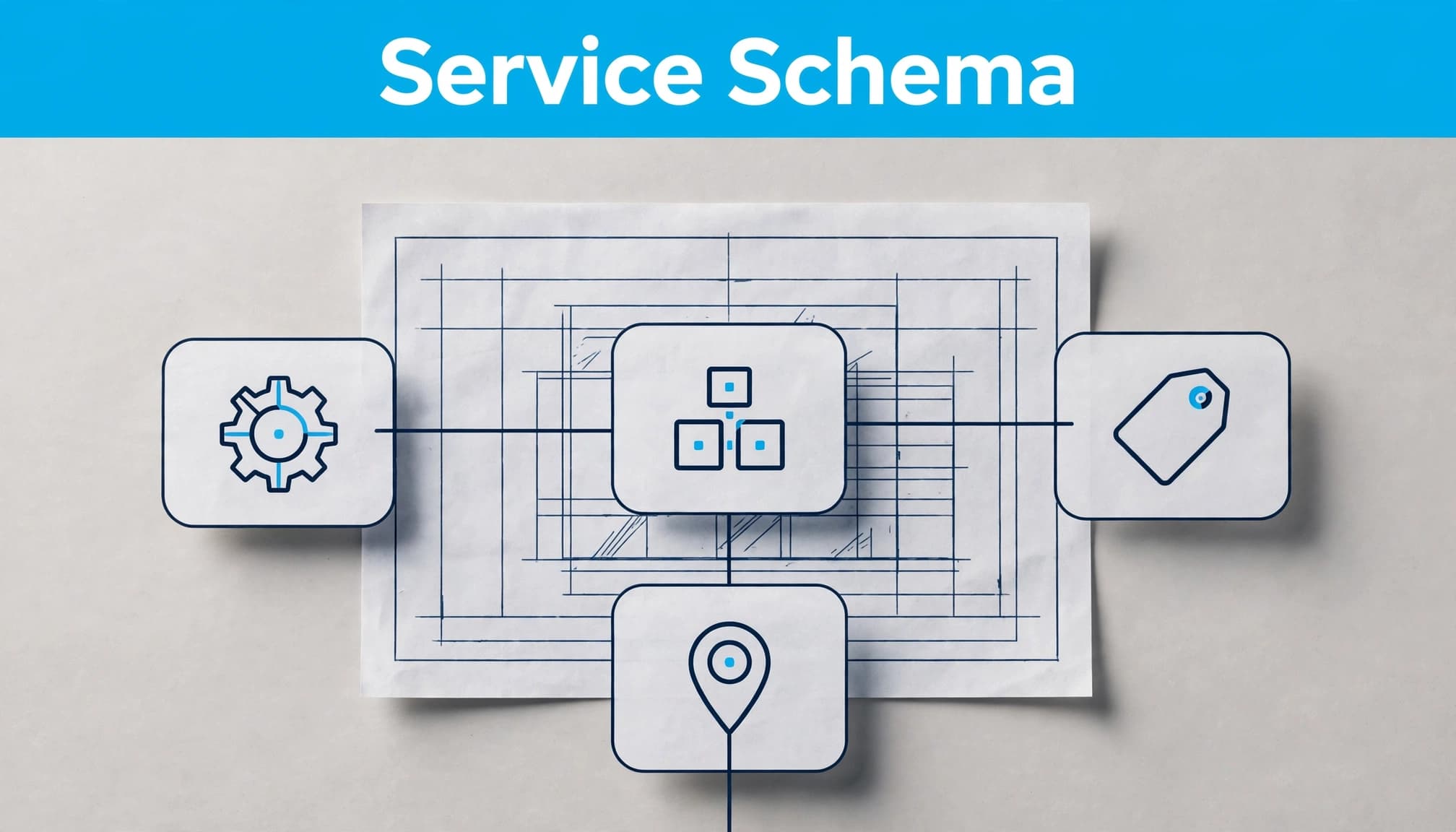
Service markup can identify the offering and connect its provider to your organisation, keeping the schema markup aligned with the page’s structured data. Keep the wording accurate. If the page describes this work, don’t mark it up as a broader service you don’t offer. Add links to relevant case studies and contact details so buyers can check the claims behind the description. Consistent facts help search engines interpret the offer, but don’t guarantee AI visibility, rankings or inclusion in organic search.
Choose schema types that fit B2B pages
More schema markup won’t make a vague page more convincing. Choose structured data types that match what you publish and what a buyer needs to verify in organic search.
| Schema type | Where it fits | What to check |
|---|---|---|
Organization | Your business identity | Name, website and profiles agree |
Service | A defined service page | Scope and provider match the page |
LocalBusiness | A genuine local business presence | Location and contact details are accurate |
Article | An editorial guide or insight | Author and dates reflect the published content |
FAQPage | Visible questions and answers | The answers match the page |
Product and Offer | A genuine product or stated offer | Product details and offer facts are visible and current |
For a PPC agency page, Service is usually the relevant starting point for schema markup. Product schema shouldn’t be added simply because the page has a sales goal. Product and Offer details must match facts buyers can see on the page. Catalogue-led B2B businesses may use this information to help shopping agents interpret their products, but markup doesn’t guarantee they’ll use it.
An article answering common procurement questions may warrant Article markup. A commercial page with a few helpful questions may use FAQPage schema when those questions and answers are visible. It describes the on-page content, but doesn’t promise rich results in search results. For help deciding what belongs on a service page, see Flow20’s B2B service page strategy for AI search.
Use JSON-LD without losing control of the facts
JSON-LD keeps schema markup separate from the visible page layout, making structured data practical to manage through a CMS or page template. Google supports other formats, including Microdata and RDFa, but recommends JSON-LD because it’s generally easier to implement and maintain.
Keep one reliable source for each detail
Start by agreeing on your business name, core service descriptions, contact details and service areas. Where your CMS allows it, use those approved facts for both the page copy and structured data. If your Google Ads offering changes, update the page and its markup together.
This matters at scale. A template can publish valid syntax across hundreds of pages while repeating an old telephone number or a retired service. Assign someone to review the underlying details when teams, locations or offers change. Technical SEO automation checks can flag inconsistencies, but a person still needs to decide which business fact is correct.
Check what a crawler can access
Markup can’t rescue a page that’s blocked, noindexed or missing its main explanation. Make sure the published URL loads, has a sensible canonical URL and puts service information in accessible page content. AI agents and generative AI systems may not use markup in the same way, so don’t hide key scope or qualifications in an image, an old PDF or a control visitors may never open.
The mobile page matters too. A buyer might arrive with one question: can you support their sector, location or platform? Put the answer and a contact route where they can find them without hunting.
Validate the markup, then check the live page
A generator can produce valid-looking JSON-LD quickly. Good technical SEO still requires checking whether it describes the page you’ve published.
Use the right test for the right question
Google’s Rich Results Test checks whether a page is eligible for the enhancements it supports. The Schema Markup Validator checks structured data vocabulary more broadly, including formats such as Microdata and types that don’t trigger Google’s supported enhancements. Flow20’s guide to testing and validating structured data walks through both checks. Valid FAQPage schema doesn’t prove a page deserves a rich result.
Test the published URL and its JSON-LD, not only a draft. Compare the parsed JSON-LD with the visible page. If it names a service area, author, review or price, can a visitor verify it? Fix missing or misleading facts, even when validation reports no syntax error.
Watch for drift after publication
Markup can fall out of step when someone edits a service page but forgets its template. Check representative pages after a redesign, CMS update or change in your offer. Search Console can help you spot reported issues, while search engines rely on accurate facts to represent your business in search results.
Also review information beyond your site. If an AI answer names a retired service, an outdated directory or business profile may be part of the problem. An audit of brand accuracy in AI search is a useful way to separate a markup error from a conflicting outside source.
Measure whether clearer pages help real buyers
Measure technical SEO through organic search and pages that matter commercially. Start with a small set of high-intent services and queries. Record what buyers ask, whether your page answers them, and whether results describe your offer accurately in AI search.
For example, a question about LinkedIn lead generation may show that your page explains campaign management but says little about targeting or lead qualification. Improve the service-page information first, then use schema markup and structured data to represent the same offer accurately. Flow20’s advice on earning citations from ChatGPT offers useful context for generative AI. Buyers may also encounter business information through shopping agents, but don’t treat a citation as proof of a lead.
Paid campaigns can help you test the language buyers respond to while organic pages develop. Your Facebook Ads enquiries, for instance, might expose questions your service page doesn’t answer. Compare search visibility with qualified enquiries and pipeline, not screenshots of AI answers alone.
Key takeaways
- Make your business, service scope and supporting evidence clear on the page before adding schema markup for AI search.
- Use accurate structured data to reinforce those facts, but it can’t guarantee AI citations, rankings or placement in AI Overviews.
- Validate published pages, then measure buyer outcomes. An AI mention on its own tells you very little.
Keep the markup as clear as the offer
A buyer shouldn’t need to decode your website to understand what you do. AI search systems face the same problem when business names, service descriptions and locations conflict. Clear pages and accurate schema markup belong together, even though neither can guarantee an AI citation.
Start with one important service page. Check its claims, connect it to the right business details, add suitable structured data and test the live result.
Frequently asked questions
Can ChatGPT and other AI tools read JSON-LD directly?
Some systems may encounter JSON-LD during retrieval, but you can’t assume every platform reads it directly or uses it to choose citations. AI search platforms differ, and their methods aren’t fully public. Keep essential facts in crawlable page content and use schema markup to reinforce them.
Does schema markup guarantee an AI Overview citation?
No. Google doesn’t require special schema for AI Overviews or AI Mode, and FAQPage schema should match visible FAQs without guaranteeing a rich result. Your page still needs normal Search eligibility, useful content and accurate information; structured data can help Google understand it, but citations and placement aren’t guaranteed.
Where should you start with a B2B website?
Choose a service page that attracts relevant enquiries. Check that its scope, audience and proof are clear, then connect accurate Service markup to your organisation. If you’d like help fitting that work into a wider Digital marketing plan, speak to Flow20 about the pages and enquiries that matter most.