

AI search referrals become qualified B2B leads when your website confirms the buyer’s shortlist, answers their remaining questions and offers a clear next step. To measure that process, connect identifiable AI visits with enquiries, sales acceptance and CRM revenue, whilst keeping AI-influenced demand separate from traffic you can attribute.
Your prospect may have compared suppliers before reaching your website. That can make the visit valuable, but it doesn’t automatically make the enquiry suitable. Start by separating what AI search makes visible from what your sales team accepts.
Key takeaways
- Track identifiable AI referrals separately from direct traffic and self-reported AI discovery.
- Give visitors the commercial details they need to assess suitability, including scope, implementation, pricing conditions and proof.
- Judge performance through sales-accepted leads, opportunities and revenue, rather than citations or form submissions alone.
Why AI search referrals can produce better enquiries
Your visitor may have completed the initial research
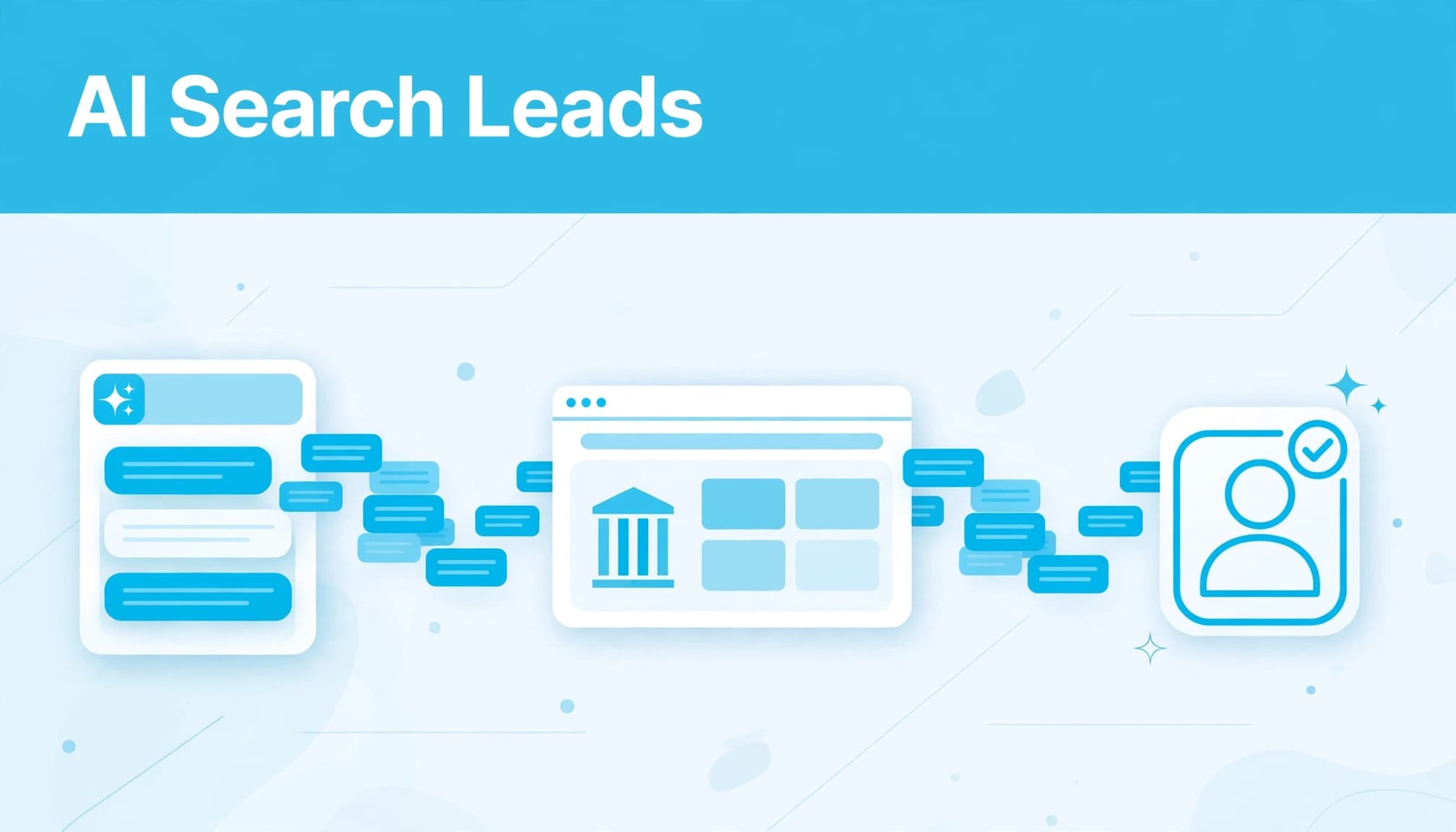
A buyer using ChatGPT or Perplexity can ask detailed questions about suppliers, suitability and implementation before clicking anything. When they arrive, they may be checking whether your business can deliver what the answer described.
If you’re comparing Salesforce implementation partners, for example, a general explanation of CRM software won’t help much. You need evidence about migration, responsibilities and ongoing support. Your landing page should continue that research.
The distinctions in our B2B AI search glossary matter here: retrieval, citation, referral and enquiry describe different stages.
Most exposure still produces no measurable visit
Pew Research Center found that users clicked a link inside an AI summary in just 1% of visits featuring a summary. That study concerned Google search behaviour, not UK B2B conversion rates.
Separately, Seer Interactive’s figures, summarised in Ahrefs’ SEO statistics, showed organic search click-through rate falling from 1.76% to 0.61% on queries with AI Overviews between June 2024 and September 2025. These figures aren’t a UK B2B conversion benchmark.
You therefore need to improve the value of the clicks you receive without assuming visibility will replace lost traffic.
What the referral data tells you
Growth, citation selection and conversion measure different things. These findings provide context for UK B2B lead generation, not a forecast for your pipeline.
| Finding | Reported result | How to interpret it |
|---|---|---|
| AI referrals across 391 SMB websites | Digital Information World reported 123% growth between September 2024 and February 2025. | Rapid growth can start from a small base. |
| AI referrals relative to organic traffic | The same analysis reported an increase from 0.54% to 1.24%. | This compares AI referrals with organic traffic, not all website visits. |
| ChatGPT citation selection | AirOps recorded 82,108 citations among 548,534 retrieved pages, or about 15%. | Retrieval doesn’t guarantee a visible citation. |
| AI-referred retail conversions | Secondary reporting of Adobe data put March 2026 conversion rates 42% above non-AI traffic, compared with 38% below in March 2025. | Retail purchases aren’t a benchmark for B2B lead qualification. |
The AirOps retrieval and citation analysis, reported in March 2026, covered 15,000 prompts. Its citation rate describes that sample, not every ChatGPT answer.
Use these figures to frame your expectations. Your own sales-acceptance rate is more useful than a conversion uplift from another sector. Even within the SMB analysis, reported growth figures differ, so don’t treat every percentage as interchangeable.
Set up GA4 around observable AI traffic
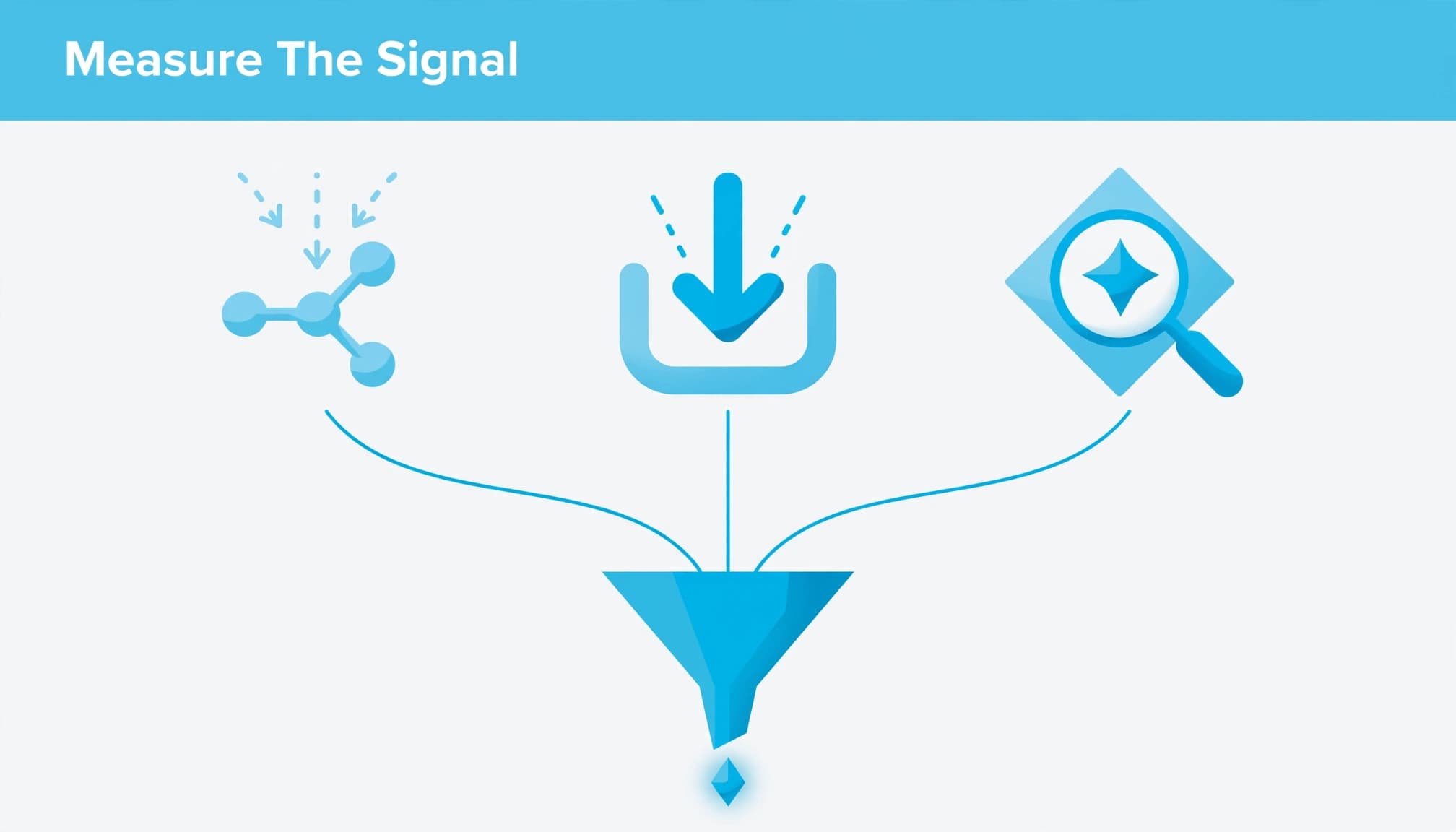
GA4’s reported AI Assistant channel is a starting point for measuring AI referral traffic, but source-level reporting is needed to distinguish assistant referrals from other referral traffic. Published accounts disagree about platform coverage.
- Open Traffic acquisition and inspect session source / medium alongside the channel group. Identify recognisable assistant sources rather than assuming every referral came from AI.
- Under Admin, Data display, Channel groups, create a custom group if you need consistent reporting. Add source rules for ChatGPT (chatgpt.com), Perplexity (perplexity.ai), Gemini (gemini.google.com) and Claude (claude.ai). Position the rule above broader referral rules.
- Record a successful enquiry as a lead event. A submission confirmation is stronger evidence than a button click. Track booked meetings separately.
- Save a report showing landing page, source, sessions, enquiries and meeting bookings. Compare equivalent periods and retain country segmentation where volumes support it.
Our guide to Google Analytics metrics provides the broader measurement foundations.
Keep paid AI traffic outside your unpaid referral group. Also, don’t reclassify unexplained direct traffic as AI traffic. Missing referral information doesn’t identify the original source.
Use Google’s generative AI performance reports in Search Console to examine Search visibility separately. An impression there isn’t a GA4 session, an enquiry or evidence that a prospect read your page.
Connect website enquiries with sales qualification
Agree what makes an enquiry qualified
Define qualification with sales before comparing channels. You need an agreed view of company fit, relevant requirements, buying role and commercial suitability.
A work email alone isn’t enough. An enquiry can come from the right organisation but concern a service you don’t provide. Record rejection reasons to assess conversion quality and distinguish poor targeting from unclear service information.
Keep your first form proportionate. Name, work email, company and a short requirement may provide enough information to begin qualification without demanding a procurement brief.
Our approach to AI search reporting keeps those commercial outcomes separate from visibility measures.
Preserve observed and self-reported sources
Store first-touch source, enquiry-session source and landing page against the CRM record where your consent and tracking arrangements allow it.
Add an optional question: “How did you first research or hear about us?” Include AI assistants as an option and allow free text. Ask sales to retain useful details, such as the platform or question the prospect remembers.
Treat that response as self-reported attribution and keep it alongside observed analytics data. If someone names ChatGPT but arrives through branded search, both records are useful. Neither needs to overwrite the other.
Review these disclosures alongside AI brand mentions, while keeping observed answers separate from individual buyer journeys.
Give shortlisted buyers a reason to choose you
Close evidence gaps before publishing more content
Start with the questions that delay a buying decision. Your page should explain who you help, what delivery involves, what the buyer supplies and where your service has limits.
For a Salesforce migration enquiry, that could mean explaining data preparation, integration responsibilities and post-launch support. These details help a buyer assess fit before contacting you.
Use AI content gap analysis to compare coverage, evidence, format and intent. A missing case study or unclear implementation process may matter more than another introductory article.
Keep this within your SEO work. Rankings and AI citations are different signals, but accessible pages and useful evidence support both.
Make the verification click worthwhile
Put the answer near the top, then support it with relevant proof. Include current service facts, practical examples and clear conditions around any result you publish.
Keep important information in readable page content. Don’t hide your only explanation of pricing or delivery inside an image or downloadable document.
Your ChatGPT search optimisation work should make the business easier to understand accurately. It shouldn’t produce copy written for an imagined model preference.
Offer the next step that matches the visit. A buyer reviewing implementation risk may need a scoping conversation rather than a generic newsletter invitation.
Calculate an observable revenue figure without double-counting
Use your CRM to build two clearly labelled groups: deals with an identified AI referral and deals where the buyer self-reported AI discovery.
For each reporting period, count distinct closed-won deal IDs across both groups and add their recorded values in pounds. A deal appearing in both groups counts once. Describe the result as revenue associated with observed or self-reported AI discovery, rather than revenue caused by AI.
Report identified-referral revenue separately as well. That gives you a narrower measure without discarding useful buyer testimony.
For conversion analysis, calculate the conversion rate from identified AI-referred traffic sessions to sales-accepted leads. Use the same defined period for both, and allow for your sales-cycle delay.
Don’t assign a share of all direct or branded-search revenue to AI using a multiplier. The Digital Bloom reported a 0.334 correlation between brand search volume and AI citations, but that doesn’t reveal which activity caused the other.
Your dashboard should retain sessions, enquiries, sales acceptance, opportunities and revenue as separate measures. You can then see whether a content change improved suitability, rather than merely increasing submissions.
Keep AI referrals within your wider acquisition plan
Platform behaviour can change the traffic mix quickly. Similarweb’s AI search statistics put ChatGPT’s share of generative-AI website visits at approximately 76% in June 2025 and 53% by May 2026. That measures visits to AI platforms, not their referral share to your website.
Your own AI search traffic and channel results deserve more weight than platform popularity figures. Use the methods in our guide to analysing ChatGPT search performance to connect visibility observations with landing-page performance.
Paid activity can also expose gaps. Use PPC to test high-intent wording, then apply the strongest qualified-enquiry insights to your service pages.
Feed sales outcomes into Google Ads, rather than rewarding every form equally. Where consent permits, Facebook Ads can support retargeting during longer buying cycles, but keep its results separate from unpaid AI discovery.
Review seasonality, pricing and other campaigns before crediting AI visibility with a pipeline increase.
Frequently Asked Questions
What counts as an AI search referral?
An AI search referral is a website visit with an identifiable source such as ChatGPT, Perplexity, Gemini or Claude. Keep self-reported AI discovery separate from observed referral data, and don’t classify unexplained direct traffic as AI traffic.
How can I tell whether AI referrals produce qualified leads?
Connect identifiable AI visits with enquiries and follow them through sales acceptance, opportunities and revenue in your CRM. Agree qualification criteria with sales, including company fit, relevant requirements, buying role and commercial suitability.
Should I count AI citations as website visits?
No. A citation or Search Console impression doesn’t show that someone visited your website or read a page, so report it separately from GA4 sessions and enquiries.
How should I report revenue associated with AI search?
Count distinct closed-won deal IDs with an identified AI referral or self-reported AI discovery, and count each deal once if it appears in both groups. Label the figure as revenue associated with AI discovery, not revenue caused by AI, and report identified-referral revenue separately.
Turn AI discovery into sales-ready conversations
Your strongest opportunity is to help an already-interested buyer establish whether you’re the right supplier. Clear scope, relevant proof and proportionate enquiry forms make that decision easier.
Measure identifiable referrals honestly, preserve buyer-reported discovery and follow enquiries through to sales acceptance. That’s how you distinguish attention from commercial value.
If you want to connect AI visibility with qualified enquiries, talk to us about your Digital marketing strategy and the pages, tracking and sales handovers that need attention first.