
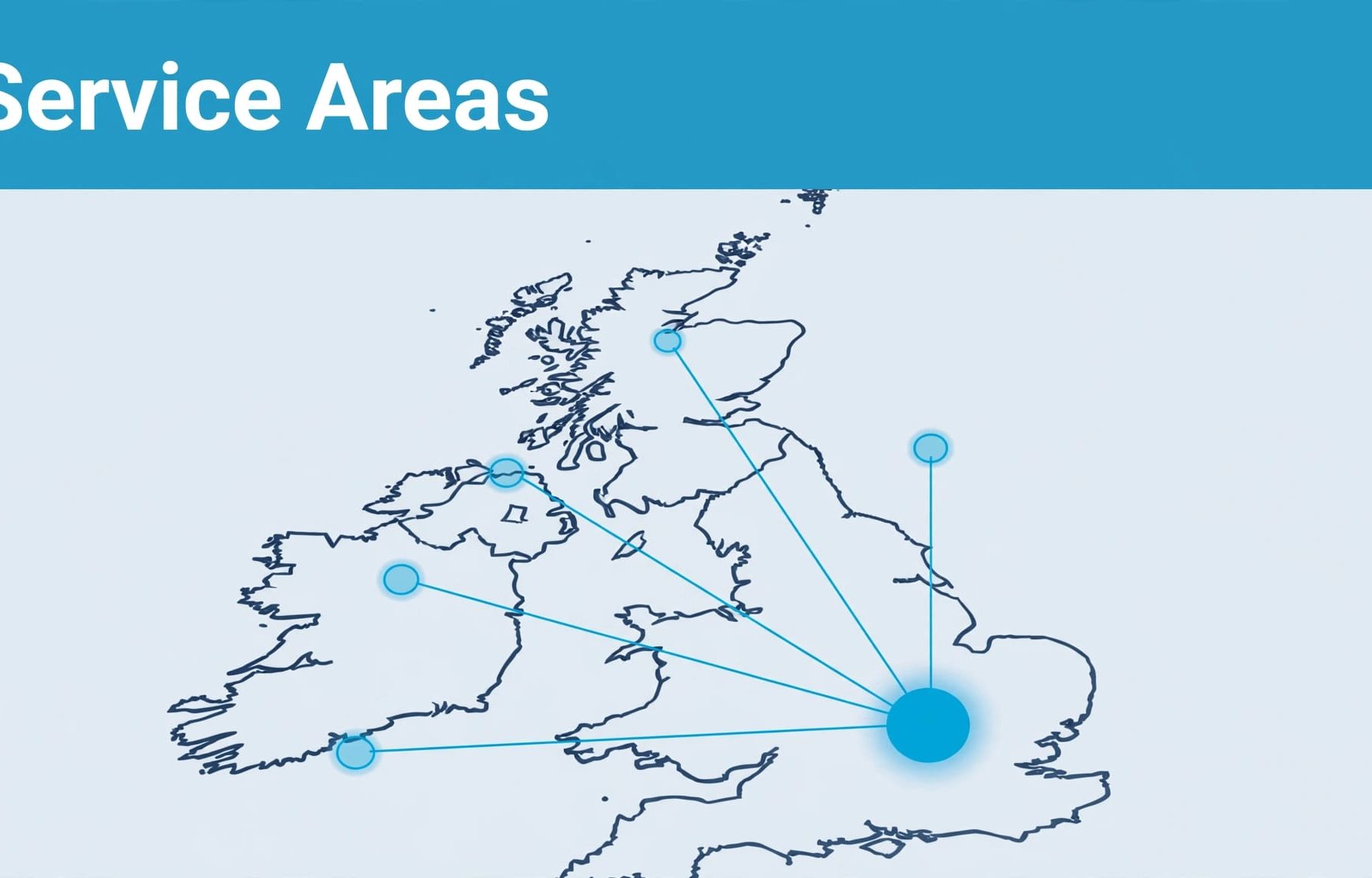
LLMs interpret B2B service areas through the relationships between your business, services, locations and delivery arrangements. You make those relationships clearer by publishing explicit coverage information, separating your office address from where you serve clients, and keeping those facts consistent across your website and business profiles.
A London address doesn’t explain whether you offer remote consultancy throughout the UK or on-site support within Greater London. Start by defining those differences before adding more location keywords.
How LLMs interpret B2B service areas
Your location needs a clear relationship
An AI answer may draw on retrieved web pages, information learned during training, or other sources available to that platform. There isn’t one public rulebook explaining how every system interprets geographic coverage.
What you can control is the information available. Connect your business name to the service, delivery method and location within the same explanation.
For example, our London base and worldwide project experience describe different things. One concerns where we’re based; the other concerns where we’ve delivered work. Neither statement, by itself, defines the delivery arrangements for every service.
Retrieval doesn’t guarantee correct interpretation
A system might find your contact page without finding the page explaining remote delivery. It might also retrieve an outdated directory listing.
This is why LLM source retrieval matters alongside the wording on individual pages. Your important coverage facts need accessible source pages and consistent supporting references.
The distinction between presence and coverage also exists in established vocabularies. Schema.org defines LocalBusiness as a physical business, rather than every place where an organisation wants customers.
A location mentioned on your website needs context: an office, a client location and a service area describe different relationships.
Map geography, sector and delivery method
B2B means selling goods or services to other businesses rather than consumers. Digital transactions can reduce administrative overheads, but B2B buyers still need to know whether you can serve their organisation.
Start with a coverage record that your marketing and delivery teams can both use.
| Coverage dimension | What you should record | Why it matters |
|---|---|---|
| Business location | Your genuine office or operating base | Separates physical presence from reach |
| Service geography | Supported countries, regions or postcode areas | Defines where the offer is available |
| Delivery method | Remote, on-site or hybrid | Explains how customers receive the service |
| Buyer and sector | Organisation types and industries served | Clarifies commercial fit |
| Restrictions | Travel, language, contractual or delivery limits | Prevents unsuitable enquiries |
Your geography should reflect delivery capacity, not the size of the market you’d like to reach.
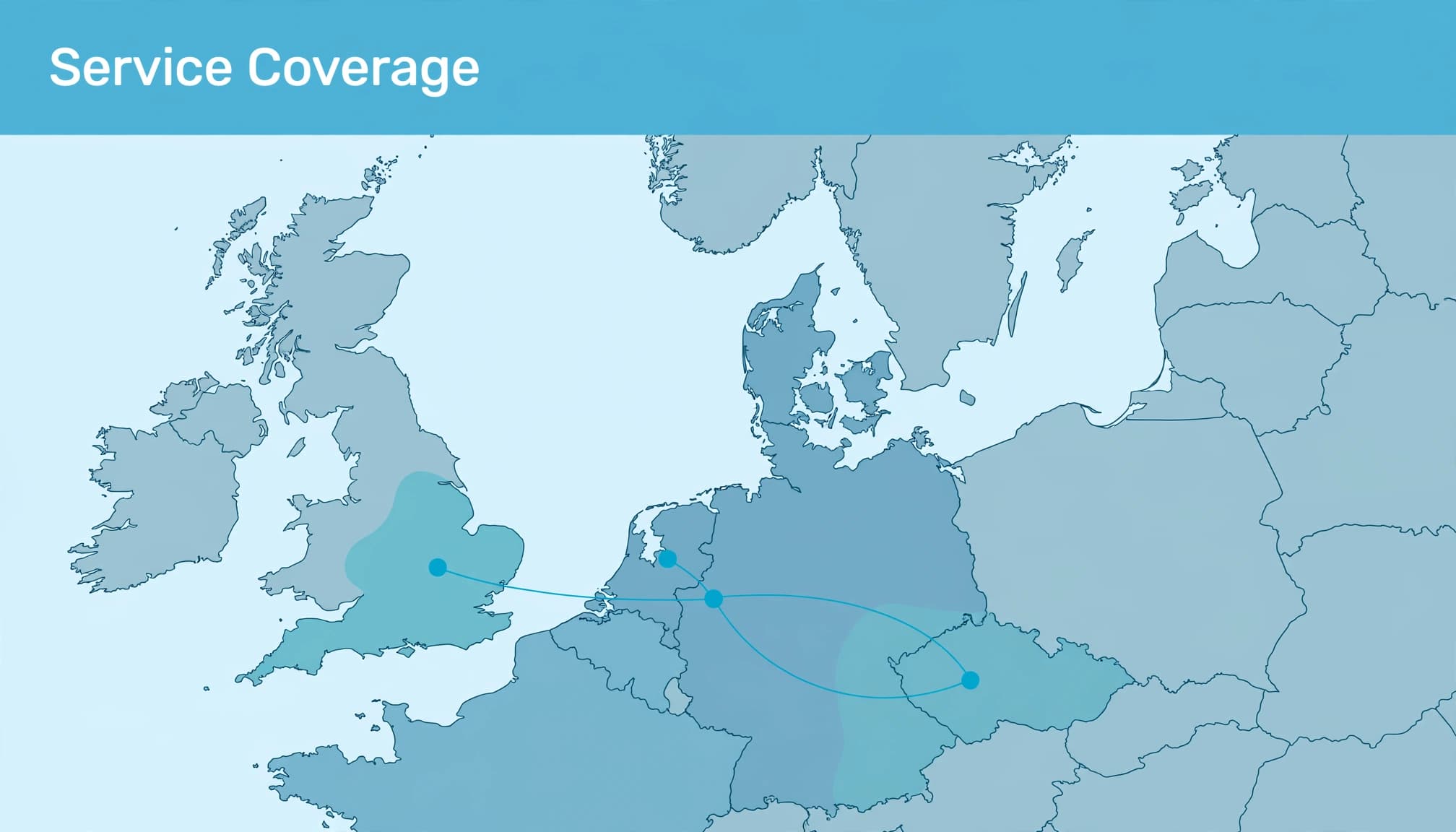
Keep buyer categories separate from industry coverage. One framework groups B2B buyers as producers, resellers, governments and institutions. That tells you who buys, but doesn’t establish expertise in manufacturing, financial services or healthcare.
Choose additional regions using enquiry quality, delivery costs and available capacity. For overseas expansion, your international SEO strategy should reflect language and country requirements as well as demand.
Build location pages around real differences
Put the coverage answer near the top
Your service page should explain who you help, what you provide and where delivery is available before moving into broader benefits.
Use precise relationships in the copy. “Office in London”, “on-site delivery in London” and “remote delivery across the UK” answer different questions. Select the wording that matches your operation rather than using all three as interchangeable keyword variations.
Keep important information in accessible page text. A map can support the explanation, but buyers and retrieval systems shouldn’t need to interpret an image to discover your boundaries.
Give each regional page a useful purpose
Create a separate location page when you have enough genuine differences to explain. These might include local delivery arrangements, relevant projects, sector demand or named team coverage.
If changing the city name leaves every other sentence accurate, the page probably needs more substance. Creating fifty versions won’t resolve that weakness.
Your local SEO strategy should connect relevant regional pages to the main service, with clear navigation between them.
Keep genuine business-location information consistent with Google’s local business guidance. Don’t present a target city as a staffed branch when you have no physical presence there.
Use schema to support service relationships
Describe the organisation and service separately
Structured data provides machine-readable descriptions of visible information. If you need the basics, start with what schema markup does.
Organisation details identify your business. Service markup can describe a particular offer and connect it to the provider. A stable @id gives related markup a consistent organisation reference.
Schema.org’s areaServed property describes the geographic area where a service or offered item is provided. Use it for actual coverage, rather than adding every commercially attractive region.
Industry specialisation belongs in the service explanation. It isn’t a geographic value for areaServed.
Keep markup aligned with visible copy
A valid schema implementation can still contain incorrect business information. Syntax validation won’t tell you whether your Manchester coverage ended last month.
Use the same approved facts for page copy and markup wherever your CMS allows it. Update both when services, locations or delivery arrangements change.
Our guidance on schema markup for AI search follows the same principle: visible clarity comes first.
Google doesn’t require special structured data for AI Overviews or AI Mode. Accurate markup can support understanding, but it doesn’t guarantee rankings, citations or recommendations. You still need useful pages that search systems can access.
Publish delivery limits where buyers need them
“Nationwide” leaves plenty unanswered. Does it include Northern Ireland? Are site visits available everywhere? Do remote services have different coverage from installation or maintenance?
Publish those distinctions beside the relevant service, rather than relying on a general footer statement. If different offers have different boundaries, give each its own coverage explanation.
Cross-border work needs equally clear wording. State supported countries, working languages, delivery methods and relevant contractual or fulfilment restrictions. For B2B sellers, explain delivery coverage, customs responsibilities and exclusions for wholesale goods where they affect the offer.
These details also influence pricing and lead routing. A remote engagement and an on-site project may need different qualification questions, travel allowances or account ownership.
Record the service location separately from the registered office when B2B customers need support at a different site. Otherwise, your CRM may route an enquiry according to the billing address rather than the site needing support.
Assign someone responsibility for the coverage record. Operational changes should trigger content updates, rather than waiting for an unsuitable lead to expose the problem.
Keep third-party coverage claims consistent
Your website isn’t the only available description of your business. Directories, partner profiles and marketplace listings can contain previous addresses, retired services or broader coverage claims.
Review these when your operation changes. Prioritise sources that appear in relevant searches or are cited in AI answers.
B2B platforms such as Alibaba, Global Sources, IndiaMART, DHgate, Made-in-China, EC21, eBay and Europages help buyers find potential suppliers and compare options. These B2B marketplaces support sourcing and B2B e-commerce, but their international reach doesn’t establish a seller’s delivery capability.
For B2B sellers, compare industry specialisation, regional reach, listing fees versus sales commissions, integrations and platform quality controls. Small businesses should also check for verified suppliers, flexible minimum order quantities, wholesale pricing, secure payments, logistics support, ERP or API integration, and trade assurance.
Buyer verification, escrow options and dispute procedures can reduce particular transaction risks. Check each platform’s published trade assurance terms, as protections vary.
Keep your listing explicit about where you supply goods or deliver services. A profile calling you a “global supplier” can mislead buyers if your service page limits delivery to Great Britain.
Correct any discrepancy before spending more on visibility. The availability or scope of trade assurance doesn’t prove a seller’s geographic coverage.
Measure whether AI answers match your offer
Test questions that reflect buying decisions, rather than repeatedly asking an AI system to describe your company.
Use a small, repeatable prompt set:
- Ask where B2B buyers can find providers for a supported location.
- Compare remote and on-site availability for the same service.
- Ask about a region outside your coverage.
- Repeat a sector-specific question buyers might ask, with a location included.
Record the platform, date, wording, cited URLs and factual accuracy. Our monthly B2B LLM search testing approach helps you compare those observations without treating one answer as a stable ranking.
Separate mentions from accuracy and commercial results. An answer that recommends you for an unsupported location may increase visibility whilst creating unsuitable enquiries.
Digital marketing should use the same coverage definitions across organic and paid acquisition. Apply them to PPC, including campaign planning for Google Ads and Facebook Ads.
Compare regional enquiry quality, sales acceptance and delivery capacity. A location producing frequent enquiries but few viable opportunities needs attention before you expand its marketing budget.
Frequently Asked Questions
How should a B2B business describe its service area?
State your business location separately from the areas you serve and explain whether delivery is remote, on-site or hybrid. Include relevant buyer types, sectors and delivery restrictions.
Does a business address show where it serves customers?
No. An office address describes where the business is based, so state separately where each service is available.
What does areaServed mean in schema markup?
It describes the geographic area where a service or offered item is provided. Use it for actual coverage, not target regions or industry specialisation.
Do B2B marketplace listings prove international delivery capability?
No. A marketplace’s international reach doesn’t establish where a seller can deliver, so state your coverage clearly and keep it consistent with your website.
Make your coverage easier to understand
Clear B2B service areas start with operational facts: where you’re based, where each service is available and how delivery works. Consistent pages, profiles and structured data make those facts easier to retrieve without promising how any AI platform will respond.
Start with one commercially important service and resolve its coverage gaps. If you’d like help connecting that work to qualified enquiries, speak to us about SEO that makes your offer easier to find and understand.



1 Comment
[…] elsewhere, an answer may preserve the number but lose its meaning. The same problem appears when explaining B2B service areas to LLMs: the relationship between facts matters as much as the individual […]