
Author Archives: Shirish Agarwal

About Shirish Agarwal

Shirish Agarwal is the founder of Flow20 and looks after the PPC and SEO side of things. Shirish also regularly contributes to leading digital marketing publications such as Hubspot, SEMRush, Wordstream and Outbrain. Connect with him on LinkedIn.

November 17, 2023

Can ChatGPT Boost Digital Marketing Results: A Comprehensive Analysis

Date updated: May 2024

Can ChatGPT boost digital marketing results? Absolutely. ChatGPT has the potential to transform how businesses approach their marketing strategies. By automating routine tasks and offering personalised customer interactions, this AI tool can enhance efficiency and engagement for marketers.

Brands can use ChatGPT to generate compelling content, manage customer inquiries, and even gather consumer insights. This not only saves time but also ensures a consistent and professional tone in all communications. The ability to analyse and optimise marketing campaigns in real time is another significant benefit.

For those looking to stay ahead in the competitive digital landscape, integrating ChatGPT into marketing strategies can provide a crucial edge. Whether it’s through enhanced customer engagement or streamlined content creation, ChatGPT is proving to be an invaluable asset.

Boost your online sales with Flow20’s expert eCommerce SEO and Bing PPC services! Get ahead with Google Ads and master your campaigns with our Google Ads training. Click here to maximize your reach and revenue today!

Key Takeaways

  • ChatGPT enhances customer engagement and personalisation.
  • It streamlines content creation for marketing campaigns.
  • It allows real-time analysis and optimisation of marketing efforts.

Integrating ChatGPT into Digital Marketing Strategies
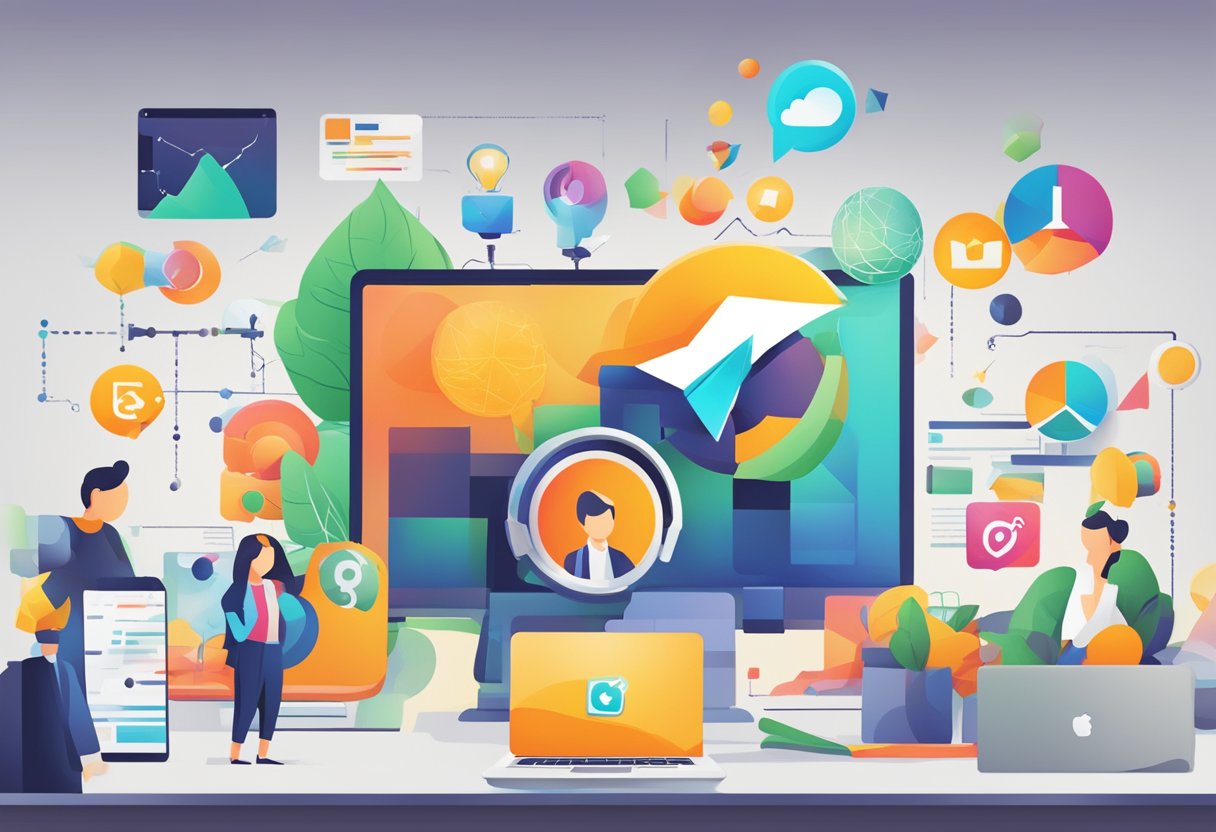
ChatGPT logo integrated into digital marketing graphics, boosting results

ChatGPT can handle various tasks in digital marketing, each enhancing different aspects of a campaign.

Content Creation
Marketers can use ChatGPT to quickly generate blog posts, social media content, and product descriptions. Its ability to craft text in different tones and styles makes it a versatile tool for content creation.

Email Marketing
With ChatGPT, crafting personalised email campaigns becomes easier. It can suggest subject lines, body content, and calls to action, helping to maintain a consistent brand voice.

SEO
For search engine optimisation, ChatGPT can assist with keyword research and competitive analysis. This helps in creating content that ranks higher on search engines.

Chatbots
Implementing ChatGPT as a chatbot can enhance customer service. It provides immediate responses and can handle common queries effectively, improving user experience.

Customer Insights
ChatGPT can be used to gather initial consumer insights by analysing data from surveys and social media. This information can guide marketing strategies and target audience engagement.

Personalisation
Personalisation is key in marketing. ChatGPT can tailor messages and content to specific audience segments, making communication more relevant and engaging.

Task Use
Content Creation Blogs, social media, product descriptions
Email Marketing Subject lines, body content, calls to action
SEO Keyword research, competitive analysis
Chatbots Customer service, immediate responses
Customer Insights Data analysis, guiding strategies
Personalisation Tailored messages, specific audience segments

Use the above strategies to integrate ChatGPT into your digital marketing plans. For more information, see ChatGPT for Marketing Use Cases and other relevant articles.

Enhancing Customer Engagement with ChatGPT

ChatGPT can greatly improve how businesses interact with their customers. It powers chatbots and virtual assistants that provide real-time responses to customer questions. These tools can handle a variety of tasks, from answering basic queries to resolving complex issues.

One key advantage is the personalisation it offers. ChatGPT can tailor responses based on customer data, creating a more personalised experience. This makes customers feel valued and understood.

ChatGPT also supports 24/7 customer service. Unlike human agents, who need breaks and have working hours, ChatGPT can operate round the clock. This helps customers get the assistance they need at any time.

Businesses can save time and resources by using ChatGPT. It automates many repetitive tasks, freeing up human employees to focus on more complex and high-value work. This efficiency can lead to cost savings and higher productivity.

Furthermore, ChatGPT aids in gathering customer feedback. It can ask customers for their opinions after interactions, collecting valuable data that businesses can use to improve their services.

In the realm of social media strategies, ChatGPT helps by offering tailored, engaging communication. Its ability to generate diverse content quickly allows businesses to keep their social media channels fresh and relevant.

Using ChatGPT can also lead to improved customer satisfaction. By providing quick, accurate, and personal responses, businesses can enhance the overall customer experience. For example, businesses have seen success in using ChatGPT for streamlining customer communication and engagement.

Transform your practice’s reach with Flow20’s bespoke SEO for law, SEO for finance, and PPC for law services. Enhance your digital marketing for law and finance. Click here to claim your market leadership today!

Leveraging ChatGPT for Content Creation

ChatGPT can enhance digital marketing by generating engaging blog posts, crafting compelling ads, and automating social media content.

Generating Blog Posts and Articles

ChatGPT can brainstorm unique blog post ideas based on specific keywords or topics. For instance, marketers can input keywords related to their industry, and ChatGPT will suggest relevant and engaging blog post ideas.

Once ideas are generated, ChatGPT can help draft the content. This tool can create well-structured articles, ensuring each section flows logically from one point to the next. It can be programmed to incorporate SEO strategies by including relevant keywords and phrases.

Additionally, ChatGPT can revise and refine content to fit the desired tone and style. Marketers can use this AI tool to maintain consistency across all their blog posts, saving a significant amount of time in the process.

Crafting Compelling Advertisements

Creating advertisements that captivate an audience can be challenging. ChatGPT provides a solution by generating ad copy that is both engaging and persuasive.

Marketers can input the product details and target audience, and ChatGPT will produce ad copy tailored to those specifics. The AI can create different variations of ads, allowing marketers to select the most effective version.

ChatGPT’s ability to write in various tones—optimistic, urgent, humorous—ensures it can produce content suited to different marketing campaigns. This adaptability means ads for social media, email, or even print can be quickly created and refined.

Automating Social Media Content

Managing social media accounts requires a consistent flow of content. ChatGPT can automate this process by generating a steady stream of posts.

Marketers can schedule regular prompts for ChatGPT to create posts, ensuring their social media pages remain active without the need for constant oversight. The AI can generate content tailored to current trends and audience preferences, making posts more relevant and engaging.

Additionally, ChatGPT can help respond to common customer inquiries, freeing up human resources for more complex interactions. This automation not only maintains engagement but also enhances consumer satisfaction through prompt responses.

Using ChatGPT in these ways ensures that digital marketing efforts are continuous and efficient, ultimately leading to better engagement and results.

Analysing and Optimising Marketing Campaigns with ChatGPT

ChatGPT can help by providing valuable insights into your marketing data. By analysing customer interactions, it identifies patterns and trends that might not be immediately obvious.

Customised Campaign Recommendations

ChatGPT can generate tailored suggestions for improving your marketing campaigns. Whether it’s adjusting your email strategy or refining your social media posts, ChatGPT offers data-driven advice.

Improved Audience Targeting

Understanding your audience better is crucial. ChatGPT can segment your customers based on various criteria, helping you target them more effectively. This leads to more personalised marketing efforts.

Performance Tracking and Reporting

Regular tracking of your campaigns is essential. ChatGPT can create detailed reports, summarising key metrics like click-through rates, conversion rates, and engagement levels.

Metric Description
Click-Through Rate Percentage of people who clicked on your ads
Conversion Rate Percentage of visitors who completed a desired action
Engagement Levels Measures likes, shares, and comments on social media

Prompt Crafting for Enhanced Results

Effective use of ChatGPT involves crafting the right prompts. For instance, using prompts to design email marketing strategies ensures your messages are aligned with customer preferences. Learn more about creating effective prompts for email campaigns.

Customer Support Integration

ChatGPT can be integrated into chatbots for customer support. Handling frequently asked questions, providing technical support, and troubleshooting can be automated, leading to higher customer satisfaction. Find more details on Chatbot integration.

Using these methods, ChatGPT can significantly enhance the effectiveness of your marketing campaigns.

Frequently Asked Questions

ChatGPT can significantly enhance various aspects of digital marketing. It helps create more personalised content, improves customer engagement, and automates routine tasks.

What impact does ChatGPT have on digital marketing strategies?

ChatGPT transforms digital marketing by generating engaging content and providing personalised customer support. It can help in crafting email campaigns, social media updates, and blog posts tailored to specific audiences. This increases user engagement and boosts conversion rates.

In what ways can artificial intelligence enhance the effectiveness of digital marketing campaigns?

Artificial intelligence, including ChatGPT, analyses data to provide insights into customer behaviour. It optimises ad targeting, improves content relevance, and automates repetitive tasks. AI tools can also personalise user experiences, making marketing efforts more effective and efficient.

What role will AI play in the evolution of digital marketing?

AI will continue to evolve digital marketing by introducing advanced personalisation and data-driven strategies. It will streamline marketing processes, reduce manual workload, and improve accuracy in targeting and segmenting audiences. This will lead to more precise and impactful digital marketing efforts.

How can one integrate ChatGPT to improve digital marketing performance?

ChatGPT can be integrated into digital marketing by using it for content creation, customer service chatbots, and email marketing. It can generate tailored messages and provide support responses. Marketers can also use it for personalisation and optimisation tasks, enhancing the overall effectiveness of marketing campaigns.

What are the potential benefits of using AI like ChatGPT in digital marketing?

AI, such as ChatGPT, offers benefits like increased efficiency, personalised customer interactions, and improved content quality. It helps marketers better understand their audience through data analysis and provides real-time engagement solutions. These capabilities can result in higher customer satisfaction and improved campaign success rates.

How might ChatGPT transform the execution of digital advertising initiatives?

ChatGPT can revolutionise digital advertising by creating more relevant and engaging advertisements. It can help in drafting ad copy and optimising it based on user preferences and behaviour patterns. This leads to higher click-through rates and better overall performance of advertising campaigns.

Flow20 is here to revolutionise your digital marketing approach. Dive into our blog for the latest insights on SEO, LinkedIn and PPC.
Can You Run Digital Marketing Campaigns Without a Website?

The answer is yes, it is possible to run digital marketing campaigns without a website. In this article, we will explore different strategies and tactics that you can use to run successful campaigns without a website.

While having a website is an essential part of any digital marketing strategy, it’s not the only way to reach your target audience. There are various platforms and channels available that you can use to promote your products or services. Social media marketing and advertising, for example, is a powerful way to reach new customers and grow your business. By creating profiles on popular social media platforms like Facebook, Instagram, LinkedIn, TikTok, and YouTube, you can target specific audiences who are interested in your products or services (Cooler Insights).

However, it’s important to note that running digital marketing campaigns without a website requires a strategic approach. You need to set specific goals and have a clear plan in place to achieve measurable outcomes. In the next section, we will explore some digital marketing strategies and tactics that you can use to run successful campaigns without a website.

Boost your online sales with Flow20’s expert eCommerce SEO and Bing PPC services! Get ahead with Google Ads and master your campaigns with our Google Ads training. Click here to maximize your reach and revenue today!

Digital Marketing without a Website

If you’re a small business owner or entrepreneur, you may be wondering if it’s possible to run digital marketing campaigns without a website. The good news is that it is possible to leverage digital marketing channels to reach your target audience and grow your business, even if you don’t have a website.

Social Media as a Platform

Social media platforms like Facebook, Instagram, LinkedIn, and TikTok are great channels to promote your business and engage with your target audience. By creating a business profile on these platforms and sharing user-generated content, you can build brand awareness and attract new customers.

Email Marketing Techniques

Email marketing is another powerful way to reach your audience and promote your business. By creating email marketing campaigns and newsletters, you can keep your customers informed about exclusive deals and new products.

Leveraging Online Marketplaces

Online marketplaces like eBay and Amazon can help you reach a wider audience and increase your sales. By creating exclusive deals and optimizing your product listings, you can attract more customers and drive site traffic.

Video Marketing and Webinars

Video marketing and webinars are great ways to engage with your audience and promote your business. By creating informative and engaging videos, you can increase your visibility and attract new customers.

PPC and Native Advertising

PPC and native advertising are effective ways to increase your visibility and attract new customers. By targeting your audience based on location, keywords, and interests, you can increase your visibility and drive site traffic.

Content Management and SEO

Content management and SEO are essential components of digital marketing. By creating high-quality and informative content, you can attract more leads and improve your search engine rankings.

Targeting and Analytics

Targeting and analytics are crucial for developing effective digital marketing campaigns. By identifying your target audience and tracking your KPIs, you can improve your marketing efforts and achieve better results.

Affiliate Marketing

Affiliate marketing is a cost-effective way to promote your business and increase your revenue. By offering incentives to your affiliates, you can attract more customers and grow your business.

Small Business Considerations

Small business owners face unique challenges when it comes to digital marketing. By focusing on low-cost strategies and setting realistic goals, you can achieve your marketing objectives and grow your business.

High-Cost vs Low-Cost Strategies

When it comes to digital marketing, there are both high-cost and low-cost strategies. By weighing the benefits and costs of each strategy, you can choose the ones that are most effective for your business.

Competitor Analysis

Competitor analysis is an important part of any digital marketing campaign. By identifying your competitors and analyzing their strategies, you can improve your own marketing efforts and stay ahead of the competition.

Hobbies and Interests

By targeting your audience based on their hobbies and interests, you can create more effective digital marketing campaigns. By understanding your audience’s preferences and needs, you can tailor your marketing efforts to their interests.

Timelines and Calendars

Timelines and calendars are essential for planning and executing effective digital marketing campaigns. By setting specific goals and deadlines, you can stay on track and achieve your marketing objectives.

Buyer Personas and Segmentation

Buyer personas and segmentation are important for targeting your audience effectively. By creating detailed buyer personas and segmenting your audience based on their preferences and needs, you can create more effective digital marketing campaigns.

Developing a Digital Marketing Plan

Developing a digital marketing plan is essential for achieving your marketing goals. By setting specific goals and KPIs, identifying your target audience, and choosing the most effective channels, you can create a plan that will help you achieve your marketing objectives.

Landing Pages and Online Presence

Landing pages and online presence are important for attracting and converting leads. By creating high-quality landing pages and optimizing your online presence, you can improve your visibility and attract more customers.

Signals and Groups

Signals and groups are important for building relationships with your audience. By joining relevant groups and responding to signals, you can engage with your audience and build trust.

Online Channels

There are a variety of online channels that you can leverage to promote your business. By choosing the most effective channels for your business and optimizing your presence on those channels, you can attract more customers and grow your business.

Adapting to Trends

Adapting to trends is important for staying ahead of the competition and reaching your audience effectively. By staying up-to-date with the latest trends and adapting your marketing efforts accordingly, you can achieve better results and grow your business.

Frequently Asked Questions

Is it possible to run digital marketing campaigns without a website?

Yes, it is possible to run digital marketing campaigns without a website. While having a website can be helpful, it is not always necessary. There are many alternatives to having a website that can be just as effective for running digital marketing campaigns.

What are some alternatives to having a website for digital marketing?

Some alternatives to having a website for digital marketing include creating a landing page, using social media platforms, creating a blog, and using email marketing. These alternatives can be just as effective as having a website and can help you reach your target audience.

Can I use social media platforms to run digital marketing campaigns instead of a website?

Yes, social media platforms can be a great alternative to having a website for running digital marketing campaigns. Social media platforms such as Facebook, Instagram, and X can help you reach your target audience and promote your products or services.

How can I track the success of my digital marketing campaigns without a website?

There are many tools available that can help you track the success of your digital marketing campaigns without a website. These tools include Google Analytics, social media analytics, and email marketing analytics. By tracking the success of your campaigns, you can make adjustments and improve your marketing efforts.

What are some limitations of running digital marketing campaigns without a website?

Some limitations of running digital marketing campaigns without a website include limited control over the user experience, limited ability to capture leads and customer information, and limited ability to showcase your products or services in detail. However, with the right strategy and tools, these limitations can be overcome.

Are there any industries where running digital marketing campaigns without a website is more common?

Yes, there are some industries where running digital marketing campaigns without a website is more common. These industries include food trucks, pop-up shops, and event-based businesses. In these industries, having a website may not be as important as having a strong social media presence and a good online reputation.

Looking for a digital marketing agency in London? Get in touch now! We are one of the best PPC agencies in London providing SEO services, can assist you with LinkedIn Ads, Facebook Ads or email marketing campaign.

Does LinkedIn Ads Use AI?

The answer is yes. In today’s rapidly changing digital landscape LinkedIn Ads employ the power of artificial intelligence (AI) to enhance ad performance and streamline the campaign creation process. This cutting-edge technology has revolutionised the way marketers and businesses promote their offerings on the platform.

LinkedIn has introduced a variety of AI-powered tools and features to optimise marketing campaigns and overall ad performance. Not only does AI help improve productivity, but it also greatly impacts the advertising landscape by providing valuable insights and trends that help tailor your advertising strategies. With the help of AI, you can now target your audience more effectively and efficiently, ensuring the success of your LinkedIn ads.

To remain competitive in the market, LinkedIn continually advances its AI capabilities, offering innovative solutions for brands and advertisers to stay ahead of the curve. As a result, you can leverage artificial intelligence to grow your business, maintain an authentic tone on the platform, and reach your professional goals in this ever-evolving digital ecosystem.

Boost your online sales with Flow20’s expert eCommerce SEO and Bing PPC services! Get ahead with Google Ads and master your campaigns with our Google Ads training. Click here to maximize your reach and revenue today!

AI Influence on LinkedIn Advertising

1. Harnessing AI for High-Efficiency Marketing Campaigns

LinkedIn Ads utilise artificial intelligence (AI) to optimise your marketing campaigns, making them highly efficient and effective. With the help of AI, LinkedIn Accelerate becomes a powerful tool for marketers, as it automates the creation and optimisation of ad campaigns by analysing your company’s LinkedIn Page and the shared website URL of the product you’re advertising.

2. AI-Powered Content and Creatives

Thanks to AI, not only do you get improved campaign performance, but also benefit from AI-generated content and creatives for your LinkedIn Ads. This includes automatically adapting images, videos, and ad copy for your target audience and maximising viewer engagement. AI helps in enhancing the creative process, providing flexibility and seamless integration of different media formats, ultimately leading to a revolutionised advertising experience.

3. Personalisation and Targeting through AI

LinkedIn has a vast user base, and catering personalised ads to this diverse audience is no simple challenge. However, AI advancements aid LinkedIn in personalising content and targeting parameters. Leveraging machine learning algorithms, the platform can effectively filter through audiences, tailoring ads for various members and customers within your B2B audience. AI-powered tools help connect your advertisements with the right viewers, enabling more accurate targeting and an improved return on investment.

Following these practices, you can expect a considerable improvement in your LinkedIn Ads’ overall performance while benefiting from the cutting-edge capabilities of AI in the realm of advertising.

AI Applications for Recruiters on LinkedIn

  • AI-Assisted Job Posting and Recommendations

LinkedIn is making it easier for you to optimise your job postings and find the perfect candidates. With the integration of artificial intelligence (AI), it is now possible for recruiters to efficiently create job postings, receive job recommendations, and generate job descriptions that appeal to your desired talent pool. The AI assistant evaluates job titles, required skills, and other important information in order to provide relevant job recommendations and match professionals with suitable opportunities according to their abilities and experience 1.

  • Efficient Candidate Search and Engagement

Searching for the right candidate can be time-consuming and challenging. LinkedIn Ads harnesses the power of AI to streamline candidate search and engagement, ensuring your recruitment efforts are effective and focused. An AI tool within LinkedIn Recruiter assists you in finding professionals with the specific skills and job titles you are seeking, thereby transforming your recruitment process into a more efficient endeavour.

Furthermore, it utilises AI-Assisted Messages to personalise communication and save valuable time. By leveraging AI, you can engage your candidates more effectively, as well as quickly apply filters and make data-driven decisions. This enables you to narrow down your search, reach out to potential matches, and ultimately, hire the best suited professionals for your organisation2.

  • Enhancement of Professional Relationships

Building and maintaining professional relationships is crucial for any recruiter. AI plays a significant role in LinkedIn’s networking feature, which helps you establish and foster connections with individuals in a certain profession. The AI tool analyses your existing connections and recommends professionals with similar job titles, skills, and backgrounds, enhancing your networking experience.

Moreover, LinkedIn AI assistant helps expedite networking emails and manage incoming requests, allowing you to focus on nurturing meaningful professional relationships with potential candidates and other relevant professionals. By incorporating AI into LinkedIn Ads and their recruiting tools, you can utilise the various AI features to effectively meet your recruitment goals and enhance your organisation’s talent pool.

Transform your practice’s reach with Flow20’s bespoke SEO for law, SEO for finance, and PPC for law services. Enhance your digital marketing for law and finance. Click here to claim your market leadership today!

Frequently Asked Questions

What is the role of AI in LinkedIn Ads?

AI plays a crucial role in LinkedIn Ads, as it helps improve the overall ad performance and speeds up campaign creation. By analysing the website URL you provide, your company’s LinkedIn Page, and other factors, AI helps in creating targeted ads that cater to your specific audience source.

How does AI improve ad targeting on LinkedIn?

AI enhances ad targeting on LinkedIn by analysing data from various sources such as user profiles, interests, and professional connections. It then helps you to refine your target audience based on their demographics, skills, job titles, and other relevant factors. This ensures that your ads reach the appropriate audience, increasing the chances of engagement and conversion.

Do LinkedIn Conversation Ads utilise AI?

Although the search results provided don’t directly mention the use of AI in LinkedIn Conversation Ads, it is reasonable to assume that AI might play a role in analysing data and user behaviour to ensure the conversation ads communicate effectively and engage the target audience.

How does AI enhance ROI in LinkedIn advertising?

AI contributes to improving ROI in LinkedIn advertising by delivering relevant and engaging ads to the right audience. This increases click-through rates and reduces the cost per click, ultimately leading to better conversion rates and a higher return on your advertising investment. By making data-driven decisions, AI helps to optimise your ad campaigns in real-time, ensuring better results.

Can AI help optimise ad copy on LinkedIn?

AI can provide insights and suggestions for optimising ad copy on LinkedIn by analysing the performance of past ads and identifying patterns that resonate with your target audience. By learning from successful ads and incorporating those insights into new campaigns, you can achieve better engagement and higher conversion rates.

What are the best practices for using AI in LinkedIn B2B marketing?

To make the most out of AI in LinkedIn B2B marketing, follow these best practices:

  1. Provide accurate and relevant data – Ensure that your company’s LinkedIn Page has up-to-date information and that you link to a descriptive and accurate URL for the product or service you’re advertising.
  2. Leverage AI-powered targeting features – Make use of AI-enabled features such as audience expansion, LinkedIn Matched Audiences, and automated bid optimisation.
  3. Perform A/B testing – Test different ad variations to find the formats and messaging that work best for your target audience.
  4. Analyse and optimise – Continuously monitor your ad performance, learn from the data, and make adjustments as needed to enhance your overall marketing strategy.

By following these guidelines, you can harness the power of AI to drive better outcomes for your LinkedIn B2B marketing efforts. If you would rather hire professional LinkedIn Ads Agency, get in touch with Flow20.com Ltd now! We are digital marketing agency providing SEO services, can do email marketing for you, social media advertising etc. Need help with your PPC ads? Contact us, a London PPC agency and see what we can do together!

What Skills are Required to Become a Digital Marketer?

One of the most crucial aspects of being a digital marketer is having a strong foundation in marketing principles and techniques. Your understanding of concepts like buyer personas, target markets, and brand positioning will help you design effective strategies that attract and retain customers. Additionally, mastering essential digital marketing skills is necessary for staying ahead in the fast-paced online landscape. These include search engine optimisation (SEO), social media marketing, email marketing, and content creation.

Furthermore, being a successful digital marketer means staying informed and agile, able to adapt to the ever-changing digital landscape. Skills like data analysis and research will allow you to measure the success of your campaigns and make informed decisions about your marketing strategies. Similarly, staying updated on the latest industry trends and tools will help you continually refine your skills and ensure you remain an invaluable asset in the world of digital marketing.

Entering the world of digital marketing can be both exciting and challenging. As a digital marketer, you’ll be at the forefront of ever-evolving technology and trends, using a range of skills to create successful marketing campaigns, engage with audiences, and build brand awareness. To succeed in this competitive industry, it’s important to equip yourself with the right skills and expertise that employers and clients demand.

Boost your online sales with Flow20’s expert eCommerce SEO and Bing PPC services! Get ahead with Google Ads and master your campaigns with our Google Ads training. Click here to maximize your reach and revenue today!

Necessary Skills of a Digital Marketer

  • Communication and Creativity
  • Understanding of Digital Channels
  • Expertise in SEO and Keyword Research
  • Data Analysis and CRM
  • Content and Email Marketing

Communication and Creativity

As a digital marketer, you need excellent communication skills to effectively convey your marketing messages. This includes both written and verbal communication, along with a good grasp of grammar and spelling. Additionally, creativity is vital in crafting engaging content, eye-catching visuals, and innovative marketing campaigns to attract and retain your target audience.

Understanding of Digital Channels

A deep understanding of various digital channels is crucial for a digital marketer. Familiarise yourself with social media platforms, email marketing tools, search engines, and content sharing websites. This knowledge will help you develop successful campaigns that utilise each channel’s strengths while reaching your target audience effectively.

Expertise in SEO and Keyword Research

Search Engine Optimisation (SEO) and keyword research are essential skills for a digital marketer. You should be well-versed in optimising web content, meta tags, and alt-text for images to increase search rankings. Moreover, mastering keyword research tools like Google Keyword Planner or Moz will help you identify high-ranking search terms and utilise them in your content strategy.

Data Analysis and CRM

Effective data analysis has become a necessity in digital marketing, enabling you to measure the success of campaigns and tailor subsequent strategies based on consumer preferences. Familiarity with data analytic tools such as Google Analytics is a must. Equally important is the ability to use Customer Relationship Management (CRM) systems, which are vital in managing customer data, tracking leads, and nurturing existing relationships.

Content and Email Marketing

In the digital marketing sphere, content marketing is the backbone of any successful campaign. Being skilled in creating high-quality, engaging, and informative content will enhance your brand’s online presence. Complementing this with expertise in email marketing, you can craft personalised messages, track email open rates, and leverage targeted mailing lists to boost customer engagement and conversion rates.

By developing proficiency in these areas, you can become a confident and knowledgeable digital marketer, capable of creating and executing innovative, effective, and data-driven marketing campaigns.

Career Development in Digital Marketing

Acquiring Relevant Education and Experience

To excel in your digital marketing career, you need to start with the right education and experience. Start by enrolling in online courses that cover essential digital marketing skills such as SEO, content marketing, social media, and analytics. Having a strong foundation in these areas will increase your chances of succeeding in the industry.

Additionally, pursuing internships or entry-level positions in digital marketing can help you gain practical experience. Through hands-on work, you can apply the skills you’ve learned in real-world scenarios, which will further enhance your understanding and expertise.

Adopting the Right Tools and Methodologies

As a digital marketing professional, you need to familiarise yourself with essential digital marketing tools and methodologies. Tools like Google Analytics, SEMrush, and MailChimp help you create targeted marketing campaigns, analyse their effectiveness, and make data-driven decisions to improve future campaigns.

Moreover, staying updated on the latest industry trends and methods, such as SEO techniques, content marketing strategies, and social media best practices, will allow you to adapt and stay on top of the ever-evolving digital marketing landscape.

Elevate your law or finance firm with Flow20’s tailored SEO and digital marketing services. Specializing in SEO for law and finance, and PPC for law, we help you dominate your market. Click now to transform your online presence and attract more clients!

Emphasis on Continuous Learning and Networking

In the world of digital marketing, it’s crucial that you continuously develop your skills and knowledge. This can be done by attending industry events, participating in webinars, or enrolling in online courses. Expanding your knowledge base will ensure that you remain competitive and cutting-edge in your field.

Networking also plays a vital role in career development. Building connections with other professionals in the industry can lead to new opportunities, advice, and insights. By actively participating in industry forums, attending conferences, and engaging in online discussions, you can grow your professional network and open doors to new possibilities.

In conclusion, focusing on education, experience, adopting the right tools and methodologies, and emphasising continuous learning and networking will set you on the path to a successful career in digital marketing.

Frequently Asked Questions

What are the essential hard skills for digital marketing?

The essential hard skills for digital marketing include search engine optimization (SEO), content creation, social media marketing, email marketing, and data analysis. To excel in these areas, you should develop expertise in various marketing tools and digital advertising platforms.

Which soft skills are crucial for success in digital marketing?

Soft skills that are crucial for success in digital marketing include effective communication, creativity, collaboration, adaptability, and problem-solving. As a digital marketer, you’ll need to convey your ideas clearly and work well with team members, while also being open to new technologies, trends, and making informed decisions based on data.

How important is knowledge of digital marketing tools?

Knowledge of digital marketing tools is essential as these tools help streamline and automate various tasks. Familiarise yourself with popular tools, such as Google Analytics, Mailchimp, and Hootsuite, to track, manage, and analyse various aspects of your marketing campaigns.

Are there specific qualifications needed to enter the field?

While a university degree in marketing can be helpful, it is not a prerequisite for a career in digital marketing. Many professionals enter the field with backgrounds in communication, business, graphic design, or other related areas. Online courses and certifications can also help you acquire the necessary skills for a digital marketing career.

What do top digital marketers do in their daily work?

Top digital marketers’ daily work involves strategising and implementing marketing campaigns, monitoring and optimising online content, coordinating with team members, analysing data, and staying updated on industry trends. Proactive learning and implementing new strategies keep them ahead in this rapidly evolving industry.

Can one pursue digital marketing without a degree?

Yes, you can pursue a career in digital marketing without a degree. Focus on building your skills through online courses, certifications, and hands-on experience. Networking and building a portfolio of work can also help showcase your abilities to potential employers or clients.

Looking for a London Pay Per Click Agency? Get in touch now! Flow20.com Ltd provide SEO services London, and can assist you with your LinkedIn Ads, Facebook Ads or email marketing.

What is a Typical Digital Marketer’s Salary?

In the United Kingdom, the average salary for a digital marketer is £27,974 per year as of November 2023. In the United States, digital marketers can earn an average of $57,596 USD annually. It’s important to remember that these figures are only general averages, and your individual salary may differ.

Digital marketing salaries can vary widely, depending on factors such as experience, location, and company.


As you explore the field of digital marketing, one question that may come to mind is what the typical salary looks like for digital marketers. Having a clear understanding of the potential income can help you determine if this career choice is the right fit for you.

To maximise your potential earnings in the digital marketing field, it’s essential to continually develop your skills and stay up-to-date with industry trends. By doing so, you can position yourself as a valuable asset to companies, and secure the best possible salary for your expertise.

Which are the Main Components Affecting a Digital Marketer’s Salary

There are several factors that contribute to a digital marketer’s salary:

  • Location and Company Factors
  • Level of Expertise
  • Role and Job Title
  • Specific Skill and Specialization
  • Type of work


To understand how much you can expect to earn in this role, let’s explore these components in detail.

Location and Company Factors

The location where you work and the company you work for play significant roles in determining your salary. For instance, it is common for a digital marketing agency in large cities like London and Manchester to earn more than the national average. In addition to location, working for a well-established company in the private sector or in digitally-focused industries can have a positive impact on your earnings.

Level of Expertise

As you gain experience and expertise in digital marketing, your salary is likely to increase. Entry-level digital marketers might find their salaries on the lower side compared to their more experienced peers. Beyond the number of years in the industry, hands-on experience working with different tools, solving complex marketing challenges, and managing high-profile campaigns can also contribute to your salary growth.

Role and Job Title

Another important factor affecting your salary is the specific job title you hold. While a digital marketing specialist could earn an average of £52,000, a mid-level digital marketing manager might earn around £70,000, and a senior-level digital marketing director could earn as much as £105,000. Clearly, the higher your position in a company, the larger your paycheck is likely to be.

Boost your online sales with Flow20’s expert eCommerce SEO and Bing PPC services! Get ahead with Google Ads and master your campaigns with our Google Ads training. Click here to maximize your reach and revenue today!

Specific Skills and Specialisations

Digital marketing is a diverse field encompassing various skills such as SEO, social media marketing, email marketing, content marketing, and more. Developing expertise in a specific area, like search engine optimisation or lead generation, can set you apart from your peers and potentially boost your salary. In addition to this, having strong analytical skills, creative design abilities, and excellent verbal communication skills can also improve your earning potential.

Type of Work

Finally, the type of work you do in digital marketing can also affect your earning power. For example, working as a full-time employee in a company could offer stability and benefits, while doing freelance work provides flexibility and allows you to pursue multiple clients. Freelance digital marketers often charge on a per-project basis or can negotiate higher rates based on their expertise and demand. Ultimately, the balance between stability, workload and potential earnings depends on your preferences and goals as a professional.

In conclusion, understanding these factors and their impact on a digital marketer’s salary can help you make informed decisions when pursuing a career in this exciting field.

Other Ways to Enhance Earnings as a Digital Marketer

Market Yourself

To earn more and increase your chances of receiving the highest pay, it’s essential to showcase your skills and achievements effectively. Building a strong personal brand will attract potential clients and employers. Update your CV regularly, including your experience in digital marketing campaigns, social media management, and other relevant skills. You could also consider starting a blog to share your knowledge and demonstrate your expertise in the field.

Leveraging Social Media

Taking full advantage of social media platforms such as Facebook, Instagram, and LinkedIn ads can significantly boost your career as a digital marketer. By strategically using these platforms to promote your work, engage with influencers, and network with potential clients or employers, you can make yourself more visible and desirable in the industry. Furthermore, having a deep understanding of various social media platforms and their algorithms will make you a valuable asset to any marketing team.

Working with a Marketing Agency

Joining a marketing agency is another effective strategy to enhance your earnings as a digital marketer. Marketing agencies often provide access to diverse projects, regular income, and increased exposure to industry trends and best practices. This experience will help you expand your skill set, making you a more attractive candidate for higher-paying digital marketing roles.

Elevate your law or finance firm with Flow20’s tailored SEO and digital marketing services. Specializing in SEO for law and finance, and PPC for law, we help you dominate your market. Click now to transform your online presence and attract more clients!

Understand Traditional vs Digital Marketing

Finally, having a solid grasp of both traditional and digital marketing methods will set you apart from other professionals in the field. By blending the strengths of traditional marketing tactics such as print advertising or public relations with innovative digital marketing strategies, you will be able to create comprehensive and effective marketing campaigns for your clients. Consequently, you’ll be more likely to secure higher-paying roles and enjoy a lucrative digital marketing career.

Frequently Asked Questions

What are the average salaries for digital marketing roles in the UK?

The average salary for a digital marketer in the UK is around £27,974 per year, with experienced professionals earning up to £50,000 per year. However, this figure can vary based on factors such as location, type of company, and your position within the company or team hierarchy.

How does a digital marketing manager’s salary compare to other positions?

A digital marketing manager typically earns more than entry-level or specialist roles. For instance, the average digital marketing manager salary in London is £53,961, which is nearly £20,000 higher than the national average for digital marketers.

What is the typical pay for a freelance digital marketer in the UK?

Freelance digital marketer salaries can be highly variable, as they often depend on factors such as project scope, expertise level and the number of clients. While it is difficult to provide an exact figure, experienced freelance professionals could potentially earn more than their salaried counterparts, especially when working with multiple clients and charging higher rates for their services.

How do digital marketing salaries vary across different cities like London?

Salaries for digital marketing roles tend to be higher in larger cities like London, where the cost of living and competition for skilled professionals is greater. As mentioned earlier, the average digital marketing manager salary in London is £53,961, which is considerably higher compared to the national average.

How much can an experienced digital marketing executive expect to earn?

With experience, a digital marketing executive can expect to earn a substantial increase in their salary. On average, experienced professionals can make up to £50,000 per year. However, this figure can fluctuate depending on location, company size, and industry.

Are digital marketing careers financially rewarding in the long run?

Digital marketing careers can indeed be financially rewarding in the long run, particularly for those who continuously develop their skills and take on more senior or specialised roles. As the demand for digital marketing professionals continues to grow, so too do the opportunities for career advancement and increased earning potential.

Looking for a London PPC Agency ? Get in touch now! Flow20.com is not only a PPC expert, we are rated as the best SEO services company London. 

Are LinkedIn Ads Worth It?

If you’re considering advertising on LinkedIn, you might wonder if it’s truly worth your time and money. LinkedIn Ads can be effective, especially if you target a professional audience looking for products or services like yours. The platform’s unique focus on career-oriented users can give you access to decision-makers and influencers who might not be reachable through other channels.

Many businesses find that the return on investment (ROI) from LinkedIn Ads justifies the costs involved. By strategically crafting your ads and choosing the right audience, you can see significant engagement and conversions. The platform’s tools let you create targeted campaigns that reach the right people at the right time, increasing your chances of success.

In an always-evolving digital landscape, understanding whether LinkedIn Ads fit your strategy is crucial. You’ll want to weigh their benefits against your advertising goals. Are you ready to dive into the details and see if it’s time for you to invest in LinkedIn Ads?

Boost your online sales with Flow20’s expert eCommerce SEO and Bing PPC services! Get ahead with Google Ads and master your campaigns with our Google Ads training. Click here to maximize your reach and revenue today!

Evaluating the Effectiveness of LinkedIn Ads

When you consider LinkedIn Ads, measuring their effectiveness is crucial. You’ll want to look at conversion rates, return on investment (ROI), campaign performance metrics, and lead generation capabilities to make informed decisions.

Understanding Conversion Rates and ROI

Conversion rates tell you how many people took a desired action after seeing your ad. This could be signing up for a newsletter or making a purchase. A high conversion rate means your ad is effective at engaging your audience.

To analyse your return on investment (ROI), compare the revenue from your ads to the cost of running them. For example:

  • Revenue from Ads: £2,000
  • Cost of Ads: £500
  • ROI Calculation: (Revenue – Cost) / Cost = £3.00

positive ROI indicates that your ads are worth the investment.

Examining Campaign Performance Metrics

Monitoring campaign performance metrics helps you understand how well your ads are doing. Key metrics to consider include:

  • Click-Through Rate (CTR): This shows the percentage of people who clicked on your ad. A higher CTR often suggests your ad is engaging.
  • Impressions: This tells you how many times your ad was shown.
  • Engagement Rate: This measures interactions, such as likes and shares.

Regularly checking these metrics allows you to identify trends and adjust your strategy for better results.

Assessing Lead Generation Capabilities

Lead generation is essential for growing your business. LinkedIn Ads can be effective in attracting quality leads, especially if you target the right audience.

To enhance lead generation, consider using the following tactics:

  • Targeted Ads: Focus on industries, job titles, or companies that align with your goals.
  • Lead Gen Forms: These forms allow users to submit their information without leaving LinkedIn, simplifying the process.
  • Compelling Offers: Provide valuable resources, such as eBooks or webinars, to entice users to share their information.

By evaluating these aspects, you can maximise your lead generation efforts through LinkedIn Ads.

Target Audience and Demographics

Knowing your target audience is crucial for effective LinkedIn ads. Understanding job titles, industries, company sizes, and demographics helps tailor your advertising strategy for better results.

The Role of Job Titles and Industries

Job titles and industries play a key role in defining your audience on LinkedIn. You can target specific roles such as managers, executives, or specialists. This allows you to reach decision-makers who are more likely to engage with your content.

Different industries have varying needs and pain points. For example, technology companies may focus on innovation, while healthcare might prioritise compliance. By selecting relevant job titles and industries, you increase the chances of your ads resonating with the audience.

Company Size and Professional Interests

Company size impacts how businesses operate and engage with marketing messages. You can target small businesses, mid-size companies, or large enterprises. Each group has distinct challenges and budgets.

Understanding professional interests is also important. For example, professionals in start-ups may seek growth hacks, while those in established firms may value stability. Tailoring your ad content based on these factors helps to connect better with your audience.

Demographics and Location Targeting

Demographics like age, gender, and education level can affect your ad’s effectiveness. You can reach diverse groups, which allows for more personalised messaging. For instance, younger professionals may respond well to innovative solutions, while more experienced workers may seek proven results.

Location targeting is equally vital. You can focus on specific regions, countries, or cities. This ensures your message reaches users where your products or services are most relevant. Combining location with demographics creates a stronger strategy for engagement and conversions.

LinkedIn Ad Formats and Their Impact

LinkedIn offers various ad formats that cater to different advertising goals. Understanding these types can help you choose the best options for your campaigns and enhance your overall results.

Understanding Different Ad Types

You can select from several types of LinkedIn ads, each serving unique purposes. The main formats include:

  • Sponsored Content: These ads appear in the feed, promoting your updates directly to users. They can be single image, carousel, or video ads.
  • Text Ads: These simple ads appear on the sidebar and usually consist of a short text and an image. They are cost-effective for brand promotion.
  • Dynamic Ads: Targeted to the user, these ads personalise the content with the viewer’s profile picture, making them more engaging.
  • Sponsored Messaging: This includes Conversation Ads and Message Ads that deliver ads directly to users’ inboxes, allowing for direct interaction.

Knowing the types will help you align your goals with the right format.

Visual Appeal with Video and Carousel Ads

Video ads and carousel ads offer strong visual appeal. Video ads are particularly effective as they capture attention quickly. They can showcase your product, share customer stories, or explain complex concepts. Engaging video content encourages viewers to stop scrolling and listen.

Carousel ads allow you to showcase multiple images or videos in a single ad. Each image can highlight different features of a product or service. This format encourages interaction as users swipe through the images. It can result in a higher click-through rate, making it an excellent choice for storytelling or detailed presentations.

Interactive Engagement with Sponsored Messaging

Sponsored Messaging ads create a direct line to engage your audience. These ads land in the LinkedIn inbox and can include personalised elements, making users feel valued.

  • Conversation Ads offer a chat-like experience where users can choose from multiple paths, leading to higher engagement.
  • Message Ads are straightforward and serve a specific message or offer, prompting users to take action.

These formats are excellent for lead generation as they encourage immediate responses. They are insightful tools for creating meaningful interactions with your audience.

Cost and Budgeting for LinkedIn Advertising

Planning your budget for LinkedIn ads is crucial to maximise your marketing efforts. You need to understand the different cost models and how to allocate funds effectively to achieve your advertising goals.

Understanding CPC and CPM Models

When advertising on LinkedIn, you typically choose between two pricing models: Cost Per Click (CPC) and Cost Per Mille (CPM).

  • CPC means you pay each time someone clicks on your ad. This is ideal if you want to drive traffic to your website or gather leads.
  • CPM charges you per thousand impressions. This model works well for building brand awareness.

Both models have their advantages. Consider your advertising goals when deciding which model to use.

Allocating Marketing Budget for Ads

Setting a budget for LinkedIn ads involves planning how much you can spend and how to allocate it. Start by determining your total marketing budget. A common approach is to spend 5-10% of your revenue on advertising.

Here are a few steps to allocate funds:

  1. Define Goals: Understand what you want to achieve.
  2. Research Costs: Look into average CPC and CPM rates for your industry.
  3. Set Daily and Monthly Limits: Make sure to control spending and adjust based on performance.

This method helps track spending and assess the effectiveness of your ads.

Monthly Ad Spend and Expected Returns

Your monthly ad spend should align with your marketing objectives and expected returns. Start with a small budget and scale up as you see results.

For example, if you invest £500 with a CPC of £2, you can expect around 250 clicks. Your expected return depends on how effectively those clicks convert into leads or sales.

Keep the following in mind:

  • Track Performance: Monitor which ads perform best to optimise spending.
  • Adjust Based on Results: Be flexible with your budget based on what works.

By closely managing your monthly ad spend, you can increase your chances of a positive return on investment.

B2B Marketing Strategies and LinkedIn

LinkedIn is a powerful platform for B2B marketing. It helps you connect with decision-makers, build brand awareness, and establish thought leadership. You can also benefit from the role of influencers and SaaS companies in this digital space.

Appealing to Decision-Makers

Reaching decision-makers is essential in B2B marketing. LinkedIn provides tools for targeting specific job titles, industries, and companies. Crafting your ads with clear, direct messages is key. Use concise language that addresses pain points relevant to your audience.

In your campaigns, focus on value propositions that resonate with decision-makers. Highlight how your product or service can solve their challenges. You can increase your chances of engagement by offering data-driven insights and case studies.

Remember to include strong calls-to-action in your ads. Encourage decision-makers to take the next step, such as visiting your website or signing up for a demo. This makes it easier for them to engage with your brand.

Building Brand Awareness and Thought Leadership

Brand awareness is crucial in B2B marketing, and LinkedIn is a prime platform for this. You can share valuable content such as articles, infographics, and videos that educate your target audience.

Positioning yourself as a thought leader sets your brand apart. Regularly posting insightful content helps build trust and credibility. You can engage your audience through discussions in LinkedIn Groups or by participating in relevant conversations.

Using LinkedIn Ads can amplify your message. Sponsored content allows you to promote your best posts to a larger audience. This strategy can increase your visibility and enhance brand recognition in your industry.

Role of Influencers and SaaS Companies

Influencers play a significant role in B2B marketing on LinkedIn. Collaborating with industry experts can enhance your credibility and expand your reach. They can share your content or endorse your product to their audience.

SaaS companies often utilise LinkedIn for targeted ads and content marketing. By showcasing user success stories and case studies, they highlight the practical benefits of their software. This approach helps potential customers see the value in what you offer.

Using both influencers and SaaS strategies can create synergy for your campaigns. You can leverage testimonials and endorsements as social proof, attracting more decision-makers to your brand. By combining these efforts, you enhance your marketing effectiveness on LinkedIn.

Maximising Engagement with Creative Content

Creating engaging content is essential for your LinkedIn ads. You need to connect with your audience in a way that encourages interaction and drives results. Focusing on a strong call-to-action, using effective lead gen forms, and enhancing click-through rates is crucial.

Elevate your law or finance firm with Flow20’s tailored SEO and digital marketing services. Specializing in SEO for law and finance, and PPC for law, we help you dominate your market. Click now to transform your online presence and attract more clients!

Crafting a Compelling Call-to-Action

Every successful ad needs a clear and strong call-to-action (CTA). This is the part that tells your audience what to do next. A well-crafted CTA can significantly boost engagement.

Use action words like “Download,” “Sign Up,” or “Learn More.” Make it compelling by highlighting the benefit. For example, instead of just saying “Download,” try “Download your free guide to mastering LinkedIn ads now!”

Position your CTA button where it’s easily visible. Use contrasting colours to make it stand out. The clearer and more appealing your CTA is, the higher your chance of improving your click-through rate.

Utilising Lead Gen Forms and Sponsored InMail

Lead gen forms help capture potential customers directly on LinkedIn. They simplify the process by letting users sign up or request information without leaving the platform. This ease can boost your engagement levels.

When using Sponsored InMail, create personalised and targeted messages. Make sure these messages are relevant and valuable to the recipient. Personalisation can lead to higher opens and responses.

Include a clear CTA in your forms and messages. Direct users to take action, whether it’s signing up for a newsletter or downloading a resource. Streamlining the process can lead to higher conversion rates.

Strategies for Increasing Click-Through Rates

To increase your click-through rates, focus on your ad visuals and copy. Use high-quality images or videos that represent your brand well. Bright, engaging visuals are more likely to catch a user’s attention.

Make your copy concise and engaging. Highlight key points quickly to keep the reader interested. Use bullet points for clarity.

Experiment with different formats and placements to see what works best. For example, carousel ads allow users to swipe through multiple images or messages. Track performance data to understand what drives engagement. Adjust your strategies based on these insights for better results.

LinkedIn’s Platform Features for Advertisers

LinkedIn offers powerful tools for advertisers. Understanding these features can help you make informed decisions about your campaigns. Key aspects include the importance of a company page, audience targeting options, and insights from LinkedIn’s algorithm.

The Importance of a Company Page

A LinkedIn Company Page is essential for establishing your brand presence. It allows you to share updates, engage with followers, and showcase your products and services.

Having a well-optimised page makes your ads more credible. Users are more likely to trust ads linked to an active company page. You should keep your page updated with fresh content and demonstrate your company culture.

This can encourage user engagement and strengthen your brand image. A strong presence can enhance your advertising efforts and attract the right audience to your business.

Audience Targeting and Analytics Tools

LinkedIn provides advanced audience targeting options. You can identify your ideal customers based on factors such as industry, job title, and location. This helps ensure your ads reach the right people.

Additionally, LinkedIn’s analytics tools allow you to track the performance of your campaigns. You can measure impressions, clicks, and engagement rates.

These insights enable you to adjust your strategy and improve your results over time. By analysing the data, you can refine your targeting and create more effective ads.

Advertising Success with LinkedIn’s Algorithm

LinkedIn’s algorithm plays a significant role in how your ads perform. The platform uses machine learning to optimise ad delivery. This means your ads can reach users who are more likely to engage.

The algorithm considers factors like user interests and engagement history. By crafting relevant ads, you increase the chances of success.

Creating quality content is vital; it enhances user interaction and improves your ad placements. This means you could see a better return on investment from your advertising efforts.

Frequently Asked Questions

This section addresses common queries about LinkedIn advertising, focusing on its benefits and challenges, effective strategies, budgeting, types of ads, and how to use Ads Manager.

What are the advantages and disadvantages of using LinkedIn ads for marketing?

Advantages of LinkedIn ads include targeting professionals and decision-makers. This can help you reach a specific audience for B2B marketing.

Disadvantages may include higher costs compared to other platforms. Limited organic reach could also be a challenge, making ads necessary for visibility.

How does one formulate an effective strategy for LinkedIn advertising?

Start by defining your target audience clearly. Understand their job titles, industries, and interests.

Next, set clear objectives for your ads. Decide whether you want to generate leads, promote brand awareness, or drive website traffic.

You should also test different ad formats and messages to see what works best for your audience.

What constitutes a reasonable budget to allocate for advertising on LinkedIn?

A reasonable budget will depend on your goals and the size of your audience. Generally, you may start with at least £5 to £10 per day for basic campaigns.

Consider the cost per click (CPC) or cost per impression (CPM) based on your objectives. Monitor your spending and adjust as needed based on performance.

Which types of LinkedIn ads have proven to be the most effective?

Sponsored Content is effective for engaging users as it appears directly in their feed.

InMail ads are also popular, allowing you to send direct messages to your target audience.

Text Ads can be cost-effective but may require more testing to measure effectiveness.

How can businesses effectively utilise LinkedIn Ads Manager to enhance their ad campaigns?

LinkedIn Ads Manager offers tools to create and manage your campaigns. You can set your budget, choose your audience, and select ad formats all in one place.

Use the analytics provided to track performance. This data helps you understand what works and allows for necessary adjustments.

What steps should be taken to commence advertising on LinkedIn?

First, create a LinkedIn Ads account if you do not already have one. This will give you access to the Ads Manager.

Next, define your campaign objectives and target audience. Then, select your ad format and create your content.

Review everything before launching your campaign to ensure effectiveness.

Looking for a digital marketing agency in London? Get in touch now! We are one of the best PPC agencies in London providing SEO services, can assist you with LinkedIn Ads, Facebook Ads or Pay Per Click advertising.

Are LinkedIn Ads Effective?

LinkedIn ads have become an essential part of many businesses’ marketing strategy, allowing companies to reach their specific target audience more effectively. With numerous options available, such as follower ads, video ads, spotlight ads, sponsored content, and message ads, advertising on LinkedIn can help you achieve your goals in a targeted manner.

While the effectiveness of LinkedIn ads ultimately depends on your strategy and execution, there is no denying that the platform has substantial potential to make a difference in your brand’s visibility and perceived value. By leveraging the attributes of different types of LinkedIn ads and tailoring them to your specific audience, you have the opportunity to create a successful, impactful campaign.

Research has shown that LinkedIn generates more quality leads than other social platforms, thanks to the network of influential decision-makers that can be found on the site. Having surpassed $5 billion in revenue in 2022, and with projections set on capturing almost 50% of all display ad revenue by 2024, it is evident that the platform is growing in popularity among marketers and advertisers alike.

Boost your online sales with Flow20’s expert eCommerce SEO and Bing PPC services! Get ahead with Google Ads and master your campaigns with our Google Ads training. Click here to maximize your reach and revenue today!

Effectiveness of LinkedIn Ads

1. Audience and Targeting

LinkedIn is known for its professional audience, making it an attractive platform for advertisers to reach professionals in various industries. One of the key advantages of LinkedIn ads is its precise targeting options. You can target your LinkedIn ads based on job titles, seniority, company size, and even skills or interests. This way, you can ensure you are reaching the right audience and optimising your ad spend.

Moreover, LinkedIn allows you to create matched audiences by using your customer data, helping you to target prospects similar to your existing customers. By engaging with this well-defined audience, you increase the chances of higher conversions and better engagement with your ads.

2. Advertising Formats

LinkedIn offers a wide range of ad formats that cater to different objectives, from brand awareness to lead generation. Some popular formats include:

  • Sponsored Content: These are native ads that appear directly in the LinkedIn feed. It can be in the form of single image ads, carousel ads, or video ads. Sponsored content is ideal for promoting your brand, content, or events to a wider audience.
  • Text Ads: These ads appear at the top or the side of the LinkedIn feed and are excellent for driving website traffic or generating leads.
  • Sponsored Messaging: This ad format enables you to send personalised messages directly to the LinkedIn member’s inbox, including Message Ads and Conversation Ads which help to engage prospects in a more interactive manner.

Each ad format offers different benefits, so choose the one that aligns best with your objectives and target audience preferences.

3. Cost and ROI

One concern for advertisers is that LinkedIn ads generally have higher cost per click (CPC) compared to other social media platforms. However, the targeting capabilities and professional user base may increase the likelihood of generating qualified leads and conversions. Thus, higher costs might be offset by the potential return on investment (ROI).

To effectively manage your budget, LinkedIn offers objective-based advertising, allowing you to optimise your ad spend based on the specific goals of your campaigns. Additionally, using conversion tracking and the LinkedIn Insight Tag, you can measure the true impact of your campaigns, and optimise them automatically with reporting and analytics provided by Campaign Manager.

In conclusion, the effectiveness of LinkedIn ads highly depends on your ads, objectives, and targeting options. By strategically utilising LinkedIn’s advertising features and best practices, you can successfully reach and engage your desired professional audience.

Conclusion

In the end, it’s quite apparent that LinkedIn ads can be effective for your business. They offer a 6.1% conversion rate, which is higher than other platforms such as Google search. With options like Sponsored Content, it becomes easier to create highly visible ads with eye-catching visuals and compelling headlines, making a difference in reaching your desired audience.

When using the platform, it’s crucial to follow LinkedIn ad best practices, such as keeping headlines under 150 characters, limiting descriptive copy to 70 characters or less, and including a clear, concise, attention-grabbing CTA in the form of a text button. By doing so, you increase the chances of your ads being successful and reaching a wider audience.

Moreover, the platform allows for effective audience segmentation and tracking conversion actions if you have over 300 users per month visiting your website. With tools like Sponsored Messaging, LinkedIn ads can yield impressive conversion rates due to their targeted nature, giving you an opportunity to engage with contacts directly.

In summary, while there are pros and cons to using LinkedIn ads, this platform has proven to be a powerful advertising tool when used strategically. By following best practices and tailoring your ads to the needs of your audience, you can unlock the potential of LinkedIn ads to boost your business. Keep these points in mind, and you’ll be well on your way to leveraging the capabilities of LinkedIn advertising.

Elevate your law or finance firm with Flow20’s tailored SEO and digital marketing services. Specializing in SEO for law and finance, and PPC for law, we help you dominate your market. Click now to transform your online presence and attract more clients!

Frequently Asked Questions

How do LinkedIn ad formats perform in terms of effectiveness?

Different ad formats on LinkedIn come with various features, and their effectiveness depends on how well you use them. For instance, Sponsored Content performs well by capturing users’ attention through visuals. Carousel ads showcase multiple images or videos and can effectively convey complex ideas, while Sponsored InMail allows a more personal approach increasing engagement. Ultimately, the significance of these ad formats depends on your marketing objectives and your target audience.

Which LinkedIn campaigns have a higher success rate?

Success rates on LinkedIn campaigns vary based on your industry, targeting strategy, and ad creatives. However, some campaigns are more likely to generate positive results, like Sponsored Content campaigns that aim at increasing brand awareness and lead generation. In contrast, Sponsored InMail could help you build long-lasting relationships with potential customers. To achieve the highest success rate, ensure your campaign objectives align with your business goals and your target audience is carefully defined.

What are the pros and cons of using LinkedIn text and video ads?

LinkedIn text ads provide a simple, cost-effective way to target users based on demographics, skills, and interests. Their main drawback is their limited visibility on the platform compared to other ad formats. Video ads, on the other hand, grab users’ attention with compelling visuals and dynamic content. However, they can be more challenging to create and might require higher budgets. Ensure you weigh the pros and cons of each format before making an investment.

How does the size of a LinkedIn ad impact its effectiveness?

The size of your LinkedIn ad, especially the visual elements, plays a crucial role in capturing users’ attention and encouraging engagement. For instance, large, high-quality images in Sponsored Content can increase click-through rates. However, it’s essential not to overwhelm your target audience with excessively large or cluttered visuals. Ultimately, finding the right balance between ad size and relevance is crucial to maintaining its effectiveness.

Is it worth investing in LinkedIn ads for businesses?

Investing in LinkedIn ads can be highly effective for businesses, as the platform is known to generate up to 277% more leads than Facebook and Twitter. With a professional audience consisting of decision-makers, LinkedIn offers a unique opportunity to target niche markets and increase conversions. However, ensure you tailor your campaigns to your target audience and objectives, considering ad formats and content quality to achieve your desired results.

What can you learn from a LinkedIn Ads course to improve ad performance?

Taking a LinkedIn Ads course can help you learn various tips and strategies to improve ad performance. Such courses usually cover topics like:

  • Identifying the right ad format for your objectives
  • Targeting and retargeting techniques
  • Effectively planning your ad budget
  • Creating high-converting creatives
  • Analysing and optimising your ad campaigns

By understanding and implementing these tactics, you can greatly enhance your ad performance and successfully achieve your business goals.

If, for any reason, taking a course does not work for you, hire a professional Linked advertising agency.

Looking for an expert for SEO services London? Get in touch now! We are not only an SEO professionals, we are digital marketing and PPC agency in London that can help you with Social Media, like LinkedIn Ads, Facebook Ads or Pay Per Click advertising.

Can you use LinkedIn Ads for B2C marketing?

The answer is yes, with a growing number of B2C brands finding success in using LinkedIn to connect with their target audiences. While LinkedIn does cater to a primarily professional audience, this unique user base presents some opportunities for B2C marketers. By utilising LinkedIn ads, B2C marketers can engage with potential customers in a more sophisticated and informative manner, making it an ideal platform for promoting products and services that require a higher level of understanding.

To make the most of LinkedIn ads for your B2C marketing efforts, it’s essential to create content that speaks to the needs and interests of your target audience. By crafting compelling ad campaigns and understanding the features of the platform, you can effectively grab the attention of users and generate conversions. So, go ahead and explore LinkedIn ads for your B2C campaigns and watch as your brand reaps the benefits of this powerful platform.

Boost your online sales with Flow20’s expert eCommerce SEO and Bing PPC services! Get ahead with Google Ads and master your campaigns with our Google Ads training. Click here to maximize your reach and revenue today!

Understanding B2C Marketing on LinkedIn

1. LinkedIn’s B2C Opportunity

LinkedIn is not just a platform for B2B marketing; it also holds great potential for B2C marketing. With its professionally-oriented user base and high-consideration purchasing behaviour, LinkedIn attracts an audience that can be valuable for B2C companies. The platform is particularly suited for businesses targeting mature and career-oriented individuals.

2. The Function and Reach of LinkedIn Ads

To tap into this opportunity, you can utilise LinkedIn Ads, which come in various formats, such as sponsored content and sponsored InMail. These ad formats enable you to reach the right professionals and consumers based on multiple targeting criteria, such as job title, industry, and seniority. Through the LinkedIn Audience Network, your marketing campaigns can extend beyond the platform to connected high-quality websites and apps for even wider reach.

Creating a compelling company page and sharing relevant content tailored to your target audience will help position your brand as an industry leader. This way, you can effectively build brand awareness and credibility among potential customers. Your LinkedIn profile should also reflect your company values and goals, keeping in mind that it is the face of your brand on this social network.

Incorporating LinkedIn advertising into your B2C marketing strategy will enable you to engage with potential customers and foster connections. Capitalising on the advantages of this social media platform, such as its professional user base, you can create more targeted marketing campaigns to reach an audience with business decision-making power and high purchasing intent.

Combine your LinkedIn ads with other marketing activities like email marketing, content marketing, and customer list segmentation to provide a well-rounded approach that appeals to different segments of your audience.

LinkedIn can indeed be a powerful addition to your B2C marketing toolkit, especially when used strategically and creatively to showcase your products and services effectively to the right audience.

Optimising LinkedIn Ads for B2C

1. Targeting Your B2C Audience on LinkedIn

To effectively use LinkedIn ads for your B2C marketing efforts, it is essential to target your desired audience. LinkedIn allows you to refine your ad targeting based on various criteria, such as job titles, skills, education level, and member traits, allowing you to tailor your campaigns to the right individuals. While setting up your ad campaign, consider factors like age, gender, interests, and demographics, and exclude any irrelevant audience segments to maximise your reach and conversion rates.

2. Creating Effective B2C Ad Campaigns on LinkedIn

To create a successful B2C LinkedIn ad campaign, focus on leveraging content that appeals to your target audience. A study conducted by LinkedIn and Nielsen indicates that B2C campaigns perform best when they emphasise aspiration, innovation, and loyalty. Along with aspirational messaging, consider incorporating video content, carousel ads, and collaboration with influencers to engage your audience on a deeper level. Additionally, sponsored InMail and text ads, which allow direct and personalised communication, can increase audience engagement and lead generation.

3. Evaluating Your B2C LinkedIn Ad Performance

Tracking the performance of your B2C LinkedIn ad campaigns is crucial for optimising your marketing efforts and maximising your return on investment. LinkedIn offers various analytics tools through its campaign manager, which enables you to assess critical metrics like reach, conversions, click-through rates, and cost per click (CPC). By assessing these data points, you can determine the effectiveness of your ad formats, content, and targeting strategies, allowing you to make informed decisions on future campaign adjustments and budget allocations.

Keep in mind that following a data-driven approach and continuous refinement can significantly improve the success of your LinkedIn B2C ads, helping you reach the right audience and achieve your business objectives.

Looking for a professional LinkedIn advertising agency London? Get in touch with digital marketing agency Flow20.com Ltd now!

Elevate your law or finance firm with Flow20’s tailored SEO and digital marketing services. Specializing in SEO for law and finance, and PPC for law, we help you dominate your market. Click now to transform your online presence and attract more clients!

Frequently Asked Questions

What strategies work well for B2C businesses on LinkedIn?

For B2C businesses on LinkedIn, it’s crucial to create a comprehensive strategy that focuses on building brand awareness and engaging with potential customers. Some proven strategies include sharing high-quality content that provides value to your audience, utilising sponsored content and sponsored InMail to reach more people, and optimising your company page for better visibility. It’s also essential to tailor your messaging to engage with the professional audience on LinkedIn and showcase your brand values.

How effective are LinkedIn ads for B2C companies?

LinkedIn ads can be effective for B2C companies, primarily when you target the right audience. LinkedIn offers granular targeting options that enable you to reach your desired demographic with precision. Leveraging LinkedIn’s audience targeting combined with well-crafted, engaging ads can improve your B2C campaign’s effectiveness and generate more leads or sales.

Which B2C brands have successful LinkedIn marketing?

Several B2C brands have found success with LinkedIn marketing, owing to their innovative strategies and creative campaigns. Some examples include Microsoft Surface, Mazda, and Airbnb, all of which have utilised LinkedIn’s platform to connect with their target audience effectively, promote their products, and build brand awareness.

What are the best ad formats for B2C LinkedIn campaigns?

The best ad formats for B2C LinkedIn campaigns largely depend on your marketing objectives and target audience. That said, some popular ad formats on LinkedIn include Sponsored Content, Sponsored InMail, Dynamic Ads, and Display Ads. Sponsored Content, in particular, can work well for B2C businesses as it allows you to promote your content directly in users’ feeds, increasing visibility and engagement.

How do B2C LinkedIn ad performance compare to other platforms?

LinkedIn ad performance may vary depending on your target audience, ad formats, and campaign objectives. In comparison with other platforms, like Facebook or Instagram, LinkedIn offers a more professional environment that enables you to target highly educated and affluent audiences. The cost per click might be higher on LinkedIn, but the quality of leads and the potential return on ad spend often factor in. Considering your goals, industry, and target audience, LinkedIn can be a valuable channel for B2C marketing.

What targeting options are available for B2C brands on LinkedIn?

LinkedIn offers a variety of targeting options to help B2C brands reach the right audience. You can target users based on their demographics, job title, company, industry, skills, and interests. Additionally, LinkedIn allows you to create tailored audiences using your own data, such as email lists or website visitors, and lookalike audiences to target people similar to your existing customers. These targeting options ensure that your LinkedIn ads are seen by those who are most likely to engage with your brand and make a purchase.

Tips to Improve LinkedIn Ads:

LinkedIn, as a professional networking platform, offers an incredible opportunity to increase your brand’s awareness, reach, and credibility. If you’re considering advertising on LinkedIn, it’s essential to understand the unique aspects of LinkedIn ads and how to make the most of this powerful marketing tool. By leveraging LinkedIn Marketing Solutions, you can create ad campaigns that resonate with your target audience and drive meaningful results.

The first step in improving your LinkedIn ads is to define your advertising goals, whether it’s raising brand awareness, generating leads, or driving traffic to your website. Once you’ve established your objectives, you can focus on crafting compelling ads that speak directly to your target audience, ensuring that your messaging is both relevant and engaging. It’s also crucial to keep up to date with LinkedIn’s ad guidelines and best practices, ensuring your ads adhere to the platform’s standards and resonate with its professional audience.

Effective LinkedIn advertising is not just about creating visually appealing ads; you must also pay attention to targeting and optimisation strategies. By refining your target audience, experimenting with different ad formats, and regularly monitoring your campaign performance, you can unlock the full potential of LinkedIn advertising and reap the rewards. Remember, the key to success with LinkedIn ads is continuously iterating and learning from both your successes and failures, so don’t be afraid to test and improve your strategy over time.

Boost your online sales with Flow20’s expert eCommerce SEO and Bing PPC services! Get ahead with Google Ads and master your campaigns with our Google Ads training. Click here to maximize your reach and revenue today!

Essentials of Effective LinkedIn Ads

1. Understanding Your Objective

Before diving into creating your LinkedIn ads, it’s crucial to define your campaign objectives. A clear objective helps you align your ads with your overall marketing goals. Examples of objectives can include boosting brand awareness, driving web traffic, or increasing conversions. By specifying your objectives, you can make informed decisions about targeting, ad formats, and budgets to maximise the efficiency of your LinkedIn campaign.

2. Identifying Your Target Audience

Once your objectives are clear, it’s time to define your target audience. LinkedIn’s comprehensive targeting options allow you to reach a specific group of professionals based on their job title, industry, location, interests, company size, job function, or seniority. By narrowing down your audience size, your ads can be more precise, relevant, and effective. You’ll increase both engagement and conversions by connecting with the right professionals.

3. Choosing the Right Ad Format

LinkedIn offers several ad formats to suit your objectives and target audience. Some available options include:

  • Sponsored Content: These native ads appear directly in users’ feeds and drive brand awareness or generate leads.
  • Text Ads: Visible at the top or side of the LinkedIn homepage, they drive traffic to your website or landing pages.
  • Dynamic Ads: Personalised ads, adjusted to individual properties such as profile picture or job title, designed for engagement and conversion.
  • Message Ads & Conversation Ads: Utilising LinkedIn’s messaging system, these types of ads can facilitate conversation and keep users engaged.

It’s essential to select the ad format that aligns best with your objectives and audience for optimal results.

4. Crafting Compelling Ad Content

Creating effective ad content requires attention to both the ad copy and its visual elements. Here are some tips for crafting compelling LinkedIn ads:

  • Headlines: Keep them under 150 characters and ensure they capture the attention of your target audience.
  • Descriptions: Limit descriptive copy to 70 characters or less to maintain users’ interest.
  • Visuals: Use high-quality images or videos that are relevant, engaging, and visually appealing.
  • Call to Action (CTA): Ensure your CTA is clear, concise, and attention-grabbing. When possible, use a text button for the CTA.

Remember to test multiple variations of headlines, creative, calls to action, and visuals while monitoring your campaign’s performance. By refining your content, you’ll improve your LinkedIn ads’ overall effectiveness and efficiently meet your objectives.

Elevate your law or finance firm with Flow20’s tailored SEO and digital marketing services. Specializing in SEO for law and finance, and PPC for law, we help you dominate your market. Click now to transform your online presence and attract more clients!

Optimising and Measuring Your LinkedIn Ads

1. Budgeting and Scheduling

When planning your LinkedIn ad campaign, it’s essential to allocate an appropriate budget and schedule. Consider your overall marketing objectives and allocate funds accordingly. Experiment with different budgets to discover how much it costs for the desired impact on your target audience. Scheduling is equally vital; timing your campaigns to maximise engagement and reach. Find the best days and times to run your ads, and adjust the schedule as needed for optimal performance.

2. Campaign Testing and Refinement

A critical aspect of LinkedIn advertising is experimenting through A/B testing. Test different ad formats, content, and targeting strategies to determine what resonates with your audience. Use engagement metrics, such as clicks and conversions, to evaluate the effectiveness of each ad variation. Always be willing to refine your approach based on performance data to continually improve your ROI.

3. Evaluating Ad Performance

Keep track of several metrics for assessing ad performance, including impressions, click-through rate (CTR), and conversion rate. These metrics provide insights into how well your ads are engaging your target audience and driving them to take the desired action on your website or LinkedIn page. LinkedIn Marketing Solutions offer analytics tools to help you monitor these metrics and gain a comprehensive understanding of your campaigns’ effectiveness.

4. Utilising LinkedIn Specific Tools

LinkedIn offers several powerful tools to help improve your ad campaigns and reach new audiences effectively. Utilise LinkedIn Lead Gen Forms to generate high-quality leads from your target audience more seamlessly. Use the LinkedIn Insight Tag to gather valuable data about your website visitors for retargeting purposes. Additionally, explore LinkedIn Groups as a way to identify and reach potential customers who are actively involved in professional conversations about your industry. By effectively utilising these LinkedIn-specific features, you can maximise the impact and effectiveness of your LinkedIn advertising efforts. Or get in touch with Flow20.com Ltd, professional LinkedIn ads agency London.

Flow20.com is a digital marketing agency that can help you not only with your LinkedIn advertising but we are also a professional London PPC agency as well as SEO services company.

Frequently Asked Questions

How can I optimise targeting options for LinkedIn ads?

To optimise targeting options for LinkedIn ads, you should begin by identifying your target audience. Once you have a clear idea of who you want to reach, refine your targeting by considering factors such as job title, company size, industry, and location. Additionally, use LinkedIn’s Matched Audiences feature to target specific groups like website visitors, account contacts, or a list of target companies.

What are the best practices for LinkedIn Sponsored Content?

For successful LinkedIn Sponsored Content, it’s important to create engaging headlines that capture attention quickly. Use compelling images that align with your messaging, and keep the copy concise and relevant. Test different versions of your sponsored content to identify what works best for your target audience. Monitor your campaign performance to make necessary adjustments for continuous performance improvement.

How can custom content influence the success of a LinkedIn ad?

Custom content considerably impacts the success of a LinkedIn ad by providing value to your target audience. Share valuable insights, industry news, or thought leadership pieces that resonate with your audience’s specific interests. Showcasing your expertise in a particular area can help establish trust with potential customers and set your business apart from competitors.

What strategies can help increase reach with LinkedIn ads?

To increase reach with LinkedIn ads, start by improving the quality and relevance of your content. Experiment with different content formats, such as images, videos, or articles, to understand which type resonates the most with your audience. Also, consider utilising LinkedIn’s ad auction system to widen your reach and maximise return on investment without overspending your budget.

What are some techniques to make LinkedIn ads more effective?

Ensure your LinkedIn ads are as effective as possible by focusing on clear call-to-actions (CTAs), persuasive ad copy, and compelling visuals. Test different ad formats and targeting options to find what performs best for your specific audience. Monitor your ad performance regularly, and adjust your strategy as needed based on your key performance metrics.

What are the optimal specifications and dimensions for LinkedIn text ads?

The optimal specs and dimensions for LinkedIn text ads include a headline no longer than 25 characters, ad copy with a maximum of 75 characters, and an image with dimensions of 100×100 pixels. Sticking to these specifications ensures your ads display correctly on LinkedIn and efficiently engage your audience.

Will Digital Marketing Be Replaced by AI?

Integrating AI as a tool that complements your skillset rather than completely replacing you can lead to more targeted and effective marketing campaigns. To stay ahead in the industry, it’s essential for you to embrace AI technology and harness its potential without losing sight of your crucial role as a digital marketer.

The rise of artificial intelligence (AI) has undoubtedly transformed various industries, including digital marketing. As a digital marketer, you might be curious about the impact of AI on your profession and whether it will ultimately replace the need for human expertise. In today’s ever-evolving technological landscape, it’s crucial to understand the capabilities and limitations of AI in this field.

As a marketer, you’re constantly seeking innovative ways to gain insights into your target audience and optimise your strategies. AI offers numerous advantages in digital marketing by efficiently analysing data, automating repetitive tasks, and providing predictive analytics. However, while AI-driven algorithms can streamline parts of the marketing process, they may not fully replace the creativity, intuition, and emotional intelligence that human marketers bring to the table.

Boost your online sales with Flow20’s expert eCommerce SEO and Bing PPC services! Get ahead with Google Ads and master your campaigns with our Google Ads training. Click here to maximize your reach and revenue today!

AI Impact in Digital Marketing

Artificial intelligence has significantly impacted digital marketing, bringing about various changes and improvements. As a digital marketer, you will now benefit from advancements in data analysis and automation of marketing processes.

Through the use of AI-powered tools, your social media campaigns can become more focused and effective. You will be able to identify your customers’ preferences and adapt marketing strategies accordingly. AI assists with learning and decision-making, greatly improving marketing analytics and optimisation.

Automation plays a critical role in the world of digital marketing. You will find it easier to make predictions and personalise your marketing strategies, taking into account customer segmentation and the interests of your target audience. Furthermore, virtual assistants and chatbots have transformed customer support, allowing for better networking and communication.

AI also improves email marketing and other aspects of personalised marketing, as it can analyse massive amounts of data to enhance customer segmentation and targeting. Customers now expect tailored content and responsiveness to their needs, and AI helps you meet this demand by generating more relevant content for your target audience.

The utilisation of AI directly impacts your ability to create effective networking strategies on social media platforms. Through predictive analytics, AI can discover trends and patterns in users’ behaviour, allowing you to adjust your campaigns to have the most significant impact.

AI-powered marketing capabilities extend to optimising user experience, as they facilitate better customer interactions and provide valuable insights for content generation. Major tech companies like Google and Facebook also employ AI to enhance their platforms’ advertising features and functionality.

In conclusion, the integration of AI in digital marketing has brought about powerful advantages, streamlining processes, and enabling greater personalisation and efficiency. By embracing AI technology, you will undoubtedly improve your marketing strategy and achieve better results in your campaigns.

Human Involvement in the AI-Empowered Digital Marketing World

As AI technology advances, it has provided digital marketers with numerous ways to streamline their tasks and improve the effectiveness of their campaigns. Yet, you must remember that AI-enhanced digital marketing still requires the unique skills and qualities of human beings to succeed.

One essential human quality needed in the world of digital marketing is creativity. While AI can help with tasks such as analytics, speech recognition, and natural language processing, it cannot match the innovative ideas and emotions that a human touch can bring to content creation, storytelling, and customer experience.

Another vital aspect of human involvement in AI-integrated digital marketing is empathy and emotional intelligence. Computers may be able to grasp certain behaviours, but true connection and understanding of customer needs hinge on human intuition and the ability to empathise.

Collaboration is also crucial in the digital marketing landscape, where businesses must work together with AI technology to optimise results, not replace one another. Human expertise, paired with the efficiency and productivity of AI, can achieve a harmonious collaboration that leads to success. As a digital marketer, you should be keen on developing the crucial skills in this ever-changing industry.

Moreover, AI cannot solely manage complex strategic tasks such as planning webinars, developing search engine optimisation (SEO) strategies, and formulating customer service policies. This can be best executed by the combined forces of human ingenuity and AI-powered tools like CRM systems, forecasting, and reporting platforms.

In summary, despite the various ways artificial intelligence can boost digital marketing efforts, it’s vital to maintain human involvement for the best results. By embracing the unique qualities that both people and AI have to offer, you can elevate your digital marketing strategies, ensuring that your business remains both innovative and competitive.

Elevate your law or finance firm with Flow20’s tailored SEO and digital marketing services. Specializing in SEO for law and finance, and PPC for law, we help you dominate your market. Click now to transform your online presence and attract more clients!

Frequently Asked Questions

How will AI impact the future of digital marketing?

AI is already making a significant impact on the world of digital marketing, transforming many aspects of the industry. As AI technology becomes even more advanced, it will continue to streamline various marketing tasks, such as data analysis, ad targeting, and customer segmentation. Although AI brings numerous efficiencies, human input will still remain essential for devising and executing creative strategies.

Can AI fully automate content creation?

While AI has made significant strides in automating some aspects of content creation, it is not yet able to fully replicate human creativity. AI tools like GPT-3 can assist in generating content quickly, but they still require human supervision to ensure relevance and accuracy. As a result, AI serves best as a complement to human content creators, rather than replacing them outright.

Will AI-driven tools replace human creativity in marketing?

AI-driven tools are undoubtedly enhancing the marketing landscape, but they are unlikely to replace human creativity. AI can help automate repetitive tasks and analyse large sets of data, but it lacks the emotional intelligence and contextual understanding that humans possess. These qualities are essential for crafting nuanced and engaging marketing campaigns that resonate with audiences.

What roles in digital marketing are at risk of AI disruption?

Some roles within digital marketing that involve repetitive tasks and data analysis are at risk of disruption from AI technology. Examples include roles related to ad targeting, customer segmentation, and campaign automation. However, roles that require creativity, strategy, and interpersonal skills are less likely to be affected, as these are functions where AI’s limitations become apparent.

How can marketing professionals adapt to AI advancements?

To adapt to the AI advancements in digital marketing, professionals should focus on improving their skills in creative problem solving, emotional intelligence, and strategic thinking. By focusing on areas where AI has limitations, marketing professionals can ensure their value in an increasingly automated industry. Additionally, embracing and learning how to use AI-driven tools can enhance their skillset, making them more marketable in the changing landscape.

What limitations does AI have in the context of digital marketing?

While AI is a powerful tool in digital marketing, it does have limitations. The technology may struggle to understand nuances and emotions in language, as well as cultural and social context. Additionally, AI-generated content can sometimes lack the creative flair and originality that human marketers bring to the table. As a result, human input and analysis will remain essential in digital marketing to ensure meaningful connections with audiences are forged.

Flow20. com Ltd is primarily SEO services company but can help you with all your website marketing needs providing excellent PPC services and LinkedIn ads, Facebook advertising as well as email marketing.