
AI citation tracking shows where AI search results use your brand or website as evidence, but it doesn’t prove that this visibility created pipeline. Relevant platforms include Google AI Overviews and other answer engines.
For B2B teams, the work isn’t about collecting screenshots. It’s about connecting AI visibility to useful content, measurable traffic and qualified sales opportunities.
What AI citation tracking actually measures
An AI answer can mention your company, cite a page from your site, or send a visitor to your site. These are three different reporting signals. Keep them separate from the start, otherwise a tidy-looking dashboard will create more confusion than insight.
Different answer engines expose source evidence in different ways. Google AI Overviews, ChatGPT search and other AI search engines may show links, source lists or no visible evidence at all.
Brand mentions are not citations
A brand mention means an answer engine has named your business. Brand mentions may describe your consultancy as offering Google Ads management, without linking to a specific page.
A citation is stronger evidence. It includes a visible source reference or URL connected to the answer. OpenAI confirms that responses using web search can include citations that readers can open to view the source through its ChatGPT web search guidance.
A referral is different again. It is a website visit that GA4 can identify as coming from an AI platform. A citation may generate no referral traffic at all.
Track the page, prompt and answer quality
Don’t only count appearances. Use citation analysis to review the source, prompt and answer quality. Record the date, UK location, buyer stage, cited URLs, competitor sources and factual accuracy.
Sentiment analysis can flag whether an answer describes the brand positively, negatively or inaccurately. It shouldn’t replace human review.
For example, a software firm may appear in an answer to “best CRM reporting tools for UK manufacturers”. That looks positive. If the answer repeats an old pricing model or names a discontinued feature, the citation has exposed a problem that needs fixing.
A citation shows that a source appeared. It does not show that a buyer read it, trusted it or became a lead.
Why a number-one ranking may not earn an AI citation
Traditional rankings still matter, but a page sitting first in Google doesn’t guarantee AI visibility in generated answers. Answer engines retrieve and assemble information differently, and their responses can change by wording, time, location and follow-up questions.
Answer engines choose evidence, not just rankings
An AI response often combines several pages, then selects the details that best support a direct answer. A ranking page with vague service copy may lose out to a lower-ranking guide with clear pricing, implementation steps, original research or a well-explained limitation.
Google’s own guidance for generative AI features points back to the basics: crawlable pages, helpful original content and technically sound indexing. There is no special AI-only markup that guarantees inclusion.
This is the practical work of generative engine optimization: make evidence clear and accessible, rather than relying on polished claims. Put the actual answer near the top, then support it with named expertise, dates, proof and a sensible next step.
Google AI Overviews and conversational search behave differently
Google AI Overviews provide a summary with links to web sources, as Google explains on its AI Overviews page. ChatGPT search and Perplexity AI may surface different sources for the same question, as AI search engines use varying retrieval systems.
Run a fixed set of prompts across the platforms that matter to your buyers. Group procurement-led, integration, local-service and informational queries rather than putting them in one unstructured list. Each has a different intent and a different chance of reaching a decision-maker.
Use LLM search testing to build a repeatable monthly benchmark rather than judging performance from one answer on one afternoon.
The AI visibility metrics worth reporting
A single AI visibility score sounds convenient. It also hides what has changed. A drop in mentions, citations or referrals requires a different response.
Use simple measures that another person on your team can check.
| Metric | What it tells you | What it cannot prove |
|---|---|---|
| Prompt-level visibility rate | How often your brand appears across a fixed prompt set, supporting AI visibility measurement | That the buyer saw the answer |
| Share of voice | Your observed citations compared with all observed citations | Market share or revenue |
| Citation frequency | How many tracked answers cite your pages | The quality of those appearances |
| Source domain coverage | Which pages and source domain types systems rely on | Why a system chose them |
| AI referral sessions | Visits with an identifiable AI referrer | All AI-influenced visits |
| Qualified opportunities | Whether identifiable visitors became useful sales conversations in your CRM | That AI alone caused the outcome |
The useful takeaway is simple: show the raw count beside the percentage. If your share of voice rose from 4% to 8%, stakeholders need to know whether that means four citations became eight, or 400 became 800.
Review citation frequency in raw counts as well as percentages. This gives your AI visibility reporting more useful context and prevents small samples from looking significant.
Separate visibility from commercial results
Visibility can influence consideration without a measurable visit. A prospect may see your firm cited, search your brand two weeks later and then submit a form through paid search.
That does not make this exposure irrelevant. It means you should treat it as supporting evidence, not a courtroom verdict on attribution. Your AI search reporting should sit beside Search Console, GA4 and CRM data. Compare identifiable referral traffic with unclicked exposure, rather than treating them as the same outcome.
Look for a citation gap with commercial value
A citation gap is where competitors are repeatedly cited for a valuable question and your brand is absent or inaccurately described. Start with high-intent themes such as supplier comparisons, migration risk, compliance, implementation time and costs.
Use competitor benchmarking to compare the pages that appear most often. A focused citation analysis can show whether those pages answer difficult questions directly or provide stronger evidence.
If three competitors are cited for “Microsoft Dynamics integration agency UK”, inspect the pages that systems use. Is there a citation gap because they are more specific? Do they answer a difficult question directly? Do they have case evidence that your service page lacks?
A B2B SEO content audit helps you decide whether the answer is a new page, a better section on an existing page or a technical correction.
Choosing AI citation tracking tools without buying noise
Tools can save hours of manual checking. They cannot see every answer a buyer receives, and they shouldn’t replace review by someone who understands your market.
Compare coverage before comparing scores
Ask each provider which answer engines it checks, including Google AI Overviews, Perplexity AI and other AI search engines. Check how often it refreshes results and whether it supports UK prompts.
Find out how it records citations, the source domain and plain mentions. Ask what citation analysis is included. Prompt tracking without the prompt wording isn’t very useful.
HubSpot, Semrush and Otterly.AI offer different approaches to AI visibility monitoring. Compare these AEO tools by coverage, export options, prompt limits and reporting depth.
Prices and plan features change, so check each vendor’s current UK billing, currency and usage limits before buying. Don’t assume a larger prompt allowance guarantees representative coverage.
Use the tool as a research queue
The best tool for your team is the one that turns observations into decisions. It should show the answer, cited source, date, competitor and target URL, not only a coloured score.
For a small B2B team, a spreadsheet plus a controlled prompt set may be enough at first. For a larger content operation, a platform can make competitor benchmarking and regular checks manageable.
Don’t commit to enterprise software before you know which prompts affect pipeline. You may find that 30 carefully chosen questions reveal more than 1,000 broad category searches.
Turn citation data into content action
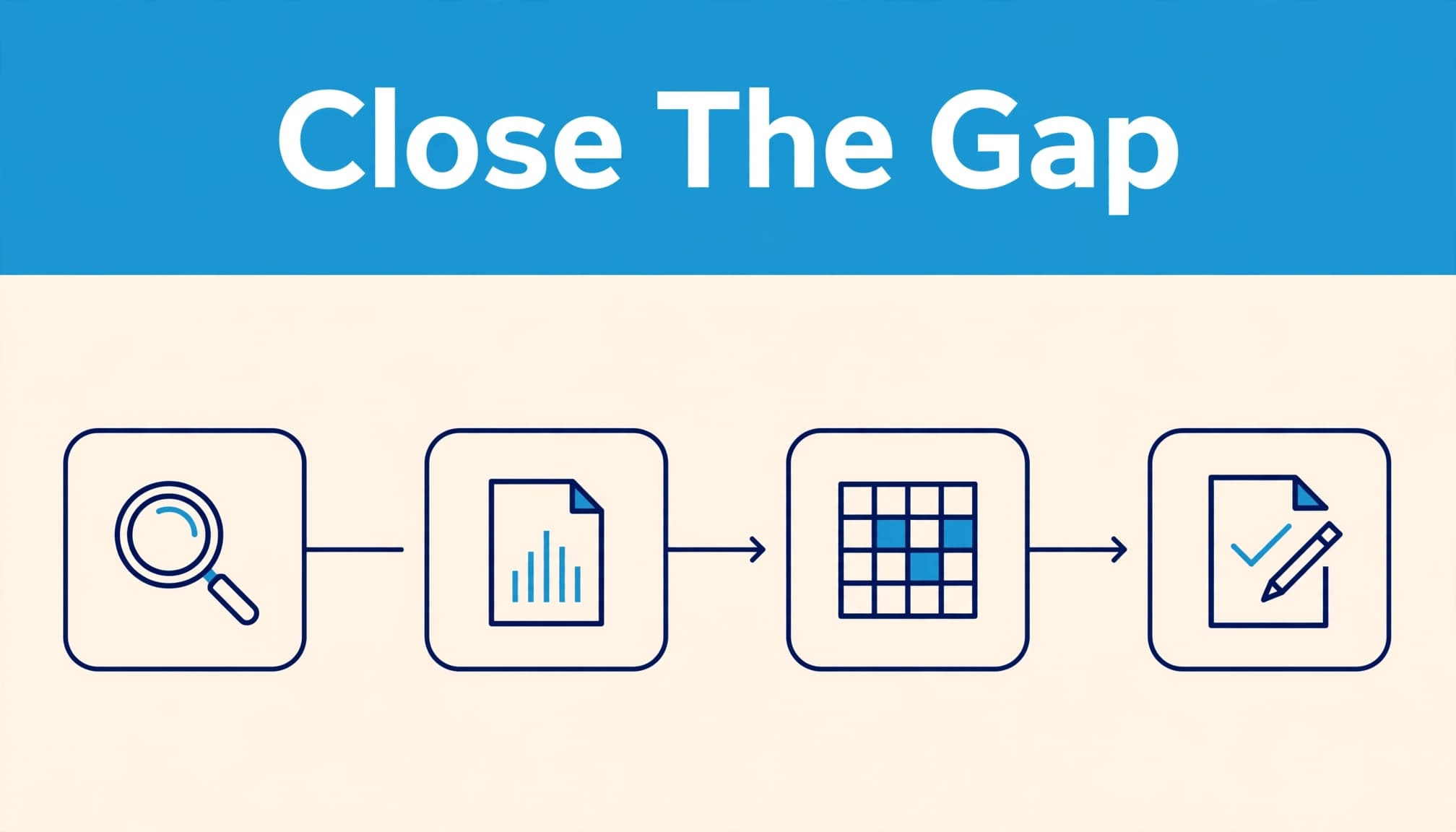
This is where most teams lose momentum. With AI citation tracking, they identify a competitor citation, add it to a report, then carry on publishing unrelated articles. The method works better when every meaningful finding has an owner and a next step.
Review the source before changing your page
Use citation analysis to review the competitor page and your own cited URLs. Look at the exact passage, the question it answers and the evidence supporting it. Check whether the source domain is authoritative and relevant. Don’t copy its headings or wording.
You may find a citation gap caused by a simple competitor advantage. It might publish a practical checklist, name its integration partners or update a pricing guide every quarter. Your page may be more technically capable but too general to extract a reliable answer.
Named expertise, supporting evidence and useful first-hand detail can strengthen content authority. Digital PR and backlink monitoring may explain external recognition, but they don’t replace improvements to the page being cited.
Check your own pages too. Stale facts can undermine trust and create sales friction. Assign an owner to important product, pricing and compliance pages, then record the last review date to support content freshness.
Build a better answer, not a longer page
Create content that helps a buyer make a decision. The objective is better AI visibility through a clear, supported answer, not a longer page. A cybersecurity provider might publish a guide covering onboarding steps, UK data residency, typical implementation stages and the documents a procurement team will need.
Use clear headings, plain HTML text, internal links and relevant schema where it accurately matches visible content. This practical form of generative engine optimization makes important information easier for people and crawlers to find. Don’t hide key details in image-only graphics, gated PDFs or scripts that crawler behavior may make difficult to interpret.
Turn the findings into AI content briefs with a defined audience, commercial question, proof required and page owner. That gives writers a useful job to do, rather than the vague instruction to “improve AI visibility”.
Measure referral traffic without overstating attribution
AI referral traffic is real, but incomplete. Browsers, privacy settings and app hand-offs can remove the referrer before a visit reaches your analytics platform.
Use UTM parameters where you control the link
You can’t add UTM parameters to referral traffic from a citation selected by ChatGPT or Perplexity. You can use them on your own newsletter links, paid campaigns, partner activity and social promotion.
Keep your naming consistent across source, medium, campaign and content. Review blanks, spelling variations and overwritten values in your CRM. B2B lead tracking in GA4 is far more useful when your acquisition data and sales stages use the same definitions.
Use AI citation tracking to connect observed citations with referral data. Treat AI visibility as exposure, rather than recorded visits.
Keep identifiable AI referrals separate from organic search and unclassified direct traffic. Label the figures as measured but incomplete.
Connect visible activity to pipeline carefully
Track referral traffic, engaged visits, form completions, booked meetings, sales-accepted leads, opportunities and closed revenue. Add annotations when you publish a major guide, revise a product page or gain recurring citation visibility.
Then compare periods before and after the change. Check for seasonality, PR coverage, changing prices, sales capacity and paid campaign activity before calling anything a cause.
Your broader mix still matters. Strong SEO makes your expertise easy to find, while PPC can test high-intent messages quickly. Use Google Ads to capture active demand, and Facebook Ads to support retargeting where it suits the buying cycle.
Key takeaways for B2B teams
AI citation tracking is most useful when it reveals a practical content, technical or data problem, and clarifies your AI visibility. Track citations, mentions, referrals and CRM outcomes separately, then keep the limitations visible in the report.
Use a fixed UK prompt set and record citation frequency. Review the cited answer and source page. Improve the evidence on your own site. Then compare share of voice over time without claiming that one citation created a sale.
Frequently asked questions
What is the difference between brand mentions and an AI citation?
Brand mentions name your business in an answer. An AI citation connects that answer to a source URL or identifiable reference. A citation is stronger evidence of source visibility, but it doesn’t prove a reader clicked or converted.
How can teams track citations across platforms?
AI citation tracking compares where your business appears across different platforms. It helps measure AI visibility, but results still need checking for accuracy, context and meaningful referral behaviour.
How do Google AI Overviews, ChatGPT search and Perplexity AI differ?
These AI search engines can select different sources and present answers in different ways. Click behaviour also varies, so visibility on one platform doesn’t guarantee visits from another.
Can AI citation tracking show return on investment?
Not on its own. It can show citations, brand visibility and identifiable referral traffic. Connect recognised visits to qualified leads, opportunities and pipeline in your CRM, but treat unclicked visibility as an influence signal rather than proven revenue.
Should AI search replace traditional SEO reporting?
No. AI search is another route to discovery. Keep tracking organic impressions, clicks, conversions, technical health and commercial results. A strong Digital marketing report puts those signals together, rather than creating a separate dashboard full of unconnected AI scores.
Put evidence before visibility
Brands that earn useful AI citations make their claims easy to check. The goal isn’t AI visibility alone, but useful, checkable evidence. Their pages answer real buyer questions, include current proof and work properly for crawlers and people.
Start with the questions your sales team hears every week. Use AI citation tracking to find each citation gap, fix the omissions that matter commercially and connect the work to qualified pipeline.



1 Comment
[…] mentions within the defined sample, not market share. For a closer look at the distinction, track citations in AI search results alongside the wording of each answer. Citation velocity is an informal way to describe how observed […]